Among approximately 528,000 applicant households, 291,522 households have been confirmed as recipients
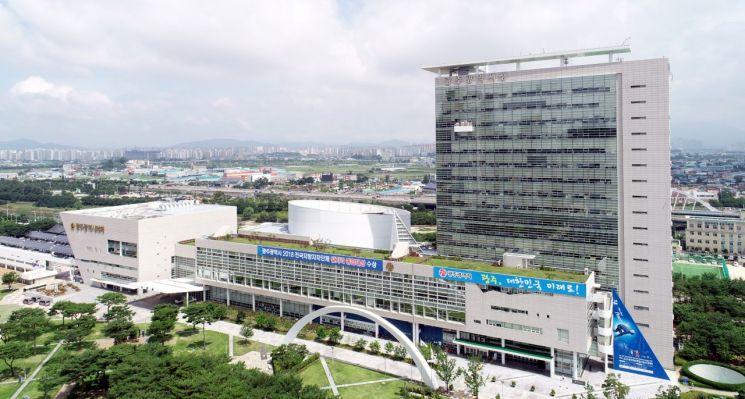
[Asia Economy Honam Reporting Headquarters Reporter Park Seon-gang] Gwangju Metropolitan City has completed the review process for households applying for the emergency household living expense support project, which was promoted for low-income households with an income below 100% of the median income standard to overcome the prolonged COVID-19 crisis.
According to Gwangju City on the 31st, the city conducted a review of 528,417 households that applied for support online and offline from the 1st to the 8th of last month, excluding 78,826 erroneous applications such as duplicate applications or ineligible cases, and conducted income verification for 449,591 households using the Social Security Information System (Happy e-um).
Through this, it was decided to support 291,522 households (64.8%) with a total of 100.5818 billion KRW.
Additionally, 158,069 households (35.2%) were deemed ineligible.
Looking at the support decision households by household size, 178,284 households (61.1%) were 1-2 person households receiving 300,000 KRW, 95,224 households (32.7%) were 3-4 person households receiving 400,000 KRW, and 18,014 households (6.2%) were 5 or more persons receiving 500,000 KRW. The average living expense support per household was 345,000 KRW.
Gwangju City has issued Gwangju Sangsaeng Cards worth 97.039 billion KRW to 282,084 households, which is 96.8% of the supported households, and as of the 27th, 75.329 billion KRW (77.6%) has already been spent within the region, contributing to the revitalization of the depressed local economy and the revival of neighborhood markets.
Furthermore, among the households judged ineligible based on income verification, 7,350 households had filed objections as of the 29th due to income reduction caused by recent business suspension/closure or unemployment. As a result of reviewing these objections, 5,734 households were selected for support, while 738 households were deemed ineligible.
Gwangju City plans to cooperate with autonomous districts to promptly review the 878 households currently under review and future objection applications, and to ensure early completion of the project by providing Gwangju Sangsaeng Cards through visiting services for residents with mobility difficulties in each neighborhood.
Lee Pyeong-hyung, Director of the Welfare and Health Bureau of the city, said, “Despite difficult conditions such as the April 15 general election and COVID-19 response, the review process for more than 520,000 applicant households was completed without major issues thanks to the dedicated efforts of autonomous district and neighborhood officials.” He added, “We hope that the living expenses provided to citizens will lead to conscientious consumption, helping households and serving as a catalyst for revitalizing the local economy.”
© The Asia Business Daily(www.asiae.co.kr). All rights reserved.

















