COVID-19 Impact Leads to Mask Wearing as Daily Routine
Conflicts Over Secondhand Smoke on Streets in Some Areas
Discomfort as Cigarette Smoke Enters Inside Masks
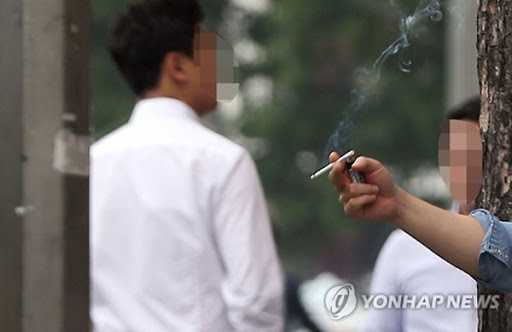 Office workers are smoking. The photo is unrelated to specific expressions in the article. [Image source=Yonhap News]
[Asia Economy Reporter Seunggon Han] # A in their 20s, an office worker, recently had an unpleasant experience on the way home from work. A man was smoking near the bus stop area, and the smoke seeped inside A's mask. A expressed frustration, saying, "The cigarette smoke that gets inside the mask doesn't come out easily." They added, "It's a no-smoking zone to begin with, so I don't understand why people smoke there. Especially, the indirect smoking damage is severe because of the mask."
With mask-wearing becoming routine due to the COVID-19 pandemic, conflicts with smokers on the streets have arisen. Non-smokers complain that cigarette smoke enters their masks and does not escape, causing them distress.
B, a 30-something office worker, said, "I wear a mask every day because of COVID, but cigarette smoke that comes in unexpectedly while walking is really troublesome," adding, "I end up having to remove the smoke that got inside the mask. I don't understand why I have to go through this hardship."
C, a university student in their 20s, said, "There was indirect smoking damage before, but when cigarette smoke enters while wearing a mask, it is really painful," and expressed concern, "I worry about what kind of adverse effects it might have on health."
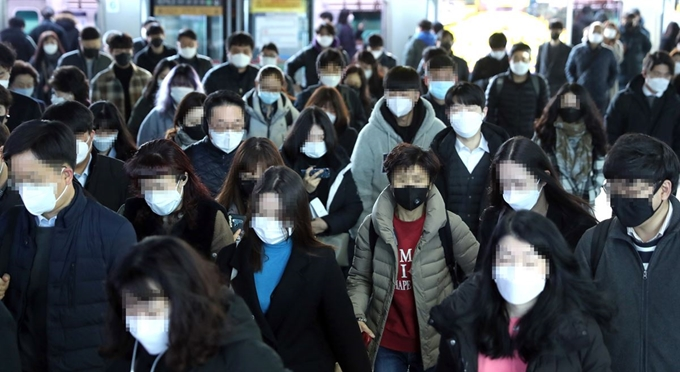 Due to the impact of the novel coronavirus infection, citizens are commuting to work through Sindorim Station in Guro-gu, Seoul, wearing masks. Photo by Yonhap News.
While the pain caused by cigarette smoke entering masks is a problem, the damage caused by secondhand smoke is also significant. According to one study, exposure to secondhand smoke increases the risk of hypertension.
Professor Byungjin Kim of the Cardiovascular Department at Kangbuk Samsung Hospital analyzed self-survey data and urine cotinine levels from 108,354 health checkup participants between 2012 and 2016, and announced that secondhand smoke increases the risk of hypertension.
The research team divided non-smokers into four groups: those never exposed to secondhand smoke; those previously exposed at home but currently not exposed at home or work; those never exposed at home but currently exposed at work; and those previously exposed at home and currently exposed at home or work.
Compared to people with no experience of secondhand smoke exposure, the group previously exposed at home and still exposed had a 1.22 times higher risk of hypertension. The group with no past exposure but currently inhaling cigarette smoke had a 1.15 times higher probability of developing hypertension.
The risk of hypertension varied depending on the duration, frequency, and period of exposure to smoke. The longer and more frequently one inhales others' cigarette smoke, the higher the chance of developing hypertension. Even exposure for less than one hour a day increased the risk. Secondhand smoke itself causes health problems.
Professor Kim explained, "Nicotine, one of the harmful substances in cigarettes, is known to temporarily raise blood pressure," and added, "It is speculated that substances other than nicotine may also affect hypertension."
He continued, "These results apply to both men and women," emphasizing, "Even short and small amounts of secondhand smoke affect hypertension, so it is important to avoid secondhand smoke as much as possible."
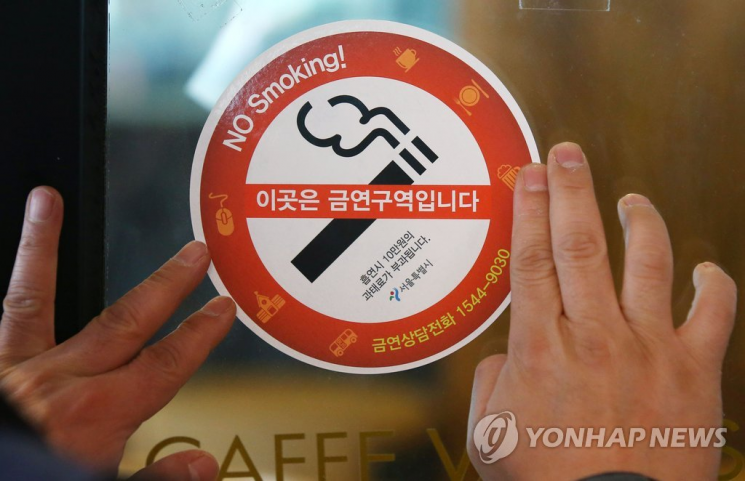
Smokers also have their perspective. The reason is that most streets are no-smoking zones. A man in his 40s said, "The company building is a smoke-free building, and even outside, it is all no-smoking zones," adding, "I feel sorry for causing inconvenience by smoking briefly."
Another smoker in his 40s said, "I smoked in front of a restaurant after a meal," and admitted, "I smoked without thinking, but I didn't consider the harm of secondhand smoke." He emphasized, "I will be more careful in the future."
Amid conflicts over secondhand smoke, the government has recommended banning the use of indoor smoking rooms.
On the 28th, health authorities pointed to smoking rooms along with restaurants and lounges as major routes of COVID-19 spread within the Coupang logistics center in Bucheon, Gyeonggi Province, and announced, "Indoor smoking rooms in other workplaces are also high-risk facilities for infection, so their use is recommended to be prohibited."
At a regular briefing, Kwon Jun-wook, Deputy Director of the Central Disease Control Headquarters, said, "Smoking itself is considered a high-risk behavior related to COVID-19," explaining, "Smoking involves removing the mask, and close contact inevitably occurs inside smoking rooms."
Deputy Director Kwon urged, "Although indoor smoking rooms are allowed under the National Health Promotion Act, due to the high risk of COVID-19 infection, we recommend smoking in outdoor smoking areas as much as possible."
© The Asia Business Daily(www.asiae.co.kr). All rights reserved.
![Clutching a Stolen Dior Bag, Saying "I Hate Being Poor but Real"... The Grotesque Con of a "Human Knockoff" [Slate]](https://cwcontent.asiae.co.kr/asiaresize/183/2026021902243444107_1771435474.jpg)


















