[Asia Economy Reporter Kim Eun-byeol] Idle funds without suitable investment destinations have surpassed 1,100 trillion won for the first time. In February this year, they increased by 40 trillion won in just one month for the first time.
According to the Bank of Korea and the Korea Financial Investment Association on the 31st, the scale of idle funds, including cash currency, demand deposits, passbook savings deposits, money market funds (MMF), and comprehensive asset management accounts (CMA), reached 1,106.338 trillion won as of the end of March. This is the largest scale in three and a half years since October 2016 (1,344.867 trillion won). Idle funds have been increasing every month since surpassing 1,000 trillion won in November last year (1,010.703 trillion won) until March.
The rate of increase is also accelerating. The increase in February this year was 47 trillion won, faster than the 30 trillion won range in November (32.7 trillion won increase) and December (34.8 trillion won increase) last year. This is the first time the monthly increase has exceeded 40 trillion won since statistics began.
Liquidity, which will become more abundant due to interest rate cuts, is likely to flow into the stock market or real estate. However, due to the government's successive housing market stabilization measures such as the December 16th measures, it seems difficult for funds to flow into real estate for the time being. Therefore, there is a possibility that funds will flow into the stock market and other areas.
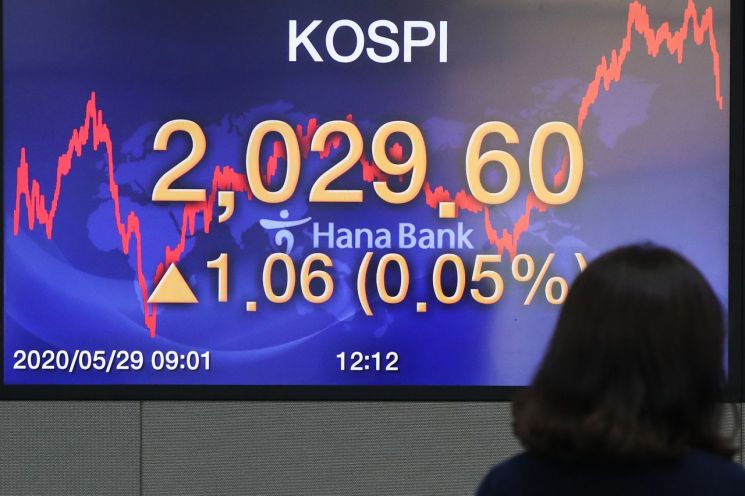
Recently, as the KOSPI index regained the 2,000-point level, funds have been pouring into the stock market. Investor deposits, which are funds that investors have entrusted to securities firms to buy stocks or money left unclaimed after selling stocks, amounted to 44.5794 trillion won as of the 28th of this month, a 63.1% surge compared to the end of last year (27.3384 trillion won) before the COVID-19 outbreak.
The balance of credit transactions, where individual investors borrow money to buy stocks, also rose to the 10 trillion won level on the 18th of this month (10.0783 trillion won) for the first time in about two months since March. Typically, when more individual investors expect stock prices to rise, the balance of credit transactions tends to increase.
© The Asia Business Daily(www.asiae.co.kr). All rights reserved.
![Clutching a Stolen Dior Bag, Saying "I Hate Being Poor but Real"... The Grotesque Con of a "Human Knockoff" [Slate]](https://cwcontent.asiae.co.kr/asiaresize/183/2026021902243444107_1771435474.jpg)
















