Performance of Stravinsky's 'Symphony for Wind Instruments' and Mozart's 'Symphony No. 39'
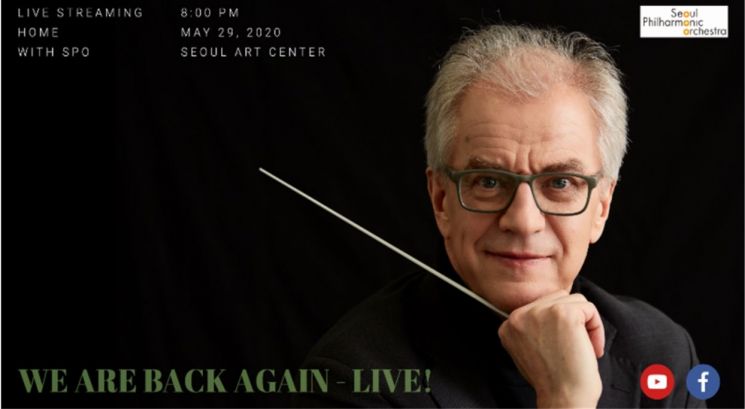
[Asia Economy Reporter Byunghee Park] The Seoul Philharmonic Orchestra (Seoul Phil) will live stream the "Seoul Phil Online Concert: #ThanksToYou" on YouTube and Facebook at 8 p.m. on the 29th at the Concert Hall of the Seoul Arts Center.
Osmo V?nsk?, music director of the Seoul Phil, will conduct the performance, featuring Stravinsky's Symphony for Winds, John Williams' Fantasia on a Theme by Thomas Tallis, and Mozart's Symphony No. 39.
The Seoul Phil originally prepared a regular concert for the 29th, but due to ongoing risks from the novel coronavirus infection (COVID-19) and concerns over spread from Itaewon clubs, the concert was switched to an online format. Through this performance, the Seoul Phil aims to support all citizens, including medical staff worldwide working hard on COVID-19 prevention, and to deliver a message of hope.
Referring to recommendations from the German Orchestra Association (DOV) and others, the Seoul Phil designed the program with pieces that allow performers to practice "distanced seating (1.5 to 5 meters)." For string instruments, each musician will use an individual music stand, and transparent soundproof panels will be installed around wind instrument players to ensure a safe performance environment. Up to 50 members will appear on stage for this concert.
Among the program pieces, Stravinsky's Symphony for Winds and John Williams' Fantasia on a Theme by Thomas Tallis serve as showcase works that highlight the orchestra’s main sections: wind and string instruments, respectively.
In Stravinsky's Symphony for Winds, he intentionally excluded the soft and rich-sounding strings from the instrumentation to create a dry, rough, yet solemn sound. Stravinsky composed many works in memory of famous individuals; this piece is dedicated to his fellow composer Debussy.
John Williams, a British composer, wrote the Fantasia on a Theme by Thomas Tallis with a very unique instrumentation. The first group is a string orchestra, the second is a separate group of nine players, and the third is a string quartet. These three groups produce distinctive sound effects by repeatedly blending and separating as the music progresses.
The final piece performed by the Seoul Phil, Mozart's Symphony No. 39, is a classical and elegant work notable for its unusual orchestration, as it is the only one among Mozart’s symphonies that excludes the oboe.
© The Asia Business Daily(www.asiae.co.kr). All rights reserved.

















