[Post-Corona, Era of Great Transformation]<10> Growing Concerns Over the 'Big Brother' System
Tracking Confirmed Cases Using Card Payment Records, Mobile Phone Location, and CCTV
Information Gathering Amid Infectious Disease Crisis, Possibility of a 'New Normal'
Frequent Personal Data Exposure and Hate Speech via SNS
Incheon Confirmed Cases from Itaewon
False Claims of "Unemployed" in Epidemiological Investigations
National Human Rights Commission Recommends Detailed Information Disclosure Standards
Quarantine Authorities Revise Guidelines Twice
Balancing Quarantine and Privacy Protection
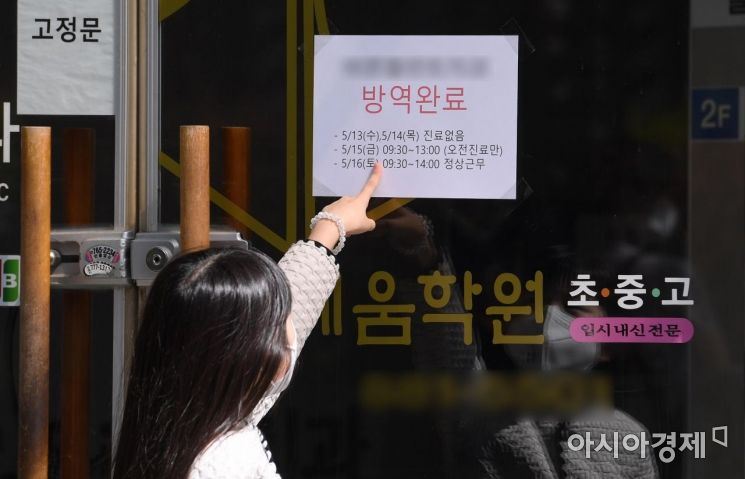 In Incheon, a cluster of eight confirmed cases of the novel coronavirus infection (COVID-19) linked to the "Seoul Itaewon club" outbreak has occurred. According to Incheon City on the 13th, a total of eight people tested positive for COVID-19, including two in Yeonsu-gu, three in Michuhol-gu, and three in Jung-gu. The eight confirmed cases on this day were identified as contacts of Mr. A, a lecturer at Seum Academy located in Michuhol-gu, who was confirmed positive on the 9th after visiting clubs in Itaewon. The photo shows the entrance door of the building housing Seum Academy in Michuhol-gu, Incheon. Photo by Kim Hyun-min kimhyun81@
[Asia Economy Reporter Lee Gwan-ju] #Scene 1. Incheon academy instructor Mr. A was diagnosed with COVID-19 on the 9th after visiting King Club in Itaewon, Seoul, earlier this month. However, during the epidemiological investigation by the quarantine authorities, Mr. A lied about his occupation, claiming to be 'unemployed,' and also falsified his movement routes. With the cooperation of the police, the quarantine authorities tracked Mr. A's movements and revealed on the 12th, three days after his diagnosis, that he was an academy instructor. While Mr. A was lying about his occupation and movements, 50 secondary infection cases occurred through taxi drivers, students, and others. The Incheon city government reported Mr. A to the police for violating the Infectious Disease Control and Prevention Act, and Mr. A continues to face severe criticism as the 'lying academy instructor.'
#Scene 2. Mr. B, an employee at a large entertainment establishment in Gangnam-gu, Seoul, was diagnosed with COVID-19 on the 1st of this month. However, Mr. B concealed this fact during the initial epidemiological investigation. He stated that he stayed only at home on April 28, but in reality, Mr. B worked at the establishment from 8 p.m. on the 27th until 4 a.m. the next day. It was confirmed that 116 people had contact with Mr. B. Had there been no lies, the quarantine authorities could have classified contacts more swiftly. Mr. B is currently under police investigation for violating the Infectious Disease Control and Prevention Act.
During the COVID-19 pandemic, lies by confirmed cases can easily lead to dangerous outcomes. People who have been in contact with confirmed cases may unknowingly become new sources of infection, which can lead to indiscriminate transmission. This is why the Infectious Disease Control and Prevention Act stipulates that if a person deliberately omits or conceals facts during an epidemiological investigation by the quarantine authorities, they may face imprisonment of up to two years or a fine of up to 20 million won. However, before this, there is a part we need to reflect on first: knowing the consequences their lies could cause, why did these individuals feel compelled to lie?
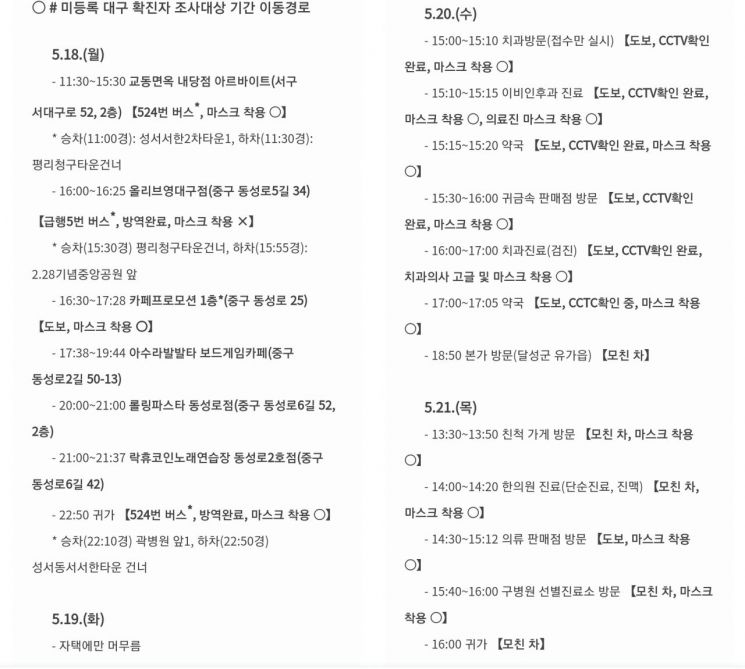 The movement path of a COVID-19 confirmed case disclosed by a local government. [Image source=Yonhap News]
◇The rapidly approaching world of the 'Big Brother'= Each city and province displays COVID-19 response status on the homepage's main screen. Among these, the most viewed by the general public is the 'movement routes of confirmed cases.' Mayors and county heads sometimes post this information directly on their social network service (SNS) accounts.
How is movement tracking conducted? There are plenty of clues. Personal card transaction records, mobile phone location and base station connection logs, and CCTV cameras installed everywhere make it easy for authorities to track an individual's movements. If the quarantine authorities find it difficult to identify movements initially, a COVID-19 rapid response team composed of about 8,000 police officers nationwide is deployed.
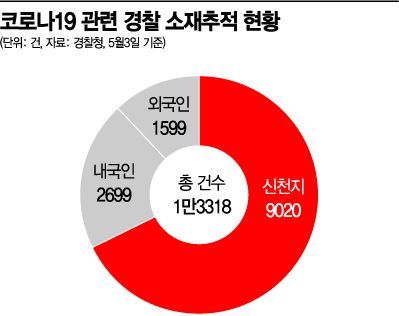
When the Shincheonji Church of Jesus Daegu cluster infection occurred in February this year, the police successfully located all 9,020 Shincheonji members upon the request of the quarantine authorities. Regarding the Itaewon club cluster infection, the police confirmed the location information of 6,065 visitors and others.
The current Infectious Disease Control and Prevention Act strongly supports such tracking. The quarantine authorities can request related agencies for the confirmed or suspected person's name, resident registration number, address, phone number, as well as medical records such as treatment records, immigration control records, and location information. In effect, during an infectious disease crisis, the quarantine authorities can thoroughly investigate an individual's private life.
What would happen if the state forcibly collected this level of information during normal times? It would provoke massive public backlash that could determine the survival of the government. However, the story changes during an infectious disease outbreak. Due to infection concerns, people accept such state information collection functions as natural. This is because they believe it is useful for greater social safety. Meanwhile, if the state considers a matter an 'emergency,' such indiscriminate personal information collection could become the 'new normal'?the standard of a new era.
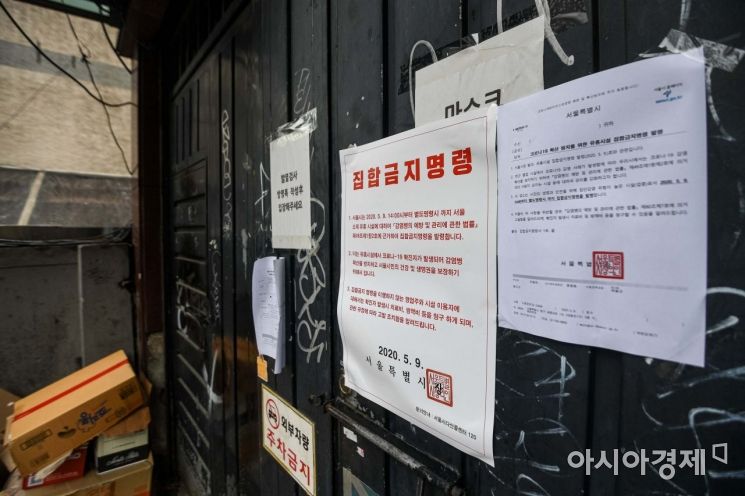 On the 10th, when Seoul City issued a 'gathering ban order' for all entertainment facilities in Seoul following the COVID-19 cluster infection outbreak originating from Itaewon clubs, a gathering ban notice was posted at an Itaewon club in Seoul known to have been visited by confirmed cases. Photo by Jinhyung Kang aymsdream@
◇The tragedy of 'lies'= The crisis arrived this month with the Itaewon club cluster infection in Seoul. Concerns arose that simply disclosing confirmed cases' movement routes could lead to so-called 'outing' (disclosure of sexual orientation or identity without consent), causing people to avoid testing or provide false contact information. Only after the quarantine authorities promised 'anonymous testing' did the number of people getting tested increase significantly, with about 46,000 people, including contacts, undergoing COVID-19 tests related to Itaewon.
Let's return to the two individuals who lied. Their lies caused significant confusion for the quarantine authorities and led to numerous additional confirmed cases. Considering the public's high interest in the COVID-19 situation, both individuals were likely fully aware of the consequences their lies could cause. Nevertheless, they wanted to hide something they considered more important?possibly their sexual identity or their occupation. Ultimately, they failed, as their movements and occupations were revealed, exposing them to widespread criticism.
Considering the results of their lies during a national crisis, their actions are clearly unforgivable to the public. However, beyond criticism of the 'lies,' it is worth reflecting on the fact that personal attacks using hateful terms such as 'homo' or 'entertainment industry worker' have also occurred. On social media and internet communities, it is common to see 'doxxing' of confirmed cases or treating them as 'viruses.' For example, early in the domestic COVID-19 outbreak, when a confirmed case's movement route was disclosed, rumors of an 'affair' spread, turning it into public gossip. If excessive criticism continues or is expected, the individuals involved will withdraw and try to hide more. This makes it difficult to achieve the original goal of infectious disease prevention. Professor Im Myeong-ho of Dankook University's Department of Psychology expressed concern, saying, "If excessive doxxing or critical public opinion continues, it could lead to secondary damage," and "the number of people reluctant to get tested may increase."
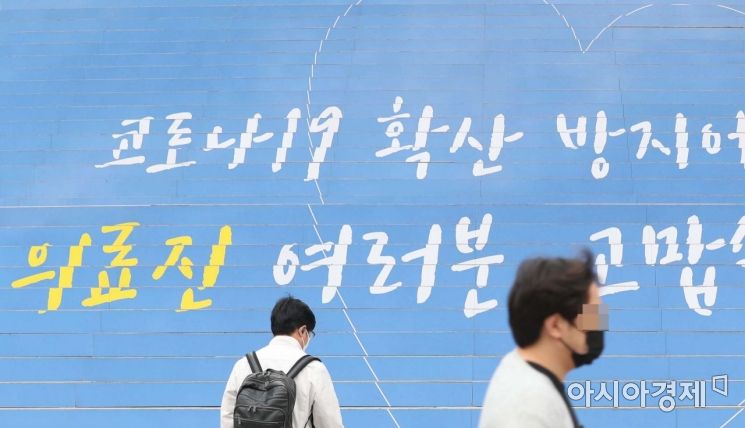 On the 22nd, the stairs of Sejong Center for the Performing Arts in Jongno-gu, Seoul, were wrapped with the phrase "Thank you to the medical staff working hard to prevent the spread of COVID-19!" / Photo by Mun Honam munonam@
◇Finding a point of convergence= On March 9, the National Human Rights Commission issued a statement signed by Chairperson Choi Young-ae, saying, "Because excessive private information about confirmed individuals is being disclosed, intimate private lives are being unintentionally exposed, resulting in human rights violations," and requested the quarantine authorities to "establish detailed and reasonable standards for disclosing confirmed patient information to effectively suppress the spread of the new infectious disease while preventing excessive infringement of patients' privacy." In response, the quarantine authorities revised the 'Guidelines for Disclosure of Confirmed Patient Movement Routes' several times. The aim was to find a balance between the difficult-to-reconcile values of preventing infectious disease spread and minimizing privacy infringement.
The first revision was made on March 14, when confirmed cases surged due to the Shincheonji cluster infection. The measure to disclose confirmed patients' routes and visited places with specific dates and times was criticized as an invasion of privacy. Consequently, the quarantine authorities excluded information that could identify individuals, such as detailed age and partial names, from disclosure. They also limited disclosure to places and transportation where contact with confirmed cases was likely to pose an infection risk in terms of time and space.
Then, a month later, on April 12, the second edition of the guidelines was released, shortening the disclosure period to reduce secondary damage to businesses included in the movement routes. The disclosure period was changed to 'until 14 days after the confirmed patient last contacted another person,' so information is deleted or made non-public after two weeks. This reflects the quarantine authorities' efforts to prevent privacy violations and secondary damage.
No one can guarantee when the COVID-19 crisis will be resolved. Some mention when vaccines and treatments are developed, others when 'herd immunity' is formed. One clear fact is that through the COVID-19 pandemic, we have clearly confirmed how strong the government's surveillance system is, and we have learned that such situations can recur anytime in the future.
© The Asia Business Daily(www.asiae.co.kr). All rights reserved.
![User Who Sold Erroneously Deposited Bitcoins to Repay Debt and Fund Entertainment... What Did the Supreme Court Decide in 2021? [Legal Issue Check]](https://cwcontent.asiae.co.kr/asiaresize/183/2026020910431234020_1770601391.png)

















