[Children in Crisis]③ 'Gachulpam' as a Hotbed of Various Youth Crimes
Children Going Out to Find Gachulpam on the Streets
Easily Tempted by Crime... Sometimes Becoming Crime Targets
3.5% of Youth Experienced Running Away Last Year
Most Due to Conflicts with Parents
Experts Say "Awareness Improvement and System Supplement Must Be Achieved Together"
[Asia Economy Reporters Byungdon Yoo, Seungyoon Song] 'Looking for someone to provide room and board' 'Two girls looking for a group to hang out with.'
On the 26th, a post like this was uploaded on a private community of a social networking service (SNS). It was about a runaway looking for companions because they had nowhere to go. Soon, several comments were added to this post. Most comments asked about the location or invited the poster to join existing runaway groups. Some left comments saying there are easy ways to make money and asked to be contacted. The author seemed to have achieved their purpose and deleted the post shortly after.
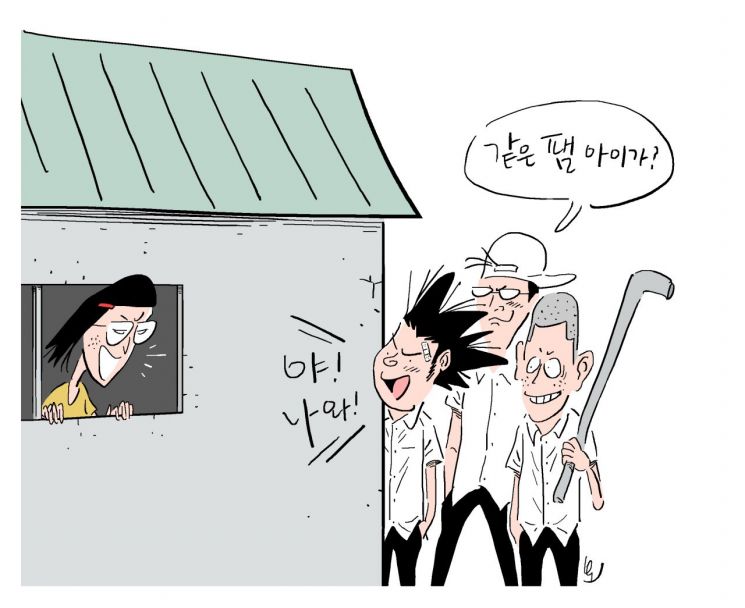
The so-called runaway groups, which have been pointed out as hotbeds of various youth crimes and social problems, are still actively operating. Runaway groups combine the words 'runaway' and 'family' and refer to communities where runaway youths form groups and live together. On various portal sites or SNS, it is not difficult to find runaway groups by simply entering specific keywords.
According to the '2020 Youth Statistics' jointly announced by Statistics Korea and the Ministry of Gender Equality and Family, a survey of youths from 4th grade elementary school to 3rd grade high school last year found that 3.5% had experienced running away within the past year. Although this is slightly lower than last year's 3.8%, it is higher than the 3.4% in 2016. The main reason for running away was problems with parents at home, accounting for 61.7%. This was followed by academic problems (15.9%), wanting to be with friends (9.6%), economic reasons at home (2.3%), and school problems (1.1%).

A significant number of children who hit the streets and lose places to rely on join runaway groups. Although there are youth shelters in each region that protect runaway youths for a certain period, it is standard to provide personal information and parents' contact details, making them unsuitable choices for those who left home due to conflicts with their parents. Joining runaway groups often leads to temptation toward crime because there are no suitable alternatives to solve basic needs like food, clothing, and shelter.
The 'Osan Skeleton Case,' where teenagers in the same group collectively assaulted a peer to death and secretly buried the body in a mountain, also occurred within a runaway group. The leader of this runaway group, a man in his 20s identified as A, bought fake bank accounts from runaway youths and sold them to voice phishing organizations. Some adults, calling themselves 'helpers,' provide conveniences such as room and board while recruiting minors for crimes like prostitution and theft.
Baek Hye-jung, a senior researcher at the Korea Youth Policy Institute, said, "When we think of runaway youths, we tend to imagine delinquent youths, but in reality, many are children who ran away because they could not endure parental neglect or abuse." She added, "To solve the runaway group problem, it is necessary to have places where they can stay safely for a certain period, and this requires not only awareness improvement but also institutional supplementation."
© The Asia Business Daily(www.asiae.co.kr). All rights reserved.
![User Who Sold Erroneously Deposited Bitcoins to Repay Debt and Fund Entertainment... What Did the Supreme Court Decide in 2021? [Legal Issue Check]](https://cwcontent.asiae.co.kr/asiaresize/183/2026020910431234020_1770601391.png)















