Found Synthetic Strain of 'Chromomycin A3' Worth Over 90 Million KRW per Gram
Establishing Domestic Basis to Replace Imported Antibiotics... Recent Patent Application Filed
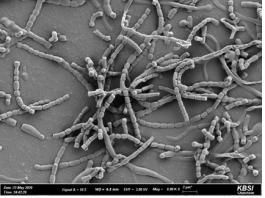
[Asia Economy Reporter Kim Bo-kyung] A microorganism capable of producing high-value antibiotics has been discovered in Korean soil.
The National Institute of Biological Resources announced on the 27th that it recently found a strain synthesizing 'Chromomycin A3,' used in the development of cancer and various tumor treatments, in Korean soil.
Chromomycin A3 is an antibiotic extracted from soil microorganisms, costing over approximately 90 million KRW per gram, and is not produced domestically, thus relying on imports.
This research is significant as it discovered a strain synthesizing Chromomycin A3 from indigenous microorganisms, laying the foundation to domestically replace the expensive antibiotics sold by multinational companies.
Since 2018, the National Institute of Biological Resources has been conducting research to discover soil microorganisms that can inhibit the growth of antibiotic-resistant bacteria and pathogenic bacteria harmful to the environment and human health, and to isolate antimicrobial substances.
Soil contains various useful microorganisms that suppress the growth of harmful microorganisms contaminated due to excessive use of antibiotics.
The strain discovered this time is the first found in Korean soil and was named 'Streptomyces griseus SJ1-7.' The research team at the National Institute of Biological Resources completed genome decoding last month and recently filed a patent.
Streptomyces griseus secretes streptomycin, used in tuberculosis treatment. It is also known to synthesize antibiotics such as Chromomycin.
Additionally, it contains 32 biosynthetic genes for active substances including asugamycin, suggesting the potential to obtain various active substances. Active substances refer to compounds that enhance or inhibit biological functions.
The Streptomyces griseus strain has been confirmed effective in killing pathogens of several plants, such as sclerotinia disease and ulcer disease, indicating potential for developing eco-friendly plant disease control agents in the future.
Baek Yeon-jae, director of the National Institute of Biological Resources, stated, "Various microorganisms inhabit domestic soil," and added, "We plan to focus research on finding microorganisms and active substances that inhibit the growth of various pathogens."
© The Asia Business Daily(www.asiae.co.kr). All rights reserved.
















