Establishment of Emergency Contact System Between Schools and Health Centers for Rapid Response to COVID-19 Confirmed and Symptomatic Suspected Cases
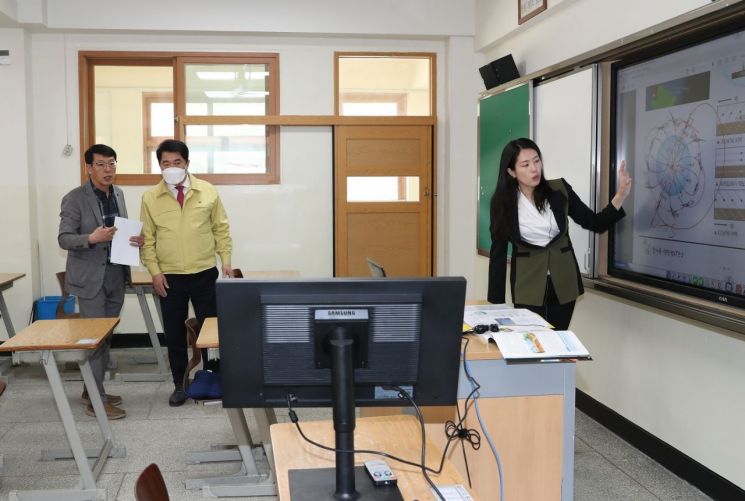
[Asia Economy Reporter Jong-il Park] Gwanak-gu (Mayor Park Jun-hee) has established an emergency COVID-19 school quarantine response system following last week's return to in-person classes for high school seniors and this week's phased reopening for kindergarten and some elementary, middle, and high school students.
Starting on the 20th with high school seniors, in-person classes began on the 27th for high school juniors, middle school seniors, elementary school grades 1-2, and kindergarten students.
Additionally, on June 3rd, high school freshmen, middle school sophomores, and elementary school grades 3-4 will begin phased in-person classes, followed by middle school freshmen and elementary school grades 5-6 on June 8th.
In response, the district has built a cooperative system among the Office of Education, schools, and the district office to prevent the spread of COVID-19 within schools, alleviate parents' and students' anxiety about returning to school, and do its utmost to prevent community transmission of COVID-19.
On the morning of the 27th, when in-person classes resumed, Mayor Park Jun-hee visited Sinseong Elementary School to personally conduct fever checks using thermal cameras and provide guidance on personal hygiene to students. He also shared the situation regarding preparations for reopening through phone calls with school principals.
Furthermore, the district has prepared for emergency situations such as suspected symptomatic cases and confirmed cases after reopening by establishing a proactive response system between the district office and schools.
First, an emergency contact system between schools and public health centers has been established to quickly transfer suspected COVID-19 cases from schools to screening clinics at health centers. Before transfer, individuals wait in a temporary observation room set up within the school and then visit the district health center for testing.
If a confirmed case occurs, the district plans to temporarily restrict facility use along the confirmed patient's movement path and issue quarantine notices to contacts for 14 days of self-isolation to thoroughly prevent further infections.
Additionally, the district has allowed educational expense subsidies to be used for purchasing disinfection and quarantine supplies to support schools in the area.
The district provided approximately 68 million KRW to 17 kind private kindergartens that participated in the closure, and about 20 million KRW in quarantine expenses to 13 private kindergartens that conducted emergency childcare.
With the implementation of online classes, the district has invested over 320 million KRW to provide smart devices to 2,279 low-income students in the area and supported about 30,000 elementary, middle, and high school students' families with agricultural product packages worth approximately 100,000 KRW each, among other various support measures.
Mayor Park Jun-hee stated, “Although each school has thoroughly prepared for in-person classes in response to COVID-19, the district will do its best to support schools with necessary items such as disinfection and quarantine supplies to create a safer environment for students to attend school.”
© The Asia Business Daily(www.asiae.co.kr). All rights reserved.
![User Who Sold Erroneously Deposited Bitcoins to Repay Debt and Fund Entertainment... What Did the Supreme Court Decide in 2021? [Legal Issue Check]](https://cwcontent.asiae.co.kr/asiaresize/183/2026020910431234020_1770601391.png)