[Asia Economy Reporter Kim Hyung-min] Hanwha and Hyundai Heavy Industries (now Korea Shipbuilding & Offshore Engineering), which suffered losses after participating in an oil field project in Yemen that failed, filed a lawsuit against the Korea National Oil Corporation (KNOC) seeking the return of their investment funds but lost the case.
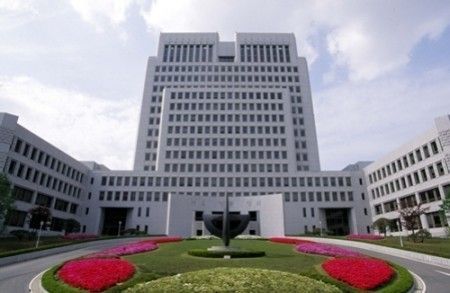
The Supreme Court's 3rd Division (Presiding Justice Kim Jae-hyung) announced on the 26th that it overturned the lower court ruling that had ruled in favor of Hanwha in the pre-compensation refund lawsuit against KNOC and remanded the case to the Seoul High Court.
The court reasoned that, given the oil field project is a high-risk business with significant uncertainties regarding oil reserves and recoverability, "the post-factors that lowered the project's value were merely due to mispredictions," and "since KNOC informed Hanwha of both the profitability and risks of the project, Hanwha should be regarded as having understood these investment risks when participating in the project."
In July 2006, KNOC won the bid for a 50% operating interest in an oil block in southeastern Yemen, transferring 5% of this to Hanwha and 15% to Hyundai Heavy Industries.
Hanwha and Hyundai Heavy Industries agreed to pay compensation in addition to the equity purchase price.
The compensation was set at 105% of the equity purchase price, as analysis data available at the time anticipated a significant increase in crude oil production from the block.
According to the contract terms, Hanwha paid KNOC $5.51 million for the equity purchase and $5.78 million as compensation. Hyundai Heavy Industries also paid $16.5 million for the equity and $17.3 million as compensation.
However, the oil field project did not proceed smoothly after the contract.
During the exploration process, a new technical evaluation indicated that, contrary to initial predictions, maintaining crude oil production would require substantially increased development costs over the mid to long term, resulting in the project operating at a loss.
Ultimately, in 2013, KNOC terminated the contract with Hanwha and Hyundai Heavy Industries and returned the operating rights to the Yemeni side.
Having lost both the equity purchase price and the premium compensation, Hanwha filed a lawsuit against KNOC seeking at least the return of the compensation.
The first and second trials ruled in favor of Hanwha.
The court judged that "if the plaintiff had known that the economic viability of the oil block was low, it would not have paid the premium compensation in addition to the equity purchase price," and that "this mistake was a significant factor in the compensation contract."
Furthermore, the court concluded that it was unfair to force Hanwha to bear losses on the compensation in addition to the equity purchase price and ordered KNOC to pay Hanwha 5.9 billion KRW in compensation.
The Supreme Court reversed this judgment, ruling the decision was incorrect and remanded the case.
The Supreme Court's final ruling regarding Hyundai Heavy Industries was the same.
The Supreme Court's 1st Division (Presiding Justice Lee Ki-taek) upheld the lower court ruling that dismissed Hyundai Heavy Industries' lawsuit against KNOC seeking the return of both the equity purchase price and compensation.
The court stated, "The evaluation of the economic viability of the oil block ultimately requires the plaintiff to bear the risk," siding with KNOC.
The first trial had ruled that KNOC should return only 17.9 billion KRW in compensation to Hyundai Heavy Industries, but the second trial dismissed Hyundai Heavy Industries' claim, stating there was no need to return either the equity purchase price or the compensation.
© The Asia Business Daily(www.asiae.co.kr). All rights reserved.
![User Who Sold Erroneously Deposited Bitcoins to Repay Debt and Fund Entertainment... What Did the Supreme Court Decide in 2021? [Legal Issue Check]](https://cwcontent.asiae.co.kr/asiaresize/183/2026020910431234020_1770601391.png)
















