Cultural Heritage Administration's Cultural Heritage Visit Campaign 'True Encounter, True Cultural Heritage'
Proposes Seven Courses of 'Korean Cultural Heritage Trails', Conducts 5 Major Special Projects and 7 Linked Projects
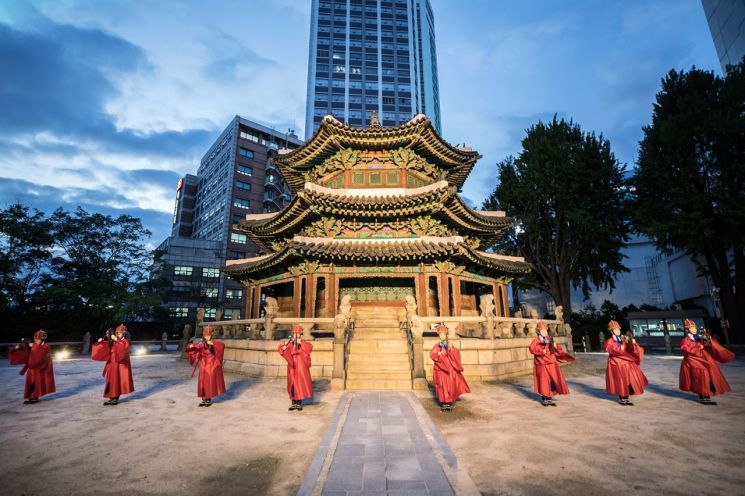
The cultural heritage approaches the public as a space for healing and leisure amid the prolonged COVID-19 pandemic that has exhausted the nation.
The Cultural Heritage Administration and the Korea Cultural Heritage Foundation announced on the 26th that they will conduct a "Cultural Heritage Visit Campaign" to promote public interest and visits to cultural heritage sites. On the afternoon of the same day, a proclamation ceremony was held at Hwangudan in Sogong-dong, Jung-gu, Seoul, to renovate cultural heritage sites as spaces for the public. The slogan is "Feel the REAL KOREAN HERITAGE." The plan is to rediscover the value of our heritage and highlight its attractions such as rest, tourism, and healing.
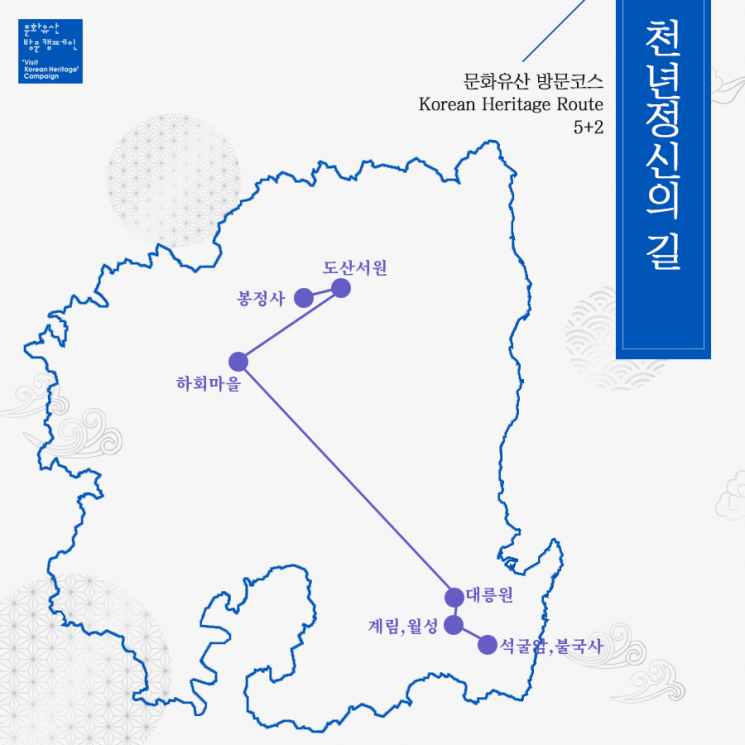
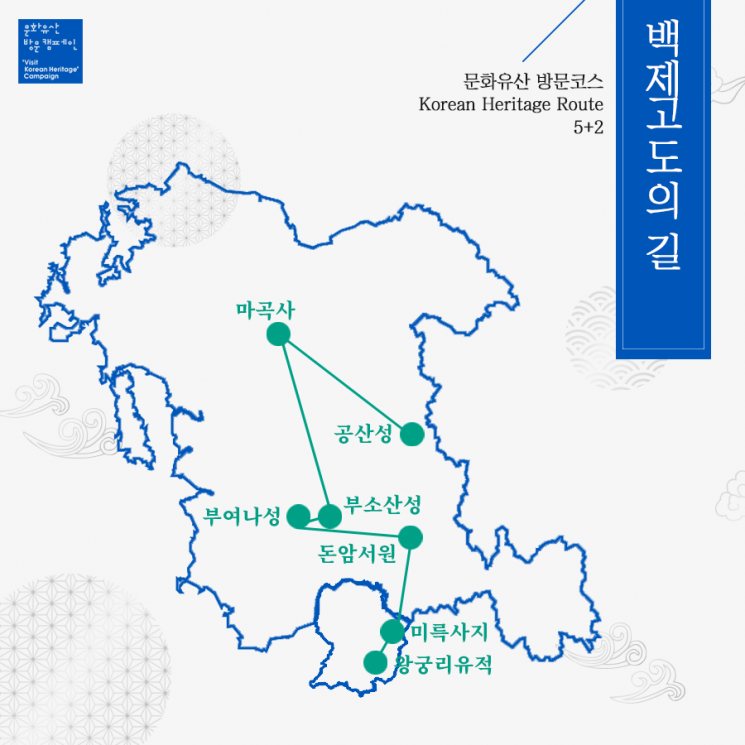
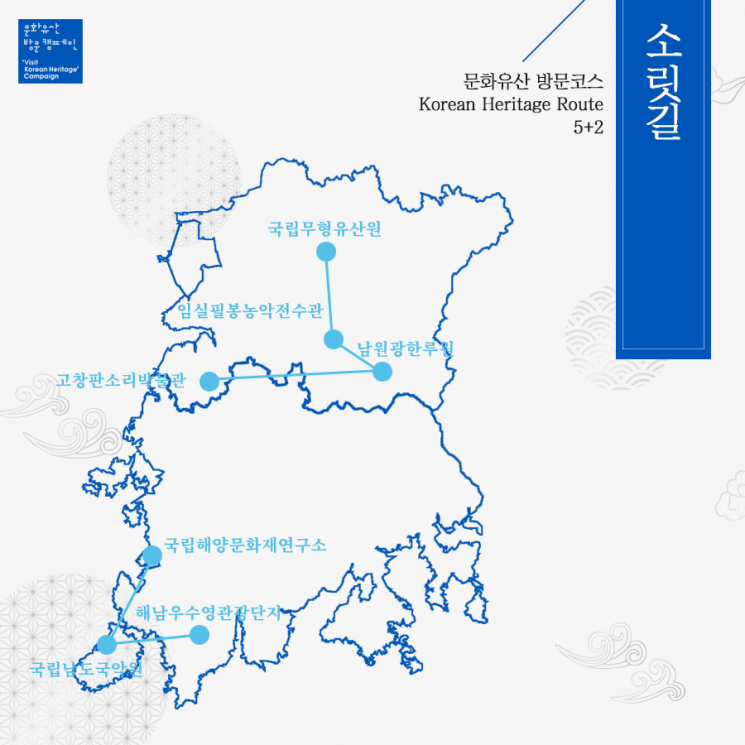
Most of the sites are outdoor cultural heritage locations. They propose "Cultural Heritage Visit Courses" encouraging people to enjoy leisure while practicing "social distancing in daily life" for two or three days. Seven courses called "The Paths of Korean Cultural Heritage" were prepared, centered on World Heritage and Intangible Cultural Heritage, considering thematic similarities and regional proximity. These courses combine cultural heritage tourist sites that are widely known through history books, broadcasts, and other media but surprisingly have few visitors.
These include ▲The Path of Millennium Spirit (Gyeongju, Andong) ▲The Path of Baekje Ancient Capitals (Gongju, Buyeo, Iksan) ▲Soritgil (Jeonbuk, Jeonnam, and Intangible Cultural Heritage) ▲The Path of Folklore and Nature (Jeju) ▲The Royal Path (Seoul, Incheon, Gyeonggi, the basic courses) ▲The Path of Seowon (Korean Confucian Academies) ▲The Path of Practice (Korean Mountain Monastic Temples, the thematic courses).
They will connect with festivals held in the regions where the cultural heritage sites are located and prepare various programs to increase accessibility. An official said, "We plan to produce 'Cultural Heritage Visit Maps and Guide Books' containing transportation options, nearby attractions, and accommodation information for each location and provide them at tourist information centers nationwide and online."
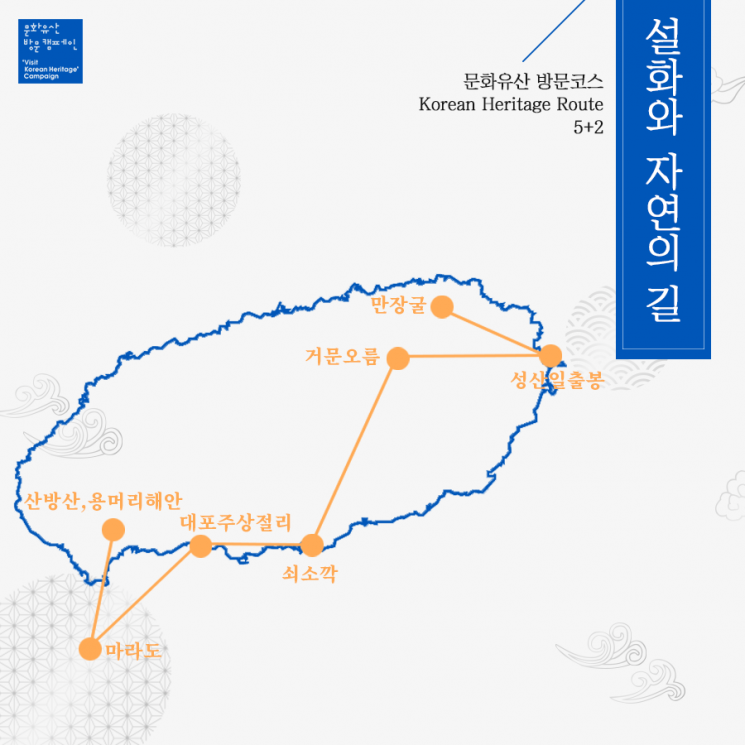
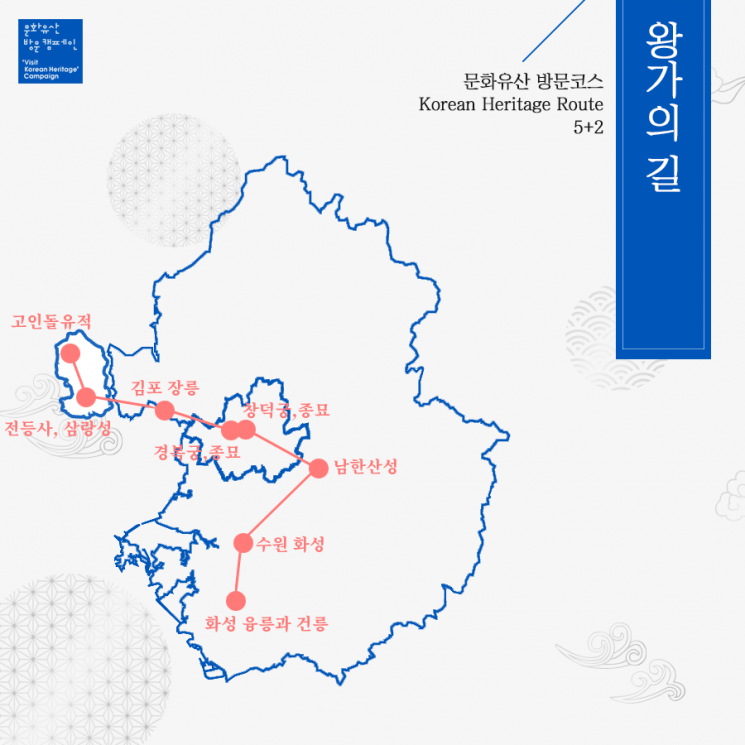
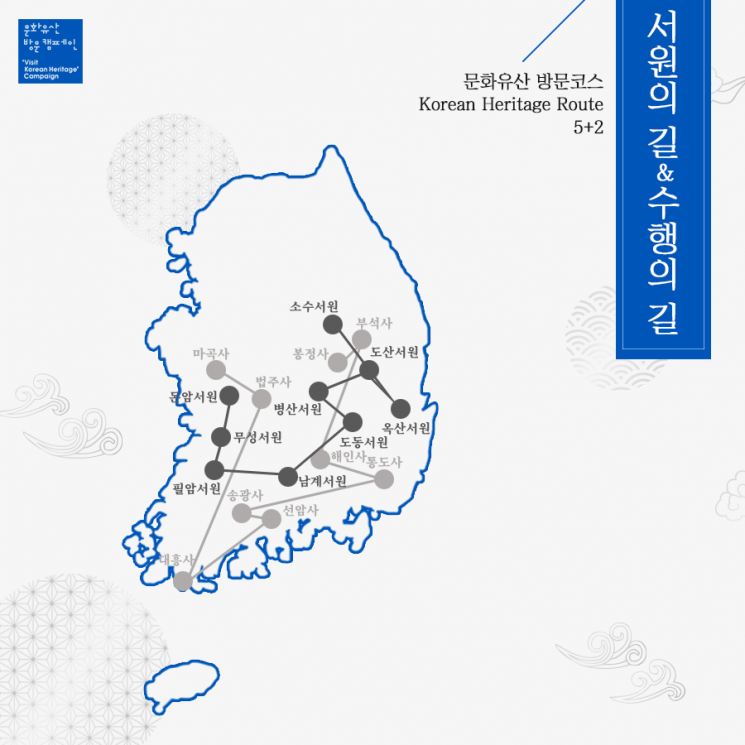
Separately, the Cultural Heritage Administration will also carry out five special projects and seven linked projects. The five special projects are special events held against the backdrop of World Heritage sites. These include "Korea On Stage," a hanbok fashion show and music performances held three times at Hwaseong Fortress in Suwon (late July, mid-October, late October), the "World Heritage Festival" (July to September), the "Royal Culture Festival" (October 10?18 at Gyeongbokgung, Changdeokgung, Changgyeonggung, Deoksugung, Gyeonghuigung), "My Cultural Heritage Travelogue" (July), and the distribution of "Cultural Heritage Cards and Stamp Books" (June). The "World Heritage Festival" will be held sequentially at Korean Seowon (July 4?20), Gyeongbuk (July 31?August 29), and Jeju Island (September 4?20).
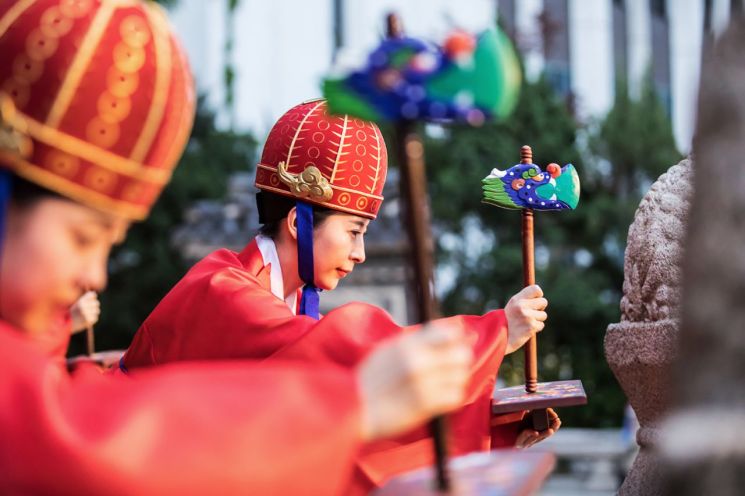
The seven linked projects include the "Intangible Cultural Heritage Exhibition and Performance" held at the National Intangible Heritage Center in Jeonju, the "Cultural Heritage Night Tour" enjoyed at night (36 locations including Gongju), the "Cultural Heritage Festival and Night Experience" held at palaces and Hyeonchungsa Shrine (such as the Changdeokgung Moonlight Tour), "Intangible Heritage Festivals and Performances," "Special Cultural Heritage Exhibitions," "Public Openings of Cultural Heritage Excavation and Restoration Sites" (10 excavation sites and 30 restoration sites), and the "Joseon Royal Tombs Cultural Heritage" event (September 26?October 25).
The Cultural Heritage Administration will operate a dedicated website from mid-next month to provide detailed information about the "Cultural Heritage Visit Campaign." It plans to offer various visit video contents and communicate with tourists in real time through social media channels (Cultural Heritage Administration and Cultural Heritage channels). Jung Jae-sook, the head of the Cultural Heritage Administration, said, "We hope this will be an opportunity to heal the hearts of the people exhausted by COVID-19 and to experience enjoyable cultural life."
© The Asia Business Daily(www.asiae.co.kr). All rights reserved.



















