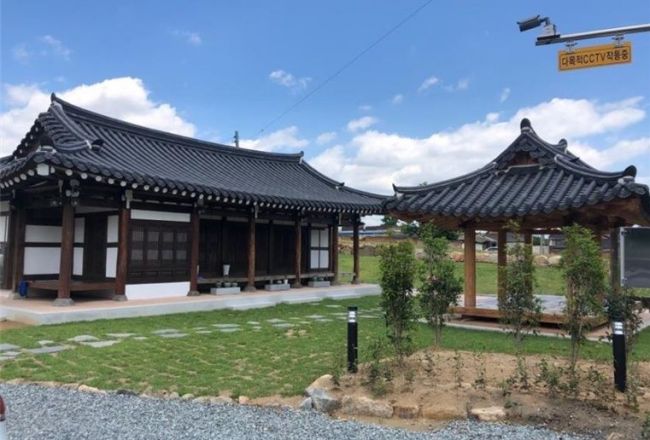
[Asia Economy Honam Reporting Headquarters Reporter Kim Yukbong] Naju City, Jeollanam-do (Mayor Kang In-gyu) announced on the 25th that ‘Naju Sincheong’ has been reborn as a new cultural space for the succession and creation of regional traditional culture in the 21st century.
On the same day, the city held an opening ceremony for the Jeollado Sound Garden Naju Sincheong Cultural Center at the Naju Nabilella Culture Center.
The event consisted of an academic forum on the theme of ‘The History and Value of Naju Sincheong,’ followed by Part 1 Jisinbalgi (Geumseonggwan - Seoseongmun - Naju Sincheong Cultural Center), and Part 2 the opening ceremony.
The Part 2 opening ceremony proceeded with congratulatory performances, progress reports, opening and congratulatory speeches, followed by the donation of a gayageum by the late Im Dong-seon, a holder of the Samhyeon Yukgak skill from Naju, a lecture on Naju Pansori, appreciation of high-pitched Pansori recordings by a Naju master singer, and an unveiling ceremony in sequence.
Sincheong (神聽) was an organization formed by male shamans (巫歌) for mutual support and education of juniors, serving as a space to practice and transmit performing arts.
It existed in large counties and districts in the Jeolla region centered on Naju, including Hwasun, Jangheung, Haenam, Jindo, and Yeosu, and most of the traditional arts of the Namdo region such as Samhyeon Yukgak, Pansori, and Sanjo, which continue to this day, were developed and passed down by Sincheong members.
The establishment period of Naju Sincheong is presumed to be before the 19th century, based on documents (Seonsaengan) of Naju Sincheong created in 1800 (the 24th year of King Jeongjo), and like other Sincheong groups in the Namdo region, it is known to have been disbanded during the Japanese colonial period.
Naju Sincheong notably produced key figures of the flourishing Pansori era, such as the eight master singers led by Jeong Chang-eop in the late Joseon period, royal court clown Jeong Jae-geun, and the modern five master singers including Kim Chang-hwan, thus blossoming the Seopyeonje style of Pansori.
The history of such Naju artists continued into the modern era.
Many masters and master singers, including Jeong Gwang-su, Korea’s first Important Intangible Cultural Asset of Pansori, An Gi-ok of Gayageum Sanjo, Jeong Nam-hee, An Chae-bong of Sogo dance, and Kim Gye-hwa of Gyobang Gutgeori dance, were all produced in the Naju region.
The construction of the Naju Sincheong Cultural Center was prepared as part of the Jeollado Millennium Garden project promoted together with Jeollanam-do to commemorate the thousand years of Jeollado.
The city restored the Naju Sincheong Cultural Center by relocating traditional old houses located in the original downtown area as a space to reflect on the footsteps of Sincheong artists who blossomed Namdo arts and to succeed and create traditional culture.
The official name is ‘Jeollado Sound Park Naju Sincheong Cultural Center,’ located at 72-6 Gyodong, Naju City, on a site of 452㎡ (total area 82㎡), consisting of two hanok buildings (one exhibition/performance hall and one pavilion).
The city plans to utilize the cultural center as a space for the transmission of Jeollado sound culture including Pansori, Changgeuk, Sinjo, and various performing arts experiences.
In particular, various programs such as the humanities concert ‘Naju Sound Pan,’ a ‘Master Class’ for traditional music majors, and a ‘Pansori Culture Class’ for Pansori enthusiasts will be held.
Mayor Kang In-gyu said, “Naju Sincheong was a cradle of Namdo arts, producing many master artists and master singers in the late Joseon period and leading the flourishing era of Pansori. The Naju Sincheong Cultural Center will be a hub of the Namdo Cultural Renaissance that promotes and enjoys Jeollado sound culture to the world.”
© The Asia Business Daily(www.asiae.co.kr). All rights reserved.
![A Woman Who Jumps Holding a Stolen Dior Bag... The Mind-Shaking, Bizarre Con of a "Human Knockoff" [Slate]](https://cwcontent.asiae.co.kr/asiaresize/183/2026021902243444107_1771435474.jpg)
















