Spread of a Society Prioritizing the Self... Work-Life Balance and Individualism Culture
4 out of 10 Office Workers Say "I Am a Voluntary Outsider"
Experts Say "Young People Are Adapting as Society Changes"
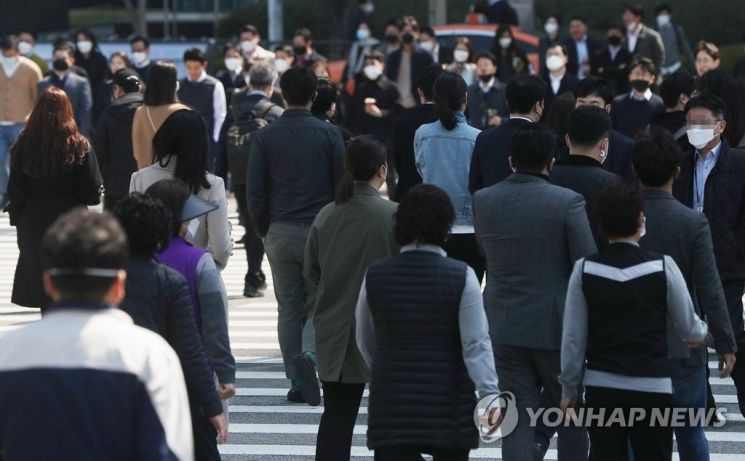
[Asia Economy Reporter Kim Ga-yeon] "Isn't it enough to just do the work? Why do we have to build friendships?"
A (28), an office worker in Gangnam, Seoul, said, "I don't understand why the perception of 'voluntary outsider' is negative when it doesn't interfere with work."
A said, "'Outsider' doesn't mean staying silent all day. It's natural to do what needs to be done and cooperate with others when necessary," adding, "It's just that I don't want to spend time with colleagues during breaks or after work. Spending time and money together doesn't necessarily improve work quality."
Recently, as the millennial generation in their 20s and 30s (born from the early 1980s to early 2000s) has actively entered the workforce, the atmosphere within companies is also changing. Characteristics of millennials such as 'individualism,' 'work-life balance (Work and Life Balance) pursuit,' and 'horizontal relationships' are spreading within workplaces.
As this social atmosphere prioritizing oneself expands, more office workers are voluntarily choosing to be 'outsiders' (Assa).
However, some have expressed dissatisfaction, saying this attitude lowers work efficiency. They point out that communication breakdowns can cause problems in information sharing and collaboration, hindering smooth work processes.
According to a survey, 4 out of 10 office workers consider themselves 'voluntary outsiders.'
On the 13th, job portal Saramin surveyed 1,314 office workers on the 'Status of Voluntary Outsiders in the Workplace,' and 44.1% of respondents answered that they are 'voluntary outsiders.' By age group, 44.4% in their 20s, 49.5% in their 30s, 39.1% in their 40s, and 28.9% aged 50 and above, with particularly high rates among the 20s and 30s millennial generation.
Respondents cited their outsider behaviors as 'leaving work immediately after finishing tasks and having personal time' (77.9%), 'not caring about or paying attention to office gossip' (34%), and 'enjoying breaks alone with coffee or smoking' (31.6%).
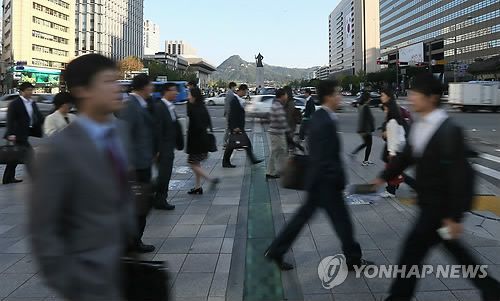
On the other hand, some office workers criticized these behaviors as stemming from individualism and selfishness.
B, a worker in their 40s, said, "Honestly, who likes to deliberately take time to build friendships at work? But everyone knows that maintaining at least minimal relationships makes work life smoother, so they attend gatherings without skipping them. In that situation, if someone just withdraws alone, I don't think anyone views that behavior positively."
According to the earlier survey, 2 out of 10 respondents who identified as 'Assa' said they had experienced disadvantages in their work life due to their behavior. They cited 'not receiving important information' (56.6%), 'lack of cooperation in work' (31.9%), and 'disadvantages in performance evaluations' (31%) as the disadvantages they faced.
Experts analyze this as a reflection of societal changes rather than just an individualistic culture.
Professor Lee Dong-gwi of Yonsei University's Department of Psychology said, "With the disappearance of the concept of a lifelong company, there is an influence that one does not necessarily have to be an 'insider.' It is an era where lifelong occupation is more important than lifelong employment. Because the future is uncertain, self-development has become important."
Professor Lee explained, "Maintaining relationships also costs a lot, so rather than forming relationships at work, how to develop oneself after work may be more in line with current social culture. This is not just a matter of values being good or bad or saying 'young people are too individualistic,' but rather a reflection of changing social trends and the process of young people adapting."
© The Asia Business Daily(www.asiae.co.kr). All rights reserved.


















