'Representative Pigeon' Cho Dong-chul, Former BOK Monetary Policy Committee Member, Anmin Forum Seminar
"Fiscal Policy Has Done Enough... Monetary Policy Should Be Bolder"
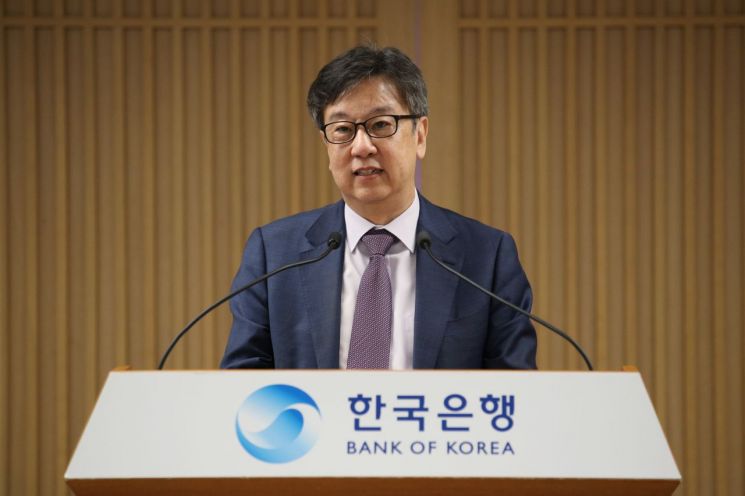
"Since Korea's base interest rate is 0.75% per annum, there is still room. People worry about the effective lower bound, but I have never mentioned the effective lower bound. There are concerns that lowering interest rates further might cause inflation, but given the current situation, wouldn't it actually be better if inflation occurs?"
Professor Cho Dong-chul of the KDI School of International Policy, who recently stepped down from the Bank of Korea's Monetary Policy Committee, stated that additional rate cuts by the Bank of Korea are necessary and that even negative interest rates should be considered. On the 22nd, at the Anmin Policy Forum breakfast seminar themed "South Korea's Macroeconomic Policy Before and After the COVID-19 Pandemic," he said, "In times of crisis, macroeconomic policies such as fiscal and monetary policies are effective, and among them, monetary policy should be more actively implemented." He added, "Some argue that the U.S. might also need negative interest rates, and since Korea's base rate is 0.75% per annum, there is still room for cuts." He further noted that after lowering rates to near zero, Korea should consider unconventional monetary policies, namely quantitative easing (QE). Professor Cho has been recognized as a representative dove (monetary easing advocate) who consistently voiced minority opinions advocating for rate cuts aligned with Korea's low inflation environment during his tenure as a monetary policy committee member.
Professor Cho argued that macroeconomic policy should take precedence in situations like COVID-19. He said, "In rapidly changing situations, macroeconomic policies that indiscriminately affect the entire economy should be flexibly utilized," adding, "If micro-policies such as temporarily extending loan maturities only for small and medium-sized enterprises are implemented because the economic situation is poor, it undermines trust in the government." He likened intervening with micro-policies to a proctor overlooking cheating because the temperature dropped sharply on the day of the college entrance exam. At such times, macroeconomic policies help maintain the average performance of students. Among macroeconomic policies, he evaluated that fiscal policy has already been implemented to the extent possible. He said, "Fiscal policy is difficult to reverse once implemented, whereas monetary policy is relatively easier to adjust, so it should be actively utilized."
Currently, Korea's base interest rate has fallen to 0.75% per annum. If the Monetary Policy Committee cuts rates further at the end of this month, it will drop to 0.5% per annum. Some express concerns that excessive rate cuts could cause side effects, such as fueling future inflation, and since Korea is not a key currency country, a decline in interest rate attractiveness could lead to capital outflows. Professor Cho said now is not the time to worry about side effects. He explained, "It is true that flooding money causes inflation, but currently, preventing deflation is necessary," adding, "If money is injected and inflation occurs, it is actually a 'thank you' situation." He also said, "Concerns about capital outflows from Korea are excessively exaggerated," noting, "It is argued that as a non-key currency country and a small open economy, the impact could be significant, but excluding India and China, Korea's economic size ranks sixth worldwide, so it is not a small economy."
Professor Cho evaluated Japanese Prime Minister Shinzo Abe's negative interest rate monetary policy as bold and noted that Japan has been escaping deflation since Abenomics. He said, "Although Japan has not yet achieved its 2% inflation target, Japan's inflation rate has recently been higher than Korea's," adding, "Japan exemplifies the interaction between fiscal and monetary policies." However, he cautioned against falling into deflation like Japan. He said, "Deflation hinders national debt management from the tax revenue perspective, so considering medium- to long-term fiscal soundness, policies should aim to prevent deflation."
© The Asia Business Daily(www.asiae.co.kr). All rights reserved.