Abolition of the 'Rate Approval System' in the Hands of the Judiciary Committee on the 19th
Introduced in 1991, It Has Served as a Rate Brake for the Top Operator
Calls for Abolition Arise as Effective Competition Is Established and 'Collusion' Harms Increase
Brake Can Be Applied Through the Suspension Reporting System Alone
[Asia Economy Reporter Koo Chae-eun] The tariff approval system, introduced in 1991, is on the verge of being abolished after 30 years. The approval system, which has served as a "brake" on the telecom fees of the market leader, is set to disappear, replaced by a reserved notification system with a "minimum braking device." This proposal is scheduled to be discussed today at the National Assembly's Legislation and Judiciary Committee.
Civil society groups argue that "abolishing the tariff approval system → increase in telecom fees → consumer harm" is the inevitable chain of events. However, the industry believes that the approval system actually hinders competition among the three major companies and encourages collusion, making it difficult to launch diverse tariff plans. They argue that simplifying procedures to promote price competition, while retaining the authority to "reject" under the reserved notification system, can prevent telecom fee hikes.
"Just follow the market leader" Similar tariff plans among the three companies... The cause is the 1-2 month approval system

According to the industry on the 19th, the amendment to the Telecommunications Business Act, including the tariff approval system, is set to pass the Legislation and Judiciary Committee today and the plenary session of the National Assembly on the 20th. The tariff approval system, which has been in place until now, requires telecom companies to obtain prior government "permission" before launching new tariff plans. SK Telecom, the market leader in wireless services, must submit its tariff terms to the Ministry of Science and ICT (MSIT) and receive prior approval. However, there have been continuous criticisms that this system reduces incentives for price competition, discourages the launch of new services, and fosters collusion.
During the approval review period, the baseline tariff plans of the market leader become known, and the second and third-ranked companies follow suit, solidifying a structure of "collusion without explicit agreement." The lengthy approval process also makes it difficult for the market leader to quickly launch various tariff plans tailored to consumer age groups or preferences.
Since four years ago in 2015, the "5:3:2" oligopoly structure among SK Telecom, KT, and LG Uplus has been broken, and fierce competition for subscribers has ensued, leading to claims that the prior tariff regulation applied only to the market leader is unnecessary. The original purpose of the tariff approval system?to protect new entrants and establish effective competition?has already been achieved. According to the "March Wireless Communication Service Subscription Statistics" released by MSIT, the 5G market shares are evenly distributed compared to the early days of the telecom market: SK Telecom 45%, KT 30.2%, and LG Uplus 24.73%.
Rejection possible under reserved notification system... Currently implemented by KT and LG Uplus
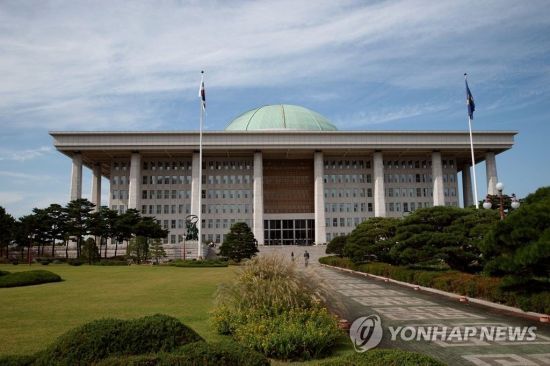
Civil society groups emphasize that without the approval system, the three major telecom companies would have no regulatory authority to block the launch of expensive tariff plans. However, experts say that since the amendment includes a reserved notification system rather than a complete notification system, it can prevent sudden sharp increases in fees caused by the abolition of the approval system. The "reserved notification system" included in the amendment reduces procedures to stimulate price competition while retaining a braking device that allows rejection within 15 days. KT and LG Uplus, the second and third largest players in the wireless market, are already operating under the notification system.
Lee Sang-sang, senior expert at the Democratic Party, pointed out, "The approval system actually blocks price competition among operators and causes tariff collusion where other companies follow the market leader's approved tariffs, reducing consumer welfare, so moving toward abolition is reasonable." Professor Shin Min-soo of Hanyang University's Business School explained, "Granting approval to retail tariffs is unprecedented and should be viewed as violating market competition principles."
© The Asia Business Daily(www.asiae.co.kr). All rights reserved.



















