[Monthly Defense Times Editor-in-Chief An Seungbeom] With the delivery of the stealth fighter F-35A to the Republic of Korea Air Force, South Korea has joined the ranks of stealth fighter-owning nations. The ROK Air Force plans to sequentially receive 40 units by 2021 and deploy them in active service. The F-35A, produced by the American company Lockheed Martin, has a maximum speed of Mach 1.8 and a maximum range of approximately 2,200 km, with a combat radius of about 1,100 km.
The F-35 is a fully networked 5th generation multirole fighter equipped with advanced stealth capabilities, sensor fusion, and data link performance. In addition, it is known to have excellent detection capabilities by carrying a high-performance radar that can simultaneously identify multiple airborne targets located about 150 km ahead.
However, to maximize the potential performance of the F-35 fighter in both air-to-air and air-to-ground operations, armaments that harmonize with the aircraft’s own capabilities are required. For the F-35 to demonstrate its maximum performance, especially in air superiority missions, air-to-air weapons capable of striking at longer ranges suitable for the radar’s performance are necessary.
The representative air-to-air missile Meteor has already been adopted by the Royal Air Force for the F-35. It is a networked missile through data link that maximizes the F-35’s situational awareness capabilities. The Meteor missile belongs to the high-performance BVRAAM (Beyond Visual Range Air-to-Air Missile) category. By applying ducted rocket technology, the Meteor missile is the first missile to extend the range of current medium-range missiles, which have a maximum range of about 50 km, to over 200 km. It is equipped with impact and proximity fuzes and carries a fragmentation warhead that maximizes lethality upon impact. It is also evaluated to be effective even in harsh electronic warfare environments.
Through the combination of a thrust vectoring ramjet engine and an active radar seeker, the Meteor accelerates toward enemy aircraft, securing a no-escape zone (NEZ) several times larger than that of existing fighters or other beyond visual range BVR missiles, thanks to its maneuverability and extended range.
The United Kingdom plans to use the Meteor as the primary air-to-air weapon for the F-35, and Japan, which is acquiring 42 F-35s, is also promoting Meteor integration. Although the main missions of each fighter may vary depending on the aircraft’s performance, armament, and operational concepts, the F-15K is expected to remain South Korea’s main fighter for several years, at least until the full delivery and operational deployment of the F-35, or possibly even beyond that point.
The F-15K is a large twin-engine fighter with two pilots onboard, capable of a top speed of Mach 2.3 and a combat radius of about 1,800 km, covering Dokdo as well as the entire Korean Peninsula. It is equipped with an Infrared Search and Track system (IRST), the latest navigation and targeting system Tiger Eyes, a Joint Helmet Mounted Cueing System (JHMCS), and an AN/APG-63(V1) radar capable of tracking up to 10 targets simultaneously.
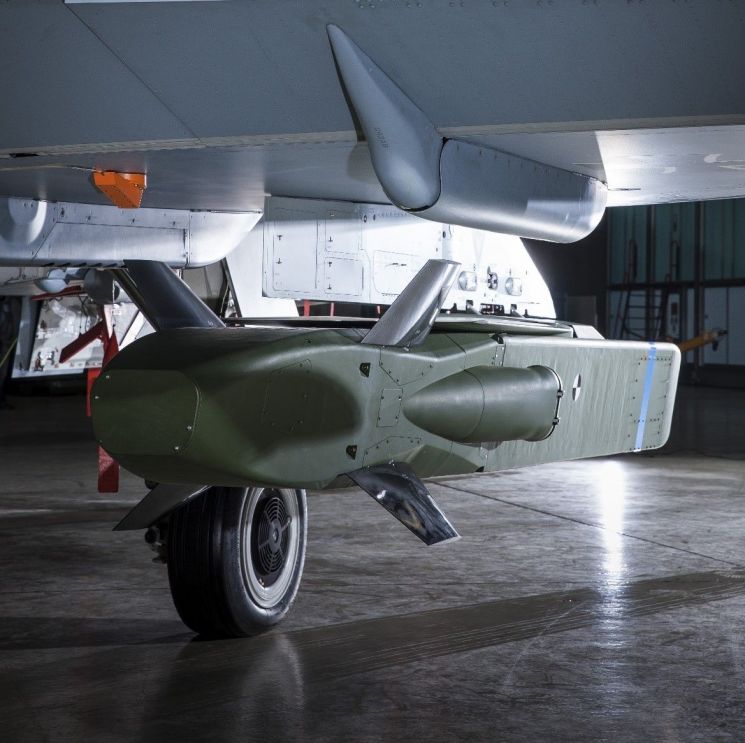
The F-15K primarily serves as a strategic strike fighter performing attack and strategic missions, carrying the 3,000-pound TAURUS long-range air-to-ground cruise missile. The TAURUS KEPD 350K has a range exceeding 500 km, making it advantageous for long-range operations.
It is also equipped with a delayed fuze that recognizes empty spaces in four stages to delay detonation, allowing its 480 kg warhead to accurately reach the target. The precision-guided TAURUS missile is equipped with triple advanced navigation systems (IBN image-based navigation, TRN terrain reference navigation, and MIL-GPS military GPS supported by an INS inertial navigation system), enabling it to strike targets without being affected by enemy GPS attacks or jamming.
© The Asia Business Daily(www.asiae.co.kr). All rights reserved.

















