Impact of COVID-19... Severe 'Employment Drought'
1 in 3 Job Seekers "Stress Due to Difficulties in Job Hunting"
Experts "Efforts Needed to Block Negative Thoughts, Such as Light Physical Activity"
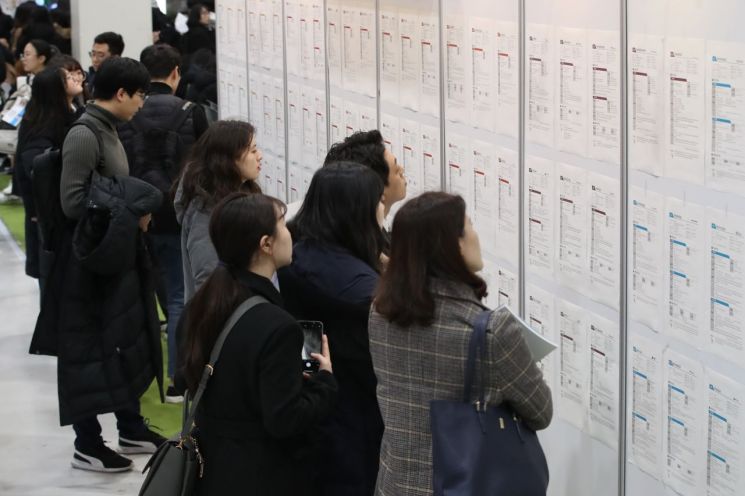 On January 8th, job seekers visiting the 2020 Public Institution Recruitment Information Fair held at the aT Center in Seocho-gu, Seoul, are looking at the recruitment information bulletin board. Photo by Yonhap News
[Asia Economy Reporter Kim Ga-yeon] "When will COVID-19 really end?", "Will I be able to get a job?"
As the novel coronavirus infection (COVID-19) situation prolongs, scheduled recruitment schedules and qualification exams are being canceled or postponed one after another.
As a result, job seekers (chwijunsaeng) are sighing more often. Job seekers have expressed frustration that their schedules have been disrupted due to the large-scale COVID-19 outbreak lasting four months since January, and they are feeling depressed, worried that the job market will become even more difficult to enter.
Companies that had postponed recruitment due to concerns about COVID-19 infection have recently resumed hiring through non-face-to-face interviews. However, some companies still lack the capacity to hire, and due to concerns about infection spread during the selection process, recruitment schedules have been postponed multiple times, so the "job drought" continues.
Moreover, with the spread of COVID-19 from the Itaewon club in Seoul, job seekers’ sighs have increased even more.
A (26) years old, who is preparing for employment after graduating from university, said, "Recently, job postings have been appearing little by little, so I thought the employment market was recovering a bit, but then a large-scale infection from the club outbreak occurred," adding, "Of course, if companies are affected, they will not hire or will reduce the scale, and if that happens, doesn't that mean my chances of getting a job will also decrease?"
He continued, "The qualification exams I was preparing for have all been postponed. Even if recruitment resumes, I am worried that competition will intensify as more job seekers gather at once," and added, "Because of COVID-19, my part-time work hours have also decreased, making it difficult to cover living expenses, so I really feel hopeless about when I can get a job."
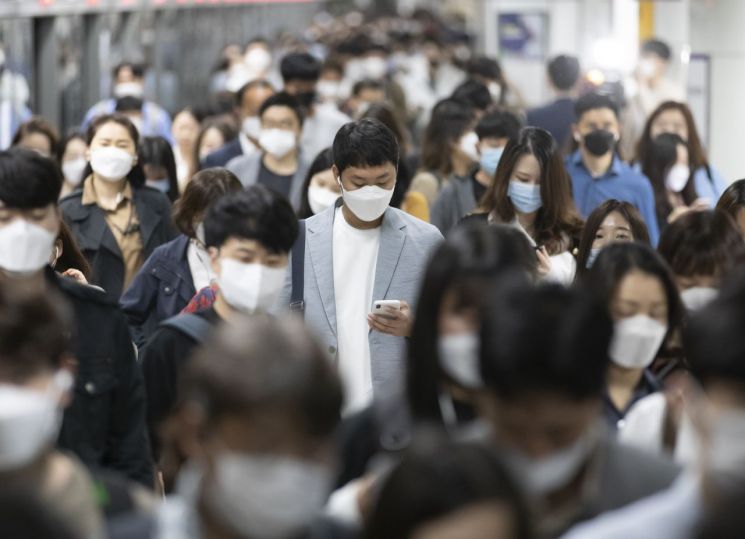 On the morning of the 13th, citizens wearing masks are leaving Gwanghwamun Station in Seoul. Photo by Yonhap News
One in three university students and job seekers reported stress due to difficulties in job hunting activities.
According to a survey conducted by the job portal JobKorea on the 28th of last month targeting 5,294 university students and job seekers about "stress situations due to COVID-19," 36.7% of respondents (multiple answers allowed) said, "I am stressed due to economic difficulties." Also, 32.1% said, "With the disappearance of the public recruitment season, other job hunting activities have also become difficult."
They also reported experiencing symptoms such as depression and lethargy due to stress. Respondents cited symptoms caused by stress including "feeling continuously depressed without reason" (38.9%), "loss of motivation and lethargy" (21.3%), nervousness (17.5%), headaches (9.7%), and insomnia (9.2%).
Research results have also shown that job seekers may suffer long-term negative effects due to the COVID-19 crisis.
According to the report "Current Status and Policy Suggestions for Youth Employment" released by the Korea Development Institute (KDI) on the 6th, employment shocks caused by COVID-19 are expected to become more apparent after the second quarter.
Researcher Han Yosep analyzed in the report, "Since February, youth employment has rapidly contracted, especially in some service industries, due to the direct impact of the COVID-19 crisis," adding, "The impact of the spread of infection worldwide, including Europe and the United States, after mid-March has not yet been reflected, and employment shocks are expected to become more pronounced after the second quarter."
He continued, "The negative effects of the foreign exchange crisis or the global financial crisis on youth employment have been found to last a lifetime, lasting more than 10 years," emphasizing the need to prepare supplementary measures for unemployed youth who are easily excluded.
Experts suggested that communication with people around and light physical activity are necessary to relieve stress.
Professor Kwak Geum-ju of the Department of Psychology at Seoul National University advised, "Although it is difficult, if symptoms are mild, efforts to stop repetitive negative thinking or rumination are necessary," adding, "When negative thoughts arise, it is important to divert attention or engage in simple physical activities such as cooking, light calisthenics, or exercise."
Professor Kwak added, "It is important to achieve even small plans like cleaning daily. Also, sharing your story with others is important," but cautioned, "However, if the pain is severe enough to harm oneself or others, or if symptoms such as insomnia, lethargy, or eating disorders interfere with daily life, professional help should be sought."
© The Asia Business Daily(www.asiae.co.kr). All rights reserved.
![Clutching a Stolen Dior Bag, Saying "I Hate Being Poor but Real"... The Grotesque Con of a "Human Knockoff" [Slate]](https://cwcontent.asiae.co.kr/asiaresize/183/2026021902243444107_1771435474.jpg)

















