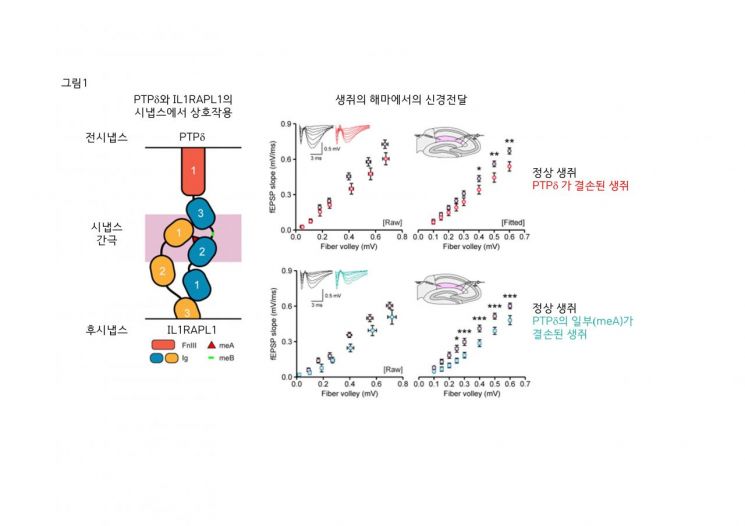
 Interaction between PTPδ Protein and IL1RAPL1 Protein in Synapses and Regulation of Neurotransmission
[Asia Economy Reporter Junho Hwang] Domestic researchers have identified a protein that regulates sleep by analyzing the activity between synapses in our brain. The research team interpreted this as finding a clue that could enhance the understanding of the pathogenesis of brain diseases, including sleep disorders. On the 14th, the Institute for Basic Science (IBS) announced that the research team led by Director Eunjoon Kim of the Synaptic Brain Disease Research Group elucidated the relationship between synapse formation, the basic unit of neurotransmission, and sleep regulation.
The research team discovered that a protein in synapses, which transmit signals between nerve cells in the brain, affects sleep regulation. Synapses are junctions where nerve cells meet other nerve cells or different nerve cells. They consist of presynapses and postsynapses; neurotransmitters released from the presynapse are detected by neurotransmitter receptors on the postsynapse, enabling neurotransmission. The team identified that the presynaptic adhesion protein (PTPδ) interacts with the postsynaptic adhesion protein (IL1RAPL1) to form synapses and function to ensure normal sleep. This is the first time the connection between synapses and sleep has been elucidated.
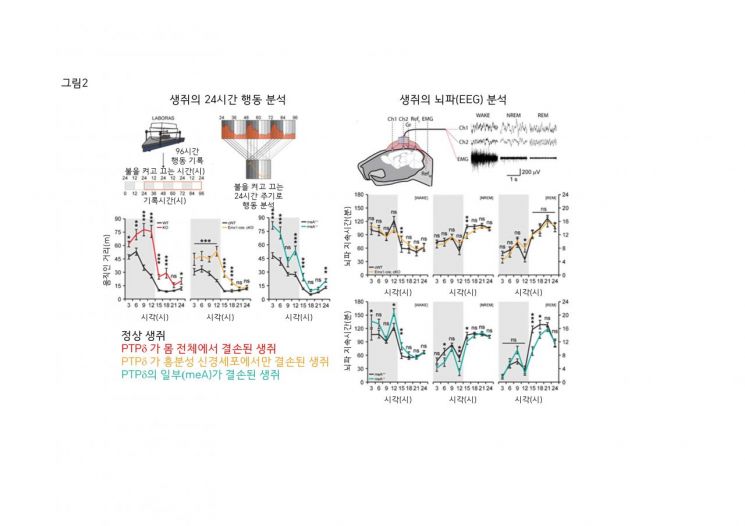
The research team created a mouse model with a complete deletion of the PTPδ protein to observe synapse formation, neurotransmission, and animal behavior. These mice showed reduced synapse formation, dulled neurotransmission in the hippocampus, and abnormal symptoms in sleep regulation. When the meA splice peptide, a part of the PTPδ protein, was deleted, synapse formation decreased and sleep disorders were induced to a similar extent as in the complete PTPδ protein deletion. This indicates that the meA splice peptide plays a crucial role in the interaction between the PTPδ protein and the IL1RAPL1 protein.
To verify whether sleep disorders accompany most neurological brain diseases, the team conducted electroencephalogram (EEG) tests and confirmed that brain waves occurring during deep sleep were reduced in mice with either the complete deletion of the PTPδ protein or the deletion of the meA splice peptide part of the PTPδ protein. Through this, the team concluded that the PTPδ protein is closely related not only to sleep regulation but also to deep sleep (non-REM sleep).
Director Eunjoon Kim stated, "We have revealed that the PTPδ protein is an essential synaptic adhesion protein for synapse formation and normal sleep," adding, "This is expected to aid in understanding the pathogenesis, diagnosis, and treatment of related brain diseases such as sleep disorders like restless legs syndrome, schizophrenia, and attention deficit hyperactivity disorder (ADHD)."
The research results were published last month in the journal EMBO.
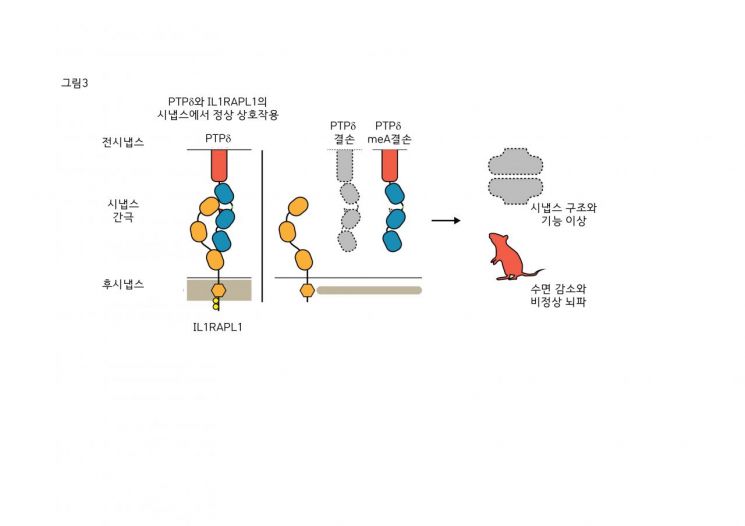 A schematic diagram illustrating that the binding of TPδ protein and IL1RAPL1 protein promotes normal synapse formation and affects sleep and deep sleep.
© The Asia Business Daily(www.asiae.co.kr). All rights reserved.
![User Who Sold Erroneously Deposited Bitcoins to Repay Debt and Fund Entertainment... What Did the Supreme Court Decide in 2021? [Legal Issue Check]](https://cwcontent.asiae.co.kr/asiaresize/183/2026020910431234020_1770601391.png)

















