National Museum of Korea Themed Exhibition 'Joseon, Fighting Against Epidemics'
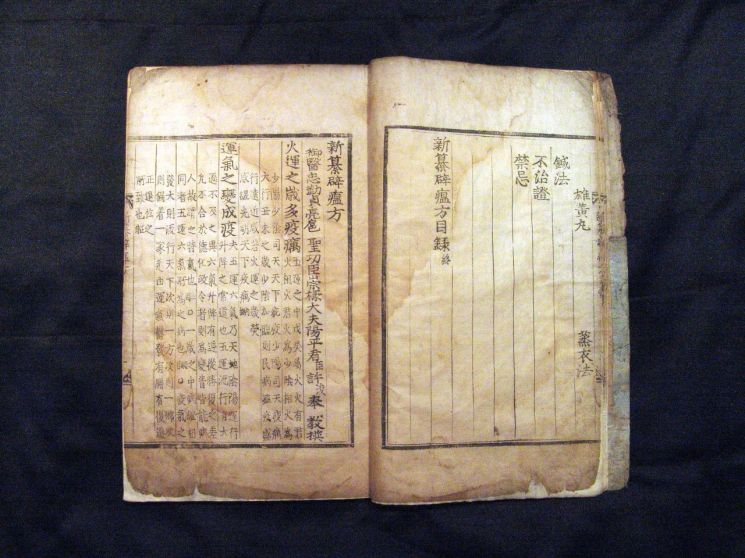
‘Sinchanbyeokonbang (新撰?瘟方·Treasure No. 1087)’ is a medical book compiled by Heo Jun in 1613 under the order of King Gwanghaegun. It contains methods to prevent and treat onyeok (溫疫·typhus infectious disease) that appeared in the 17th century. Onyeok raged throughout Joseon from 1612 to 1623. Heo Jun argued three main causes of the epidemic: changes in natural qi, restless souls, unclean environments, and corrupt politics. He emphasized that the epidemic would end only with benevolent medical practice (仁術) where the community shares the suffering and the ruler’s reflection. This remains true even now amid the chaos caused by the spread of the novel coronavirus infection (COVID-19). A will to overcome fear together is necessary.
The National Museum of Korea is holding a themed exhibition reflecting on how ancestors overcame infectious diseases. It is titled ‘Joseon, Facing Epidemics’ and is held until June 21 in the Joseon Dynasty Room 2 on the first floor of the Medieval and Early Modern Gallery. Twenty-seven items expressing the will to overcome infectious diseases, including ‘Sinchanbyeokonbang,’ are on display. A museum official explained, “Infectious diseases are terrifying fears but also major turning points in human history. This exhibition shows the will of our ancestors who lived through even more devastating epidemics and actively sought to overcome that fear together.”
Another widely known material, comparable to ‘Sinchanbyeokonbang,’ is the ‘Deungjunsimugwadosangcheop (Portrait Album of the Successful Candidates of the Military Examination)’ from 1774. It is a portrait album of eighteen military examination passers. Scars from smallpox (痘瘡) are visible on the faces of Kim Sang-ok, Jeon Gwang-hoon, and Yoo Jin-ha. Smallpox, also called 천연두 (Cheonyeondu) or Mama (??), is an acute infectious disease. Symptoms include chills, headaches, and back pain, along with rashes on the skin and mucous membranes. It spreads through contact with patients and can also be airborne in enclosed spaces. Those who recover from smallpox develop pockmarks?depressed scars where scabs formed on pus-filled areas. These are called ‘eolgeun jaguk (곰보).’ A museum official said, “Smallpox scars are frequently found in Joseon-era portraits, indicating how widespread smallpox was at the time.”
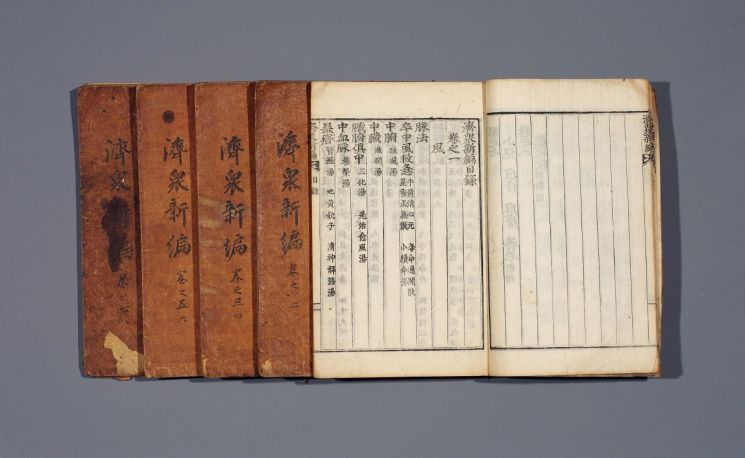
The dreadful power of smallpox can also be inferred from a eulogy written by the Confucian scholar Jeong Gyeong-se, mourning his son who died from smallpox. It vividly conveys the horrors and sorrow of the epidemic. Lee Jae, a leading scholar of the Noron faction, left a poem expressing gratitude for the benevolence and medical skill of a doctor who treated his two grandsons infected with smallpox. The medical level of the time is documented in ‘Jejungsinpyun,’ a comprehensive medical book compiled by royal physician Kang Myeong-gil under King Jeongjo’s order. It systematically organizes medical theories developed after ‘Donguibogam’ and clinical experiences from folk medicine. A museum official said, “In a situation where government-led medical systems were not functioning properly, this new standard medical book combining practicality and expertise was presented to support private medical care.”
© The Asia Business Daily(www.asiae.co.kr). All rights reserved.


















