Domestic and International Meteorological Agencies Predict 50-75% Chance of 'Worst Heatwave on Record' This Summer
Risk of Conflict Between COVID-19 Measures and Heatwave Responses at Cooling Centers and Water Parks
Heat-Related Illnesses Leading to Stroke and Circulatory Disorders... Elderly Particularly Vulnerable
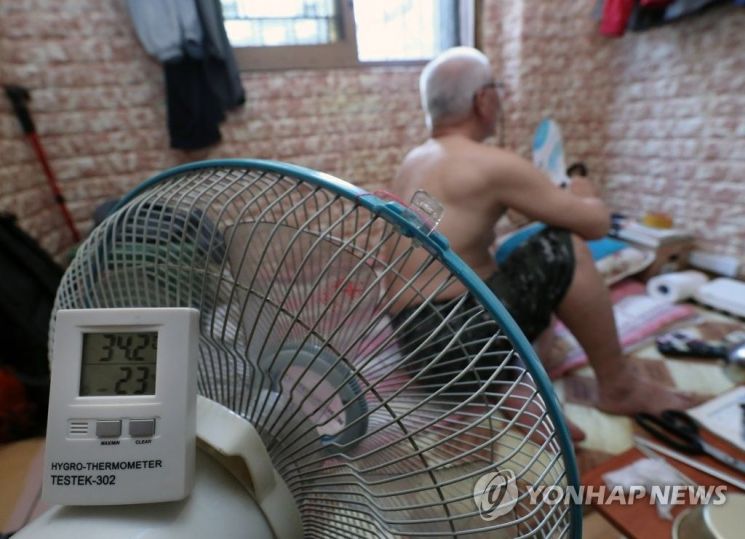 Elderly people living alone and other seniors may be particularly vulnerable to heat-related illnesses caused by heatwaves. / Photo by Yonhap News
[Asia Economy reporters Seunggon Han and intern reporter Juhyung Lim] Amid the lingering risk of a resurgence of the novel coronavirus disease (COVID-19), domestic and international meteorological agencies are predicting the "worst heatwave on record" this year, raising concerns about the health of vulnerable groups such as the elderly.
Heatwave shelters and other cooling facilities should be opened for the elderly who are vulnerable to heat-related illnesses, but there is a possibility that these facilities may not operate smoothly due to the risk of COVID-19 cluster infections.
Experts have suggested that COVID-19 prevention measures and heatwave evacuation plans should be implemented simultaneously, while carefully coordinating the two policies to avoid contradictions.
In March, the U.S. National Oceanic and Atmospheric Administration (NOAA) announced that there is a 75% probability that 2020 will record the highest temperature in observational history and a 99.9% probability that it will rank within the top five highest temperatures. The UK meteorological agency, the Met Office, predicted a 50% probability.
According to NOAA, January was the hottest month on record, and the average temperature from January to March was the second highest after 2016, which experienced unusually high temperatures in the first half of the year due to the El Ni?o phenomenon. If this trend continues, there is a high likelihood that the annual average temperature will surpass that of 2016.
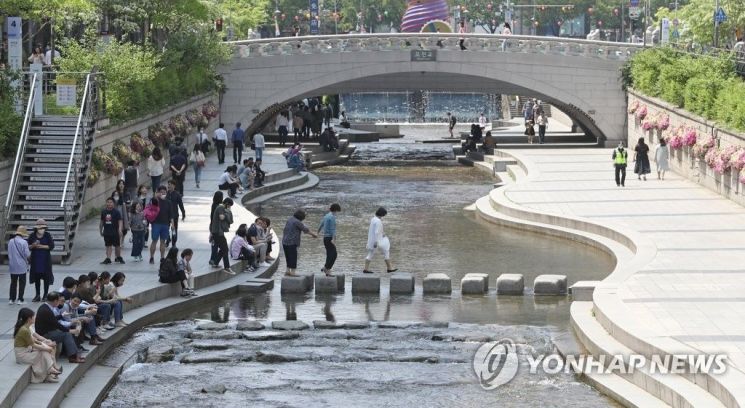 On the afternoon of the 4th, when the highest daytime temperature in Seoul reached 26 degrees Celsius, citizens sat in the shade at Cheonggyecheon in Seoul. / Photo by Yonhap News
South Korea is not exempt from this trend. The Heatwave Research Center at Ulsan National Institute of Science and Technology predicts that this summer’s temperatures will be higher than average, increasing the number of heatwave days, and that abnormal high temperatures will occur from May.
Since May 1, early heat has persisted. In particular, some regions such as Gangwon and Gyeongbuk have set new records for the highest daytime temperatures in early May. Some local governments have also begun preparing early heatwave measures, including installing shade shelters and operating cooling centers.
The problem lies in the potential conflict between heatwave measures and COVID-19 daily quarantine guidelines. Facilities where many users can stay for extended periods, such as cooling centers and water play areas, pose a risk of cluster infections.
Cooling fog devices, which spray fine water particles to lower temperatures and provide a refreshing sensation, may create an environment where virus particles from COVID-19 infected individuals mix with water droplets, facilitating virus spread.
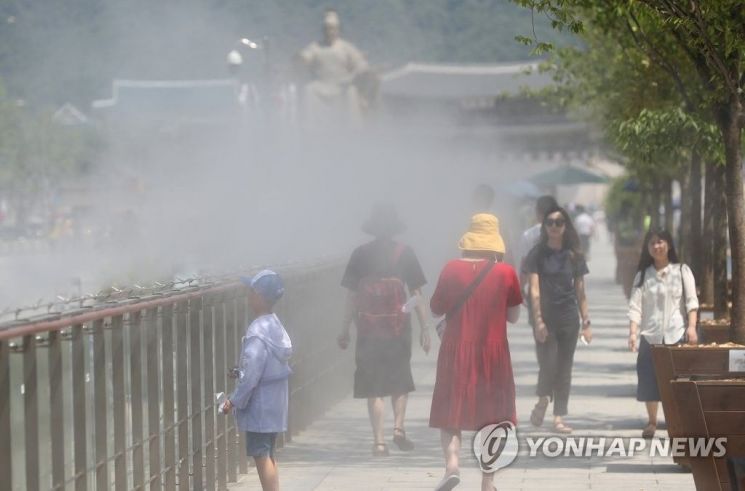 On July 4th last year, citizens were walking along the path where the cooling fog was operating at Gwanghwamun Square in Seoul. / Photo by Yonhap News
Given this situation, there are concerns that related policies may not be properly implemented even during heatwave conditions.
This is especially dangerous for vulnerable groups such as the elderly who are susceptible to heat-related illnesses. Heatwaves can cause heatstroke and sunstroke in the elderly, who are sensitive to temperature changes, and these illnesses can lead to stroke, circulatory disorders, and mental illnesses. Without continuous attention and heatwave response services, the damage among these groups could be greater.
In response, experts have recommended a thorough review to ensure that COVID-19 prevention and heatwave measures do not conflict or contradict each other, and emphasized the need to implement both policies together.
On the 23rd, the Daegu Gyeongbuk Institute released a briefing titled "This Year’s Heatwave Measures Should Be Linked with COVID-19 Prevention," stating, "It is desirable to open heatwave evacuation facilities as much as possible, ensuring good ventilation and securing large cooling centers with spacious areas." They added, "For outdoor group stay facilities, supplementary measures such as promoting the habitual use of personal parasols and providing shared parasol rental services should be developed to minimize risks."
They continued, "Cooling fog devices cannot exclude the risk of COVID-19 virus spread," and "Caution is required to operate such facilities only after scientific verification."
Regarding medical facilities, they advised, "Considering the inclusion of COVID-19 patients and future heatwave patients, difficulties in patient accommodation are expected. Therefore, based on a detailed review of additional medical demands considering the pattern of heat-related illness occurrences, it is necessary to secure spare personnel and equipment in advance."
© The Asia Business Daily(www.asiae.co.kr). All rights reserved.
![User Who Sold Erroneously Deposited Bitcoins to Repay Debt and Fund Entertainment... What Did the Supreme Court Decide in 2021? [Legal Issue Check]](https://cwcontent.asiae.co.kr/asiaresize/183/2026020910431234020_1770601391.png)


















