Japanese Game 'Animal Crossing' Gains Massive Popularity
Long Lines Form to Purchase 'Dongsup'
Conflicting Public Opinions Over Some Not Joining Japan Boycott Movement
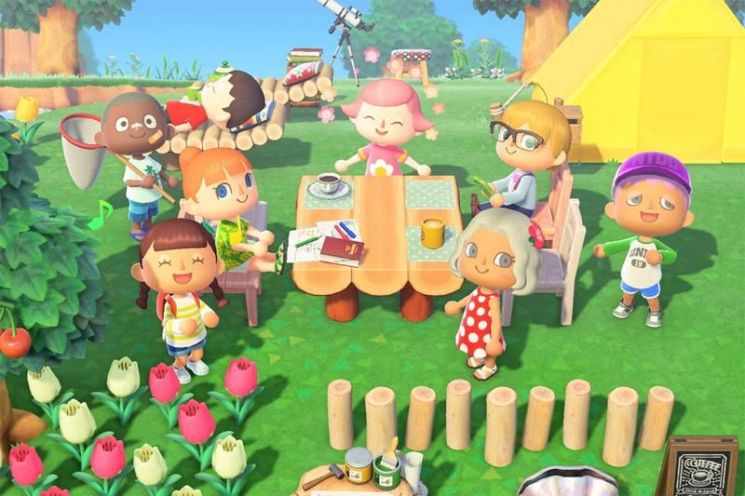
[Asia Economy Reporter Seunggon Han] The conflict surrounding the Japanese game 'Animal Crossing' is intense. Opinions are divided, ranging from accusations that opposing the boycott of Japanese products to the view that enjoying the game is a matter of personal freedom. The game is quite popular domestically, to the point of causing shortages.
The gameplay of 'Animal Crossing' is simple. Users enjoy various hobbies such as fishing and decorating their homes while cultivating their village. It is characterized by easy controls and a chat function that allows interaction with friends or acquaintances. More and more people are connecting with those they actually know in 'Animal Crossing' to enjoy the game together.
Due to this situation, long lines sometimes form to purchase the 'Animal Crossing' game. On the 23rd of last month, a long queue formed from the morning on a weekday at the Sindorim Techno Mart in Guro-gu, Seoul, by people wanting to buy the 'Animal Crossing' game.
Although the 'Animal Crossing' lottery event was scheduled to start at 10:30 AM that day, about 300 people had already gathered before the opening from 9 AM.
Because of this popularity, some online shopping malls are selling the product at more than twice the retail price, and these transactions are thriving. It can be said that there is practically an 'Animal Crossing' craze.
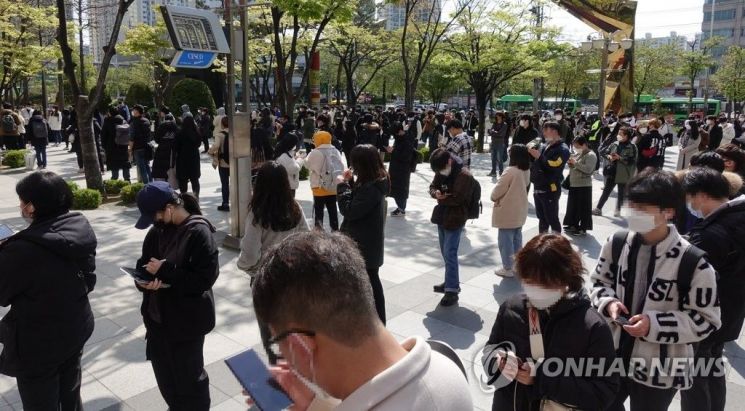 On the morning of the 23rd, citizens lined up in front of Sindorim Technomart in Guro-dong, Guro-gu, Seoul, to enter a lottery for purchasing the Nintendo Switch Animal Crossing edition. [Image source=Yonhap News]
The problem lies in the critical public opinion toward users enjoying 'Animal Crossing.' While the boycott of Uniqlo, Japanese beer, and other products continues, the phenomenal popularity of this game has led to concerns that the boycott movement, which has held strong so far, might falter.
A man in his 40s, office worker A, said, "Enjoying the game can be seen as each person's freedom," but added, "I am worried that the Japanese boycott movement might be shaken because of the popularity of 'Animal Crossing'." He emphasized, "Personally, I wish people would play that game less."
Another office worker in his 30s, B, said, "To put it bluntly, I want to ask if people could just stop playing the game." He continued, "The Japanese boycott movement is not just a simple boycott. It was triggered because Japan has not apologized for the atrocities committed against us. It's frustrating," he expressed angrily.
Despite the criticism, 'Animal Crossing' continues to rise in popularity day by day. According to market research firm NPD Group, in March, 'Animal Crossing' sold $739 million (approximately 913 billion KRW) worth of video games in the United States.
The game console on which 'Animal Crossing' runs, the 'Switch,' was also sold out at major U.S. retailers such as Best Buy and Target. As a result, used Switch devices are being sold on the e-commerce site Amazon at around $500, much higher than the new product price of $299 (approximately 370,000 KRW).

On the other hand, those in favor of playing 'Animal Crossing' criticize the boycott as coercion. C, a man in his mid-30s, said, "I just think it's coercion," and added, "I don't understand why personal freedom is being infringed upon."
Another office worker also said, "I don't think it's right to say 'not participating in the Japanese boycott' or 'ultimately surrendering to Japan' just because someone plays 'Animal Crossing'." He expressed, "I wish people would just see the game as a game."
In response, Professor Seokyung Deok of Sungshin Women's University wrote on his Facebook on the morning of the 8th of last month, "The boycott can never be forced. I also respect each individual's choice," but added, "However, I hope we can think about this once more. Last year, photos of people lining up in front of Uniqlo stores were also shared in Japan, and Japanese netizens gave a lot of criticism and ridicule."
© The Asia Business Daily(www.asiae.co.kr). All rights reserved.














