[Asia Economy Reporter Naju-seok] Singapore's case related to the novel coronavirus infection (COVID-19) has attracted attention multiple times both domestically and internationally. In the early stages of the COVID-19 outbreak, Singapore was praised for its strong quarantine measures that helped contain the spread. Especially, unlike Korea, which could not even start the school semester due to infection concerns, Singapore was conducting normal classes, making it a point of comparison. However, recently, as the number of COVID-19 confirmed cases in Singapore surged, the evaluation has shifted to the opposite.
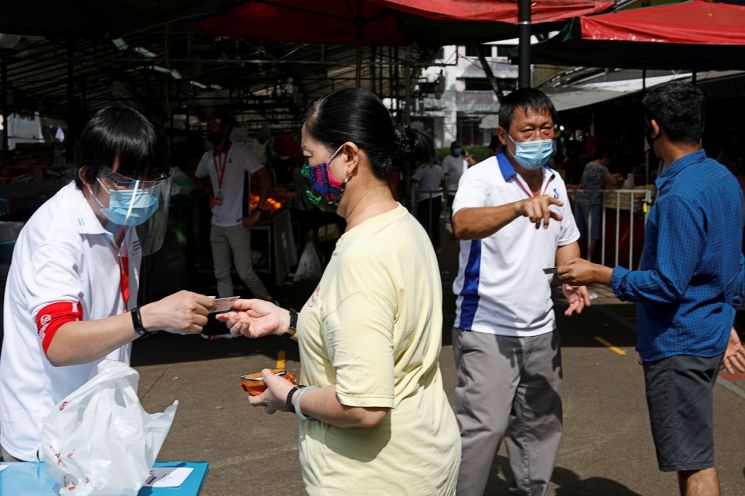
Professor Kim Hye-jin, a political international studies professor at the National University of Singapore currently residing in Singapore, pointed out that there are many misunderstandings regarding Singapore's quarantine situation, which had received extreme evaluations. Professor Kim analyzed, "Misunderstandings have accumulated due to misinformation or exaggerated news," and added, "Singapore was a case that was amplified more by the media rather than having done well in quarantine from the beginning." He explained, "Many foreign correspondents staying in Singapore cite Singapore's example to criticize their home country's quarantine policies, and this tendency was prominent during the COVID-19 situation."
Professor Kim also pointed out that reports claiming Singapore closed its borders to China from the early stages of COVID-19 are not true. He introduced, "Contrary to what is known in Korea, Singapore did not close its borders with China from the beginning. Instead, in the early stages, Singapore advised against traveling to Hubei Province, China, on January 23, and four days later, on January 27, it recommended avoiding travel to China altogether."
He expressed concern that there are parts related to Singapore's school opening and attendance issues that have not been properly reported domestically. Professor Kim mentioned, "In Singapore, the school year differs from Korea's, and all schools start their semester from January every year," adding, "When concerns about COVID-19 began, schools were already in session."
Some domestic reports compared Singapore's reopening after vacation to the domestic situation. Regarding this, Professor Kim pointed out that it was a misunderstanding due to differences in the academic system. He said, "The 'school opening' reported by Korean media was not the start of a new semester but a one-week spring break." Singapore, where the semester had already started, and Korea, which starts a new semester after a long winter vacation, are under different conditions.
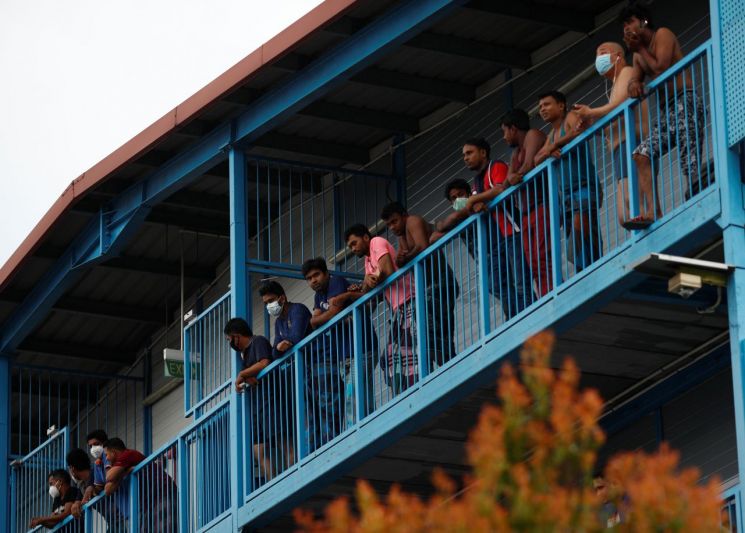
He also expressed concern about views linking the recent sharp increase in confirmed cases in Singapore to students attending school. He explained that Singapore schools switched to online classes not because of infections within schools but due to the spread of infections among foreign workers residing in dormitories. Professor Kim asserted, "The claim that school opening is the main cause of the increase in confirmed cases is not true."
He explained, "In Singapore, to prepare for online classes, one day per week was conducted online starting this month, but as the number of confirmed cases increased, from the second week, all classes were switched entirely to online. The increase in confirmed cases in Singapore was due to infections among foreign workers residing in dormitories within Singapore, along with the influx of confirmed cases from Europe."
© The Asia Business Daily(www.asiae.co.kr). All rights reserved.


















