"Already Occurred Long-term Care Benefit Entitlement Does Not Expire Even If Fetus Is Separated"
[Asia Economy Reporter Choi Seok-jin] The Supreme Court has ruled that if a fetus's health is damaged due to poor working conditions and the mother gives birth to a child with a congenital disease, this constitutes a work-related injury for the mother and is therefore eligible for workers' compensation insurance benefits.
This is the first time the Supreme Court has made a judgment on whether damage to a fetus's health or congenital diseases in a newborn are included as work-related injuries of the worker.
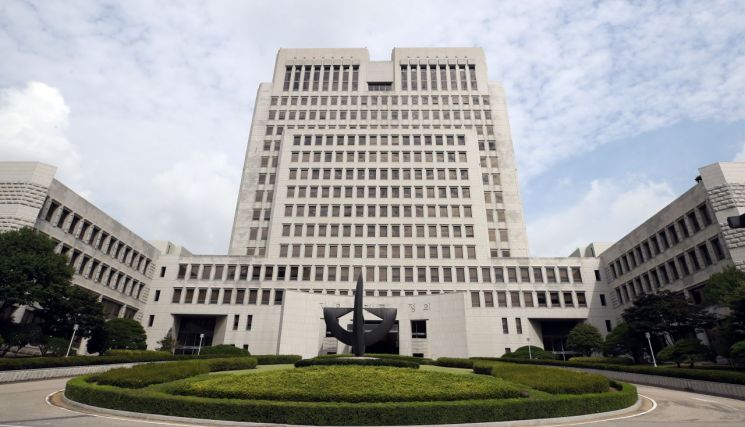
The Supreme Court's 2nd Division (Presiding Justice Kim Sang-hwan) on the 29th overturned the lower court's ruling that dismissed the appeal in a lawsuit filed by four nurses, including Nurse A who worked at Jeju Medical Center, against the Korea Workers' Compensation and Welfare Service regarding the rejection of their application for medical benefits, and remanded the case to the Seoul High Court.
The court stated, "Damage to the health of a fetus caused by work performed by a pregnant female worker is included in the 'work-related injury' of a worker as defined in Article 5, Paragraph 1 of the Industrial Accident Compensation Insurance Act, regardless of its impact on the female worker's labor capacity."
It added, "If a work-related injury occurs in which the health of the fetus, which is part of the mother's body, is damaged due to work performed by a pregnant female worker, and the relationship for receiving medical benefits under the Industrial Accident Compensation Insurance Act is established, even if the fetus, which was a single entity with the mother, is separated by birth, the already established relationship for receiving medical benefits cannot be considered terminated."
The plaintiffs, nurses working at Jeju Medical Center, all became pregnant in 2009 and experienced signs of miscarriage, then gave birth the following year; all four children were born with congenital heart defects.
At that time, Jeju Medical Center was investigated to have a high turnover rate due to not only intense labor but also irregular shift work and insufficient staffing.
In particular, since most inpatients were elderly over 70 years old, nurses had to crush pills if patients could not swallow them, and many of the crushed medications included those prohibited for pregnant and women of childbearing age.
Perhaps because of this, among the nurses working at Jeju Medical Center at that time, including the plaintiffs, 15 became pregnant; of these, only six gave birth to healthy children, four gave birth to children with congenital heart defects, and five experienced miscarriages.
Ultimately, the plaintiffs who gave birth to children with congenital heart defects argued that exposure to harmful factors in early pregnancy caused defects in fetal heart formation, and thus the birth of children with congenital heart defects constitutes a work-related injury, applying to the Korea Workers' Compensation and Welfare Service for medical benefits.
However, the Service ruled that "work-related injuries only refer to injuries, illnesses, disabilities, or death of the worker themselves, and the worker's children cannot be considered workers covered by the Industrial Accident Compensation Insurance Act," and denied the payment of medical benefits. The plaintiffs then filed a lawsuit requesting the court to cancel this decision.
The trial focused on whether the poor working environment at the hospital at the time was causally related to the congenital diseases of the fetuses and whether the scope of application of the Industrial Accident Compensation Insurance Act includes the fetus.
The lower courts' rulings were divided.
The first trial court ruled in favor of the plaintiffs, stating that in principle, the mother and fetus are a single entity, and any effects on the fetus and the resulting legal rights and obligations belong to the mother; therefore, health damage to the fetus caused by work during pregnancy should be regarded as a work-related injury of the mother worker.
However, the second trial court ruled against the plaintiffs, reasoning that even if the mother worker gave birth to a child with a disease caused by a work-related injury, it is not the worker's own disease, so there is no right to receive medical benefits.
The Supreme Court reversed the outcome once again.
© The Asia Business Daily(www.asiae.co.kr). All rights reserved.
![From Hostess to Organ Seller to High Society... The Grotesque Scam of a "Human Counterfeit" Shaking the Korean Psyche [Slate]](https://cwcontent.asiae.co.kr/asiaresize/183/2026021902243444107_1771435474.jpg)
















