[Asia Economy Reporter Buaeri] "The only one I can trust is myself, I have to fight until the end. Because I have to survive!"
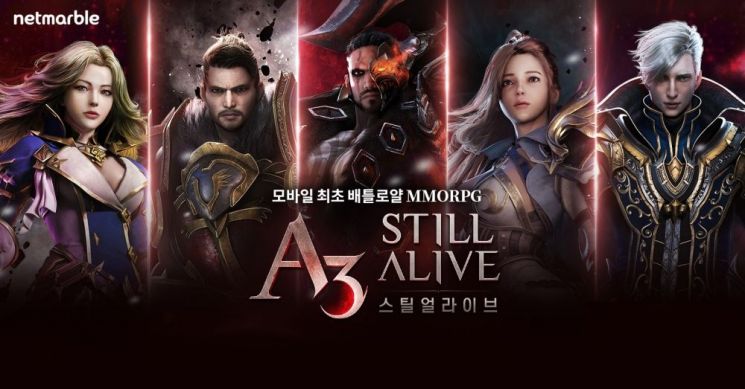
Netmarble's new release A3: Still Alive uses this as its advertising slogan. From the start, the grand sound and dazzling graphics evoke the feeling of a blockbuster movie trailer, but no celebrities appear in this ad. Instead, characters from the game perform passionately. It is analyzed that the effect of star marketing, which was once popular, has worn off.
◆ The waning effect of top star marketing = According to the game industry on the 29th, it has become difficult to find top stars in the advertisements of the three major domestic game companies 3N (NCSoft, Nexon, Netmarble). Traditionally, in the domestic game industry, it was common to use famous actors or singers as promotional models when launching new games.
In 2017, NCSoft featured actor Choi Min-sik as the advertising model for Lineage M, producing a noir film-like commercial. Around the same time, Netmarble selected singer G-Dragon as the model for Lineage 2 Revolution, reminiscent of a fashion advertisement. This trend continued until last year. Nexon also featured actor Chris Hemsworth, famous for "Thor," as a model during the launch of Traha in February last year.
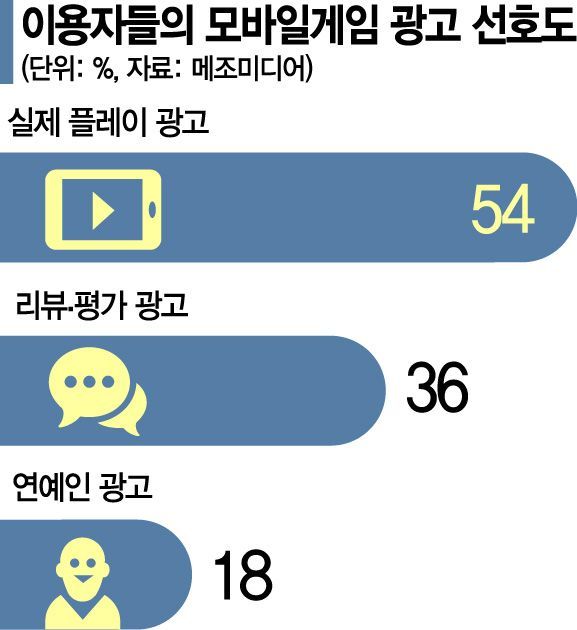
However, most of the 3N's new game advertisements this year mainly feature 'in-game' footage showing actual gameplay instead of top stars. NCSoft's Lineage 2M, Netmarble's A3, and Nexon's KartRider Rush Plus actively expose videos containing actual game content in their advertisements.
This shift in game advertising trends is interpreted as a result of the popularization of mobile games, which has reduced the value of using top star models. Star advertisements were effective in gaining recognition during the early days of mobile games but did not lead to long-term sales growth.
An industry insider explained, "The influx effect from star marketing is not significant," adding, "Rather, in a situation where it is necessary to maintain a solid existing user base, star marketing causes the unintended side effect of overshadowing the actual game content." In fact, a survey conducted by Mezzomedia in February with 302 respondents revealed that 54% of game users prefer advertisements that show actual gameplay footage. Only 18% preferred celebrity advertisements.
◆ Mobile advertising marketing remains effective = Although the high costs of hiring stars have disappeared, the 3N companies still spend nearly 10% of their revenue on marketing expenses. An analysis of the financial statements of NCSoft, Nexon Korea, and Netmarble from last year shows that NCSoft spent 106.2 billion KRW, Nexon 119.3 billion KRW, and Netmarble 292.3 billion KRW. Mobile games still have a significant marketing impact. According to Mezzomedia, 72% of game users reported having downloaded a game after watching a mobile advertisement. Recently, competition in digital advertising, such as on YouTube, has intensified.
Some express concerns about the overheating of marketing by large game companies. Professor Wi Jeong-hyun of Chung-Ang University's Department of Business Administration, who is also the president of the Korea Game Society, said, "Game companies have shifted their business model to attract users in the short term through strong marketing rather than competing with game quality," adding, "Small and medium-sized game companies without self-sufficiency are at a significant disadvantage, which is undesirable for the overall game industry."
© The Asia Business Daily(www.asiae.co.kr). All rights reserved.













