Concerns Over Full Global Storage Tanks by Late May Tank Tops
Oil Price Decline Worries Persist Despite Geopolitical Concerns
10 Million Direct and Indirect Jobs... Possible Collapse of US Energy Industry
Additional Drag on US Economy
[Asia Economy Reporter Naju-seok] International oil prices rose slightly on the 22nd (local time), but the trend of weakness is gaining momentum. There are also views that the shocking forecast of international oil prices reaching minus $100 per barrel and the collapse of related industries will become an additional adverse factor for the US economy.
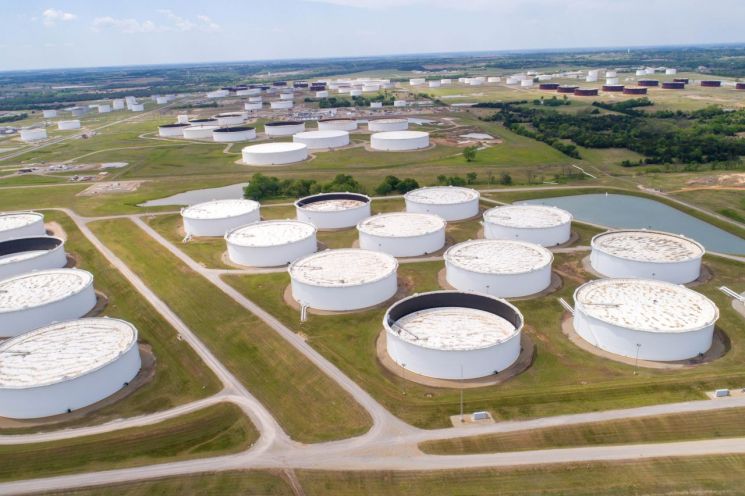
Bloomberg News cited the analysis of OilX, an oil-related market information analysis company, reporting that crude oil inventories are reaching their limits. OilX predicted, "By the end of May or early June, the crude oil market will face a global 'tank top' situation." Tank top is an oil industry term used to describe a situation where crude oil inventories increase to the point that storage tanks can no longer hold more oil.
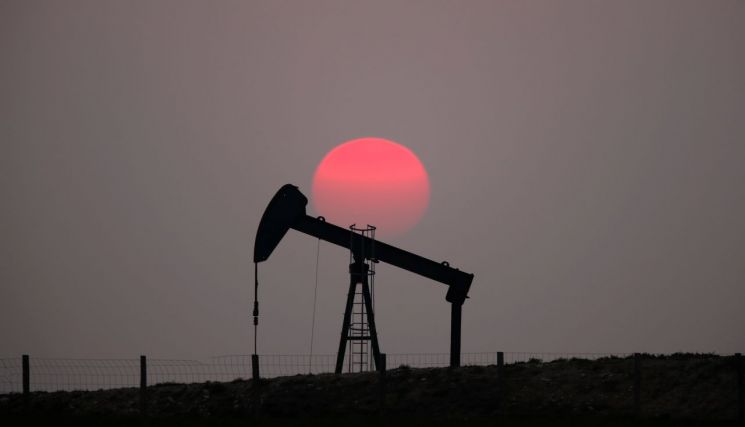
OilX further analyzed, "About 50 million barrels are being filled into crude oil storage tanks every week." It revealed that in India, crude oil storage tanks are already 95% full. Nigeria plans to cut production due to the lack of storage space for crude oil.
Experts diagnosed, "When tank top occurs, crude oil prices in many regions will approach $0, and in some regions, prices could become negative." Paul Sankey, an oil analyst at Mizuho Bank, warned, "There is a sufficient possibility that oil prices could fall to -$100 per barrel next month."
Although oil prices rose temporarily on the day due to increased military conflict possibilities between the US and Iran, anxiety across the entire market remains widespread.
The decline in oil prices, which began due to reduced crude oil demand caused by the novel coronavirus disease (COVID-19), now threatens not only the entire oil-related industry but also the global economy as a whole.
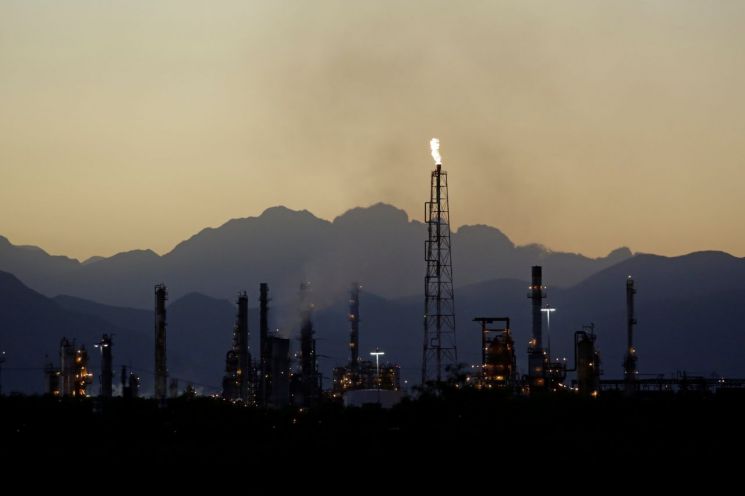
According to an analysis by credit rating agency Moody's, there is a possibility of bankruptcy among oil-related companies in the US. For oil drilling companies, debts maturing between this year and 2024 amount to $86 billion. Pipeline companies also face the need to repay or refinance $123 billion during this period.
Even if the US economy enters a recovery phase after overcoming the COVID-19 crisis, there are views that the energy industry will hinder the recovery trend. According to Restart Energy, an energy consulting company, if oil prices remain in the $20 range until the end of next year, more than 500 US oil exploration and production companies will go bankrupt; if prices stay in the $10 range, over 1,100 companies will fail. The Washington Post (WP) warned that because of this, the US economy could follow a W-shaped model, showing a short-term recovery followed by deterioration before a full recovery.
In particular, anxiety in the employment market has increased. As the US has emerged as the world's largest crude oil producer, the oil-related industry occupies a significant portion of the employment market. According to The New York Times (NYT), about 10 million people work directly or indirectly in oil-related industries. The oil price crisis is directly linked to the employment crisis of these workers.
In fact, as layoffs increase due to the oil industry crisis, the employment situation in the US is also worsening. In the US, unemployment benefit claims have increased by 22,025,000 over the past four weeks. New unemployment claims will be announced on the 23rd, with the market expecting about 4.3 million claims. As the number of unemployed surges, there are also views that the US unemployment rate could exceed 15% this month.
To prevent the collapse of the crude oil industry, solving the oversupply problem is essential, but the pace of production cuts in the US is slow. According to the US Energy Information Administration on the day, US crude oil production last week averaged 12.2 million barrels per day. This is 900,000 barrels less than the 13.1 million barrels per day recorded last month. Additionally, the US government is considering increasing strategic reserves, but no decision has been made yet. Even if reserves are increased, the NYT reported it would be only 500,000 barrels per day. The market was watching the Texas Railroad Commission, which can decide on production cuts in Texas, a major US crude oil production area. However, the Texas Railroad Commission postponed the decision at the meeting that day, citing the need for legal review processes.
© The Asia Business Daily(www.asiae.co.kr). All rights reserved.
![User Who Sold Erroneously Deposited Bitcoins to Repay Debt and Fund Entertainment... What Did the Supreme Court Decide in 2021? [Legal Issue Check]](https://cwcontent.asiae.co.kr/asiaresize/183/2026020910431234020_1770601391.png)

















