Domestic 5G Smartphone Sales Expected to Expand to 48% This Year
Limited Plans, Insufficient Network Quality, and Content Shortage Remain Challenges
[Asia Economy Reporter Han Jinju] The domestic 5G smartphone lineup is expected to double compared to last year. The product range is diversifying not only with foldable phones and flagships but also with mid-range smartphones. The commercialization of 5G services in countries like the United States and Japan has also had an impact.
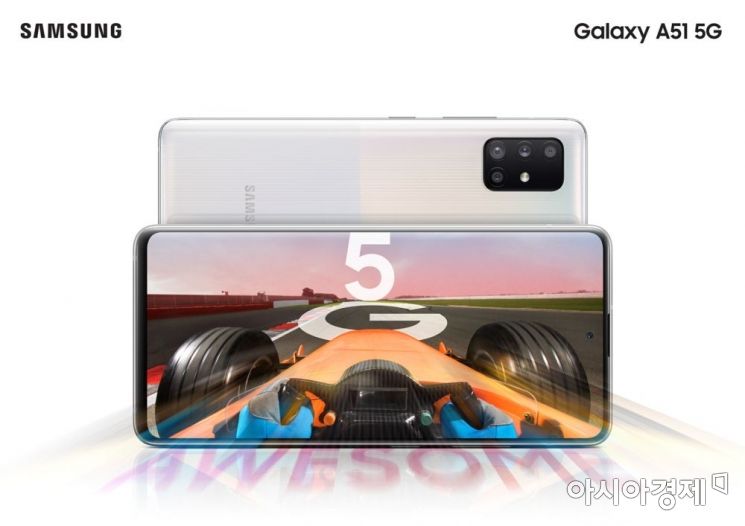
According to the industry on the 25th, Samsung Electronics plans to release more than three mid-range 5G smartphones this year. In May, the Galaxy A51 5G and A71 5G will be launched, and in the second half of the year, the successor to the Galaxy A90, the A91 5G, will be released. Flagship products such as the Galaxy Fold 2 and Galaxy Note 20 will also be launched with 5G in the second half of the year, and the Galaxy Z Flip 5G version is also coordinating its domestic release schedule.
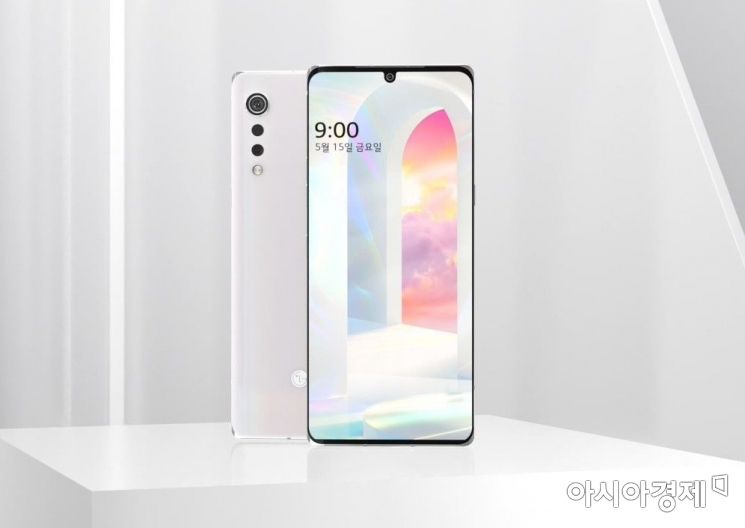
LG Electronics will release the 5G mass premium phone 'Velvet' domestically in mid-next month and plans to launch it overseas in North America and Japan within the quarter. In addition, various 5G smartphones at different price points, including the mid-range Q series, are being prepared. The V60 ThinQ, which supports 5G, will be sequentially released in the US, Japan, and Europe. By the end of the year, Apple will also join the 5G competition by launching its first 5G iPhone.
According to global market research firm Counterpoint, the share of 5G smartphone sales in Korea is expected to reach 48% this year, a significant increase from 28% last year. In particular, the domestic 5G phone sales forecast is higher than that of the US (26%) and China (36%). Korea was the first in the world to successfully commercialize 5G in April last year and accounted for 39% of global 5G smartphone shipments last year, maintaining the top position. This means Korea has succeeded in market preemption.
As the variety of 5G smartphone options increases, the number of 5G subscribers is also expected to grow faster. According to the Ministry of Science and ICT, as of the end of February, the number of 5G subscribers was 5.36 million, which is slower compared to the introduction of LTE. This is because 5G smartphones were mainly released as flagships, and limited plans, insufficient network quality, and lack of content resulted in a lack of incentives to subscribe to 5G. Introducing affordable 5G plans for mid-range 5G smartphone users is also a challenge that needs to be addressed.
Along with this, expanding 5G service coverage and supporting various frequency bands are essential for smooth 5G service. 5G is characterized by the simultaneous use of sub-6 GHz frequencies (below 6 GHz) and millimeter wave (mmWave) bands above 24 GHz. Domestic 5G services are mainly provided on the 3.4?3.7 GHz low-speed wide-area network. Telecom operators plan to invest in the 28 GHz band starting in the second half of this year, so it will take some more time for general consumers to feel the speed changes.
An industry official said, "Most areas already providing 5G services are using sub6 (below 6 GHz) bands, and so far, the millimeter wave market is not large," adding, "Smartphones supporting millimeter wave bands are also being prepared, but they plan to release them in line with the commercialization timing of domestic telecom operators."
© The Asia Business Daily(www.asiae.co.kr). All rights reserved.


















