Demand Plummets... Price Adjustment Impossible Due to Supply Control
Non-Member Countries Like US and Mexico Gain Influence
[Asia Economy Reporter Naju-seok] Despite the largest-ever oil production cuts, oil prices have fallen relentlessly, exposing the limits of the Organization of the Petroleum Exporting Countries (OPEC)'s influence. The COVID-19 pandemic is even changing the oil politics and economics centered around OPEC. Marking its 60th anniversary, OPEC now faces a crossroads between unity and helplessness due to the current crisis.
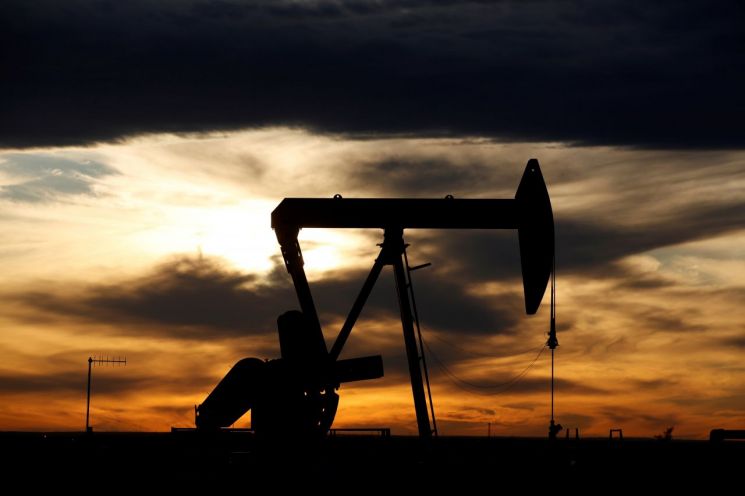
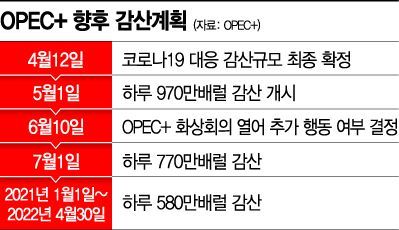
The limits of OPEC can also be seen in recent oil price trends. Despite an agreement to cut production by 9.7 million barrels per day, on the 16th (local time) at the New York Mercantile Exchange (NYMEX), May delivery West Texas Intermediate (WTI) crude oil closed at $19.87 per barrel, the same as the previous day. This marked the first time since 2002 that prices fell below $20 for two consecutive days. While the general analysis attributes this mainly to a drop in demand caused by COVID-19, it is also significant as an example where OPEC's influence failed to operate amid a large-scale crisis. Last month, OPEC attempted production cuts led by Saudi Arabia. However, when Russia opposed and the effort failed, production was increased. As supply surged amid a sharp decline in demand, global oil storage facilities became already full.
Behind Saudi Arabia's decision to increase production, which was close to self-harm extortion, lies a significant environmental change: the weakening of OPEC's influence.
Founded in September 1960 and celebrating its 60th anniversary this year, OPEC is a resource cartel established under the pretext of maintaining stability in the international oil market. In the past, OPEC shook the global oil market by raising prices nearly fourfold through oil shocks, exercising virtually absolute influence over the oil price-setting process.
However, OPEC has formed a new alliance called OPEC+ with Russia and others, showing a changed stance by deciding production volumes together. Behind this change is a major shift in perception that OPEC can no longer control the oil market. At one time, OPEC accounted for half of the world's oil production, but it has gradually lost its price leadership. The seeds of this loss were sown by OPEC itself. Whenever oil prices rose due to collusion among oil-producing countries, countries and companies worldwide began exploring oil resources and developing new oil fields, weakening OPEC's leadership.
In response to these changes, OPEC formed OPEC+ with Russia and others to control supply. The result of artificially high oil prices was the emergence of the U.S. shale revolution. Places that were previously unexploitable oil fields became producible due to the shale revolution. Thanks to this, since 2016, U.S. oil production has increased by an average of 4 million barrels per day, making it the world's largest oil producer.
In particular, the hegemon, the United States, transformed from a net oil importer to an exporter, gaining new power. Recently, U.S. Energy Secretary Dan Brouillette claimed in an interview with a media outlet that the geopolitics of oil have fundamentally changed as the U.S. became the world's largest oil producer. Unlike when the U.S. imported oil, it can now assert its voice. In fact, the U.S. even threatened to raise tariffs if the OPEC+ production cut agreement was not reached. This boldness comes from the ability to be self-sufficient.
Now, there are also criticisms that OPEC itself faces limits in controlling production volumes. It has become difficult to flexibly adjust total production as OPEC member countries are caught up in sanctions or civil wars. For example, major oil producers like Iran and Venezuela face difficulties exporting oil on the international market due to U.S. sanctions, while Libya and Nigeria are embroiled in civil wars. Because of this, whenever production cut discussions arise, OPEC looks only to Saudi Arabia, but Saudi Arabia feels burdened by this attention.
The Wall Street Journal (WSJ) described this changing market environment by saying, "OPEC, once a source of fear, is now on the brink of death."
© The Asia Business Daily(www.asiae.co.kr). All rights reserved.
![User Who Sold Erroneously Deposited Bitcoins to Repay Debt and Fund Entertainment... What Did the Supreme Court Decide in 2021? [Legal Issue Check]](https://cwcontent.asiae.co.kr/asiaresize/183/2026020910431234020_1770601391.png)

















