Ministry of the Interior and Safety, Ministry of Economy and Finance, Ministry of Health and Welfare, and 243 Local Governments' Deputy Heads Meeting Held
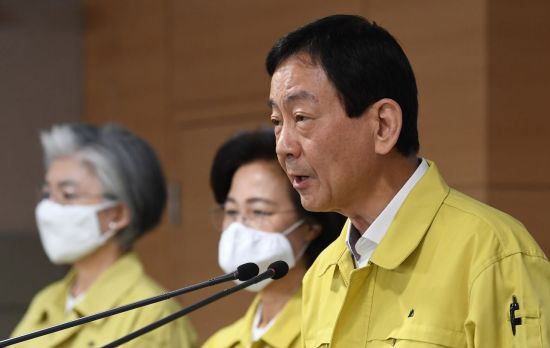
[Asia Economy Reporter Jo In-kyung] With the submission of the second national supplementary budget bill, including the emergency disaster relief fund, to the National Assembly, the government has begun preparing procedures for rapid execution in cooperation with local governments across the country.
On the morning of the 17th, the Ministry of the Interior and Safety held a video conference chaired by Minister Jin Young, with participation from 243 local governments' deputy heads, announcing that the central and local governments agreed to pool their capabilities for the swift support of the emergency disaster relief fund.
During the meeting, it was discussed that once the national supplementary budget bill is approved by the National Assembly, local governments will immediately implement their own supplementary budgets and prepare in advance for matters related to rapid execution.
In particular, 130 local governments that have already completed the formation and approval of supplementary budgets to respond to the novel coronavirus infection (COVID-19) will additionally conduct one-point supplementary budgets to support the emergency disaster relief fund. The necessary funds for the supplementary budgets will be secured through self-help efforts such as expenditure restructuring of underperforming projects, and if necessary, surplus funds such as reserves will also be actively utilized.
The government also allowed local governments to autonomously and flexibly adjust the overlap between their independently promoted "living expense support" projects and the government's emergency disaster relief fund according to local circumstances.
However, the basic principles of the central government's emergency disaster relief fund support?▲ income below the bottom 70%, ▲ 400,000 KRW for single-person households, 600,000 KRW for two-person households, 800,000 KRW for three-person households, and 1,000,000 KRW for households of four or more, and ▲ an 80:20 cost-sharing ratio between the central government and local governments (70:30 for Seoul)?were guided to be fundamentally observed.
During the meeting, time was also spent sharing opinions to ensure the national emergency disaster relief fund is executed without issues, based on the know-how of local governments already implementing their own projects. Participants collectively recognized that, as this is an unprecedented large-scale project providing support simultaneously to approximately 14.78 million households, a groundbreaking payment method different from previous ones is necessary.
Additionally, all local governments will form separate task forces (TFs) centered on deputy heads, and the Ministry of the Interior and Safety will prepare active support measures such as simplifying application procedures and diversifying payment methods.
Minister Jin Young of the Ministry of the Interior and Safety emphasized, "For the emergency disaster relief fund to bring vitality to struggling citizens and our economy, it is important that it is provided conveniently and swiftly," and added, "We will thoroughly prepare in advance based on organic and close cooperation between the central and local governments."
© The Asia Business Daily(www.asiae.co.kr). All rights reserved.

















