Charged with causing death by dropping and neglecting in bathroom
Probation in both 1st and 2nd trials... "Greater responsibility lies with society and state"
Local governments operate 'Unmarried Mother and Child Welfare Facilities'
But limited capacity restricts admission... Access barriers exist
In reality, over 20,000 unmarried mothers and 7,000 children under age 4
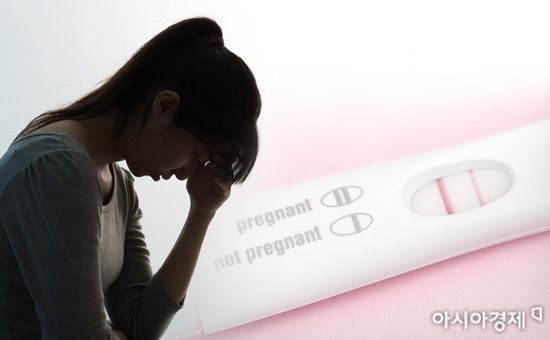
[Asia Economy Reporter Seongpil Cho] "The responsibility of our society and the state for failing to protect the victim is very great."
The court handed down an unusual suspended sentence to an unmarried mother who gave birth at the age of 19 and raised the child alone, ultimately causing the child's death. Although a heavy sentence was inevitable due to the added charge of abandoning the corpse, the court simultaneously held the state responsible for failing to properly care for the unmarried mother and her child.
According to the legal community on the 17th, the Seoul High Court Criminal Division 12 (Presiding Judge Yoon Jong-gu) recently sentenced A (22, female), who was indicted on charges including child abuse resulting in death under the Child Abuse Punishment Act, to three years in prison with a four-year suspended sentence, the same as the original trial. The court also ordered 160 hours of community service and 40 hours of child abuse treatment lectures.
A learned of her pregnancy at a hospital in July 2017. She considered having an abortion but missed the timing and eventually gave birth in November of that year. After giving birth, she raised the child alone in a villa in Uijeongbu, Gyeonggi Province. When the child was 14 days old, after bathing the baby as usual, A stood up to get a towel and accidentally dropped the child. The baby hit the bathroom sink and then fell to the floor. A comforted the crying baby and fed formula. Although the baby vomited the formula, A saw the baby fall asleep and thought everything was fine. However, the baby never woke up. A few days later, A put the corpse in a plastic bag and secretly disposed of it at a roadside garbage dumping site.
Both the first and second trials judged A's charges to be serious. In particular, they found intent to abandon based on the failure to immediately take the child to a hospital or take other measures. However, they recognized that due to lack of parenting experience and knowledge, timely rescue measures were not taken, and judged that the crime was significantly different in nature from typical child abuse resulting in death. The legal sentencing range for child abuse resulting in death is from 2 years and 6 months to 18 years and 6 months imprisonment. However, in cases like A's, where the crime was committed with indirect intent, the sentence can be reduced to less than 5 years according to sentencing guidelines.
Earlier, the first trial court gave a suspended sentence considering A's difficult upbringing. The court stated, "The defendant went through a wandering period due to her parents' divorce at a young age, which led to the crime," and "The defendant's mother, who was contacted, pled for leniency, promising to guide the defendant on the right path."
The appellate court maintained the sentence but issued a ruling focusing on the social background. It recognized that not only A's fault but also the responsibility of the state and society was involved. The second trial court said, "The state's and society's indifference also had an impact. Sentencing the defendant to actual imprisonment is considered harsh."
As the court pointed out, many unmarried mothers like A face the reality of raising children alone amid social indifference. The Ministry of Gender Equality and Family guides unmarried mothers in difficult situations to 'Unmarried Mother and Child Family Welfare Facilities' operated by local governments. These facilities provide free accommodation, meals, and medical benefits for up to 1 year and 6 months.
However, there are only 22 basic living support facilities nationwide operated by local governments. There is not a single one in Uijeongbu, where A lived. The Ministry of Gender Equality and Family acknowledged the practical access barriers, stating, "There is no restriction on admission based on residence, but the number of admissions is limited considering capacity." The capacity of the 22 basic living support facilities nationwide ranges from 9 to 50 people, averaging about 25. In contrast, the number of unmarried mothers like A was 21,254 as of 2018. Additionally, the number of unmarried mother children under 4 years old raised by them was 7,342.
© The Asia Business Daily(www.asiae.co.kr). All rights reserved.
















