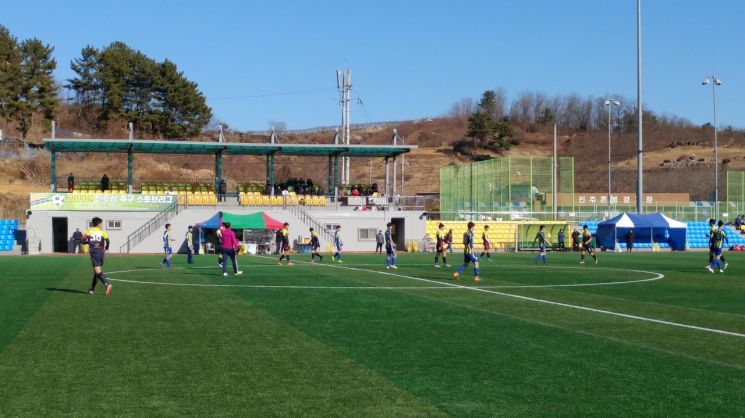
[Asia Economy Reporter Oh Hyung-gil] Choi Cheol-min (alias, 35), who was playing early morning soccer, ran to block the ball as it flew toward the goalkeeper but collided with an opposing attacker and fell, sustaining injuries including cervical spinal cord damage and spinal ligament injury, resulting in paralysis and a physical disability diagnosis.
Choi's family filed a claim for damages and consolation money, arguing that the opposing player committed an illegal act by violating the duty of care for safety during the sports game. Will Choi be able to receive compensation?
According to the Korea Insurers Association on the 15th, when participating in sports games, there is a duty of care under the principle of good faith to ensure the safety of other players by adhering to the game rules, as other players may get injured.
If a player participating in a sports game seriously violates the game rules or intentionally engages in aggressive behavior causing injury to another player, they may be held liable for damages due to breach of the duty of care for safety.
However, in sports like soccer, where multiple physical contacts occur, there is an inherent risk of injury in the game itself, and participants accept a certain level of risk within the foreseeable range. Therefore, if the breach of the duty of care for safety does not exceed socially acceptable limits, it is difficult to recognize liability for damages.
In cases like Choi's involving sports accidents and tort liability, the Supreme Court and lower courts have differing opinions on whether there was a breach of the duty of care for safety.
The Nonsan Branch of Daejeon District Court (January 13, 2016, ruling 2015gahap2027) stated, "It is difficult to expect a player to stop running toward the ball considering the abstract possibility of colliding with the goalkeeper," and judged that it was difficult to recognize a breach of duty of care warranting liability on the part of the defendant attacker.
However, the lower court ruled, "The attacker had a duty to pay attention to the goalkeeper's situation and movements to avoid injuring the goalkeeper but recklessly ran and collided heavily," and "It was fully foreseeable that the impact could be severe, and considering that the game was for friendship among club members, the attacker violated the duty of care for safety beyond socially acceptable limits."
Accordingly, the court limited the attacker's liability for damages to 20%, citing the inherent risk of injury in soccer games and that participants must accept some risk within a foreseeable range.
The Supreme Court overturned the lower court's ruling that recognized the attacker's breach of the duty of care for safety and corresponding liability for damages, concluding that the defendant attacker is not liable for damages, consistent with the first trial's stance.
The court noted that the situation involved competing to gain possession of the ball and that it is difficult to conclude that the collision violated soccer game rules.
Even if the attacker violated the rules, the degree of violation was not considered severe, and the court recognized the inherent risk of physical contact in soccer. Considering the typical forms of physical contact that can occur between an attacker and a goalkeeper, the court found it difficult to view the attacker's actions as exceeding socially acceptable limits or violating the duty of care for safety toward the plaintiff.
© The Asia Business Daily(www.asiae.co.kr). All rights reserved.

















