[Interview] Josangu WiHome CEO
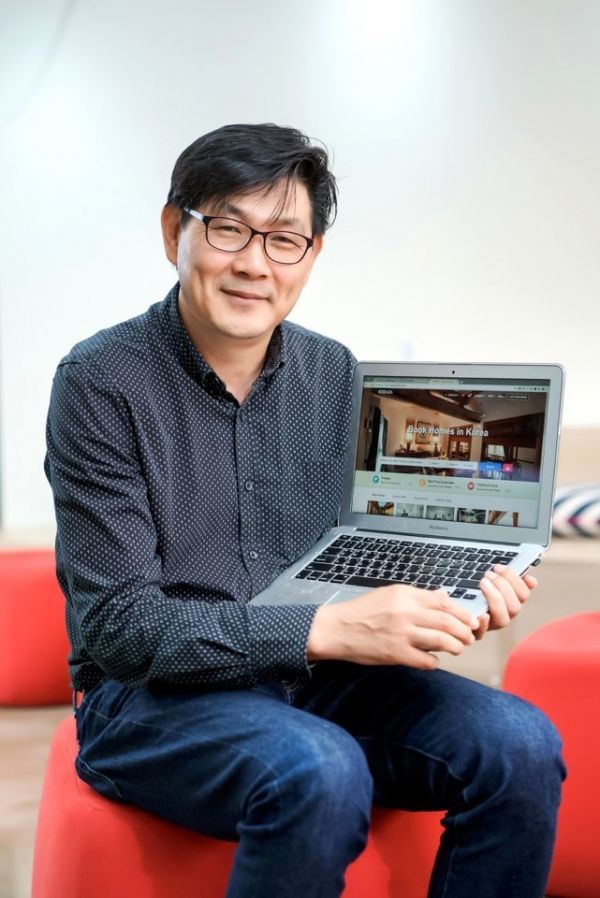
[Asia Economy Reporter Moon Hyewon] "The sharing economy is both the trend of the times and the path we must take. Instead of gradually reducing illegal accommodations, we need a new vessel to contain them. We want to stop Airbnb's solo run, which operates arbitrarily ignoring the laws and regulations of the Korean government, and create a world where Koreans can proudly enjoy the convenience of shared lodging." (Jo Sangu, CEO of WeHome)
David standing against Goliath Airbnb, which controls nearly 90% of the global shared lodging market. The native shared lodging platform 'WeHome' is the first urban lodging platform in Korea to receive a regulatory sandbox exemption (a method that exceptionally allows business when existing regulations apply). Although the travel and tourism industry was hit hard by the recent COVID-19 pandemic, an unexpected alternative has emerged as it is used as temporary accommodation for families of those in self-quarantine, gradually easing the situation.
The Ministry of Science and ICT and the Ministry of Culture, Sports and Tourism will complete the business commencement approval process by conducting an on-site inspection of WeHome as the final procedure as early as this week. Although it is out of the public eye due to the COVID-19 situation, it is a major 'event' that domestic customers will be legally served.
In November last year, the Ministry of Science and ICT approved WeHome as a regulatory sandbox exemption in the ICT sector. However, it imposed conditions to establish safety measures and personal information protection devices that could arise during service expansion, delaying the actual business application. Since then, WeHome has completed preparations to meet these requirements and is awaiting the on-site inspection.
CEO Jo originally planned to launch the business with related promotions in July this year, the peak summer vacation season. However, as foreign tourists sharply declined due to the COVID-19 outbreak, he proposed a 'survival program' to shared lodging operators plunged into severe confusion. The idea was to use the homes of families of self-quarantined individuals as temporary accommodations for about two weeks while they leave their residences during the quarantine period.
Under current law, urban shared lodging businesses are defined as urban lodging businesses under the Tourism Promotion Act and are only allowed for foreign tourists. However, through WeHome, designated as a regulatory sandbox exemption, domestic customers can legally use the service in Seoul.
CEO Jo said, "The regulatory sandbox exemption is currently only allowed in the Seoul area, and we have received applications from about 20 to 30 shared lodging facilities operating in Seoul."
CEO Jo expects that more shared lodging operators will turn to WeHome once business commencement is approved. He said, "The government’s crackdown on domestic operations of shared lodging companies will intensify, and operators and users will be driven toward legal services."
Airbnb has openly conducted business activities targeting domestic customers. Enforcement against this has been difficult, raising issues of reverse discrimination against domestic companies. CEO Jo said, "Airbnb blatantly operates illegally, ignoring the Korean government’s enforcement and laws, making huge profits. We hope to stop this solo run and that the domestic shared lodging culture centered on Korean native companies will find order within a legal framework."
© The Asia Business Daily(www.asiae.co.kr). All rights reserved.

















