Global COVID-19 Fatality Rate 5.98%... Over 10 Times Higher Than H1N1
Deaths Exceed 90,000... Shift from Lifting Lockdowns to Considering Extensions
Health Authorities on Alert Ahead of Easter, Ramadan, and Other Religious Events
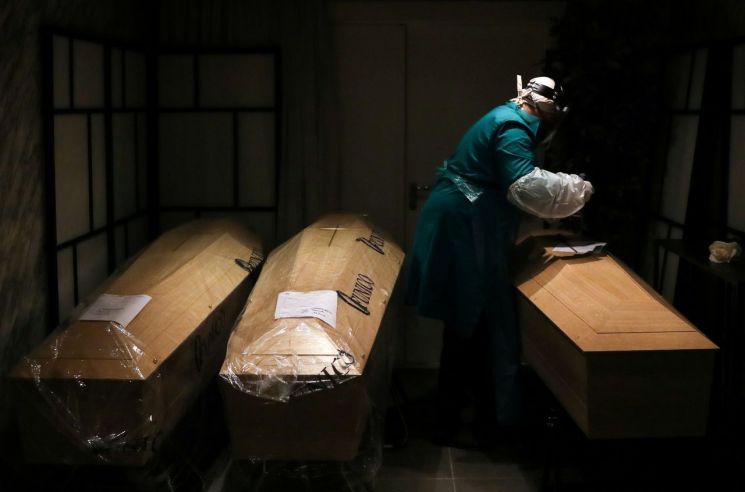
[Asia Economy Reporter Hyunwoo Lee] As the global cumulative death toll from the novel coronavirus infection (COVID-19) surpasses 90,000, the fatality rate of COVID-19 has been found to be more than 10 times higher than that of the novel influenza virus. Concerns are rising that the spread of COVID-19 could intensify again if lockdown measures are loosened during large-scale religious events such as Easter and Ramadan starting this weekend.
According to CNBC on the 9th (local time), Tedros Adhanom Ghebreyesus, Director-General of the World Health Organization (WHO), said at a video briefing held at the WHO headquarters in Geneva, Switzerland, "The fatality rate of COVID-19 is estimated to be more than 10 times higher than that of the influenza virus," and emphasized, "All countries worldwide must continue to maintain lockdown measures and financial support."
The fatality rate was calculated as the global COVID-19 death toll exceeded 90,000. According to COVID-19 statistics from Johns Hopkins University in the United States, as of this day, the cumulative number of confirmed cases worldwide was 1,582,904, and the number of deaths was 94,807. The fatality rate estimated by deaths relative to confirmed cases is 5.98%, which is more than 10 times higher than the 0.5% fatality rate during the 2009 novel influenza (H1N1) pandemic.
As the number of deaths continues to rise, countries are announcing extensions of lockdown measures. Bloomberg reported that the Italian government plans to extend the nationwide lockdown, originally scheduled until the 13th, by two weeks. The UK is also considering extending its lockdown measures. Dominic Raab, Foreign Secretary acting as Prime Minister of the UK, stated, "We will not lift lockdown measures until there is clear evidence that the peak has passed."
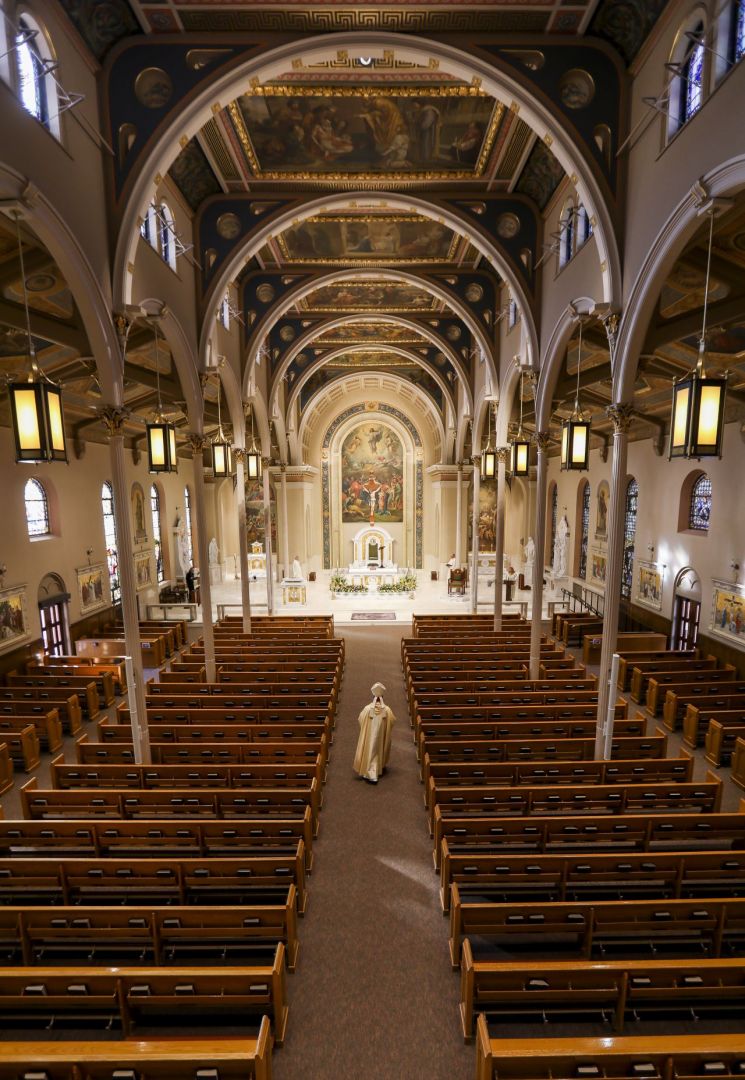
Religious events such as Easter, starting this weekend, have also been severely affected. The Berlin Administrative Court in Germany rejected a request from Catholics to allow small-scale masses with fewer than 50 people ahead of Easter starting on the 12th. The Administrative Court of Hesse also did not accept the application for permission to hold Easter masses.
In Iran, an Islamic Shia theocratic state, gatherings during Ramadan, the largest Islamic religious event, are planned to be banned. On this day, Ayatollah Khamenei, the Supreme Leader, appeared on Iranian state TV and announced, "This year, public gatherings, prayers, and evening meals during Ramadan may all be prohibited." Earlier, Israel, where the largest Jewish event, Passover, began on the 8th, also imposed movement restrictions, and police forcibly dispersed assemblies of Haredi and other Jewish fundamentalist groups resisting these measures.
© The Asia Business Daily(www.asiae.co.kr). All rights reserved.
![Clutching a Stolen Dior Bag, Saying "I Hate Being Poor but Real"... The Grotesque Con of a "Human Knockoff" [Slate]](https://cwcontent.asiae.co.kr/asiaresize/183/2026021902243444107_1771435474.jpg)

















