Nature German Research Team Results Announced
Virus Concentration 1000 Times That of SARS... Mask Wearing and Social Distancing Needed
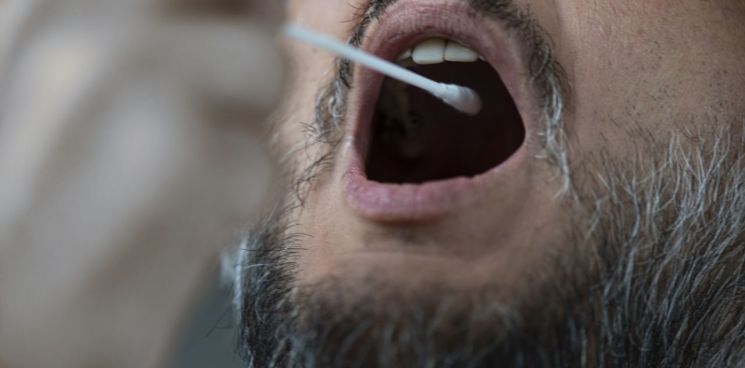
[Asia Economy Reporter Cho Young-shin] German scientists have identified the reason behind the rapid spread of the novel coronavirus infection (COVID-19), according to a report by Hong Kong's South China Morning Post (SCMP) on the 10th.
According to clinical trial results conducted by a joint research team from Berlin, Munich, and Cambridge, the COVID-19 virus replicates quickly in the human throat. The team explained that as the virus replicates itself in the throat, person-to-person transmission (droplet transmission) becomes easy, and the speed of spread inevitably becomes fast.
The research team collected samples from the throats of nine patients showing initial symptoms (first week), all of which tested positive. They noted that in the case of SARS (Severe Acute Respiratory Syndrome) patients, positive reactions in the first week were less than 40%. This indicates a difference in viral load between COVID-19 and SARS. The team confirmed that the concentration of the COVID-19 virus reaches its peak within five days, which is more than 1,000 times higher than that of SARS. Based on this, the team concluded that the virus replicates in the throat.
The researchers explained, "The COVID-19 virus can easily spread through droplets, so efforts should focus on preventing droplet transmission." This study supports the World Health Organization (WHO)'s recommendation that wearing face masks can help prevent person-to-person transmission.
The team warned, "COVID-19 is highly contagious because the virus is released through the upper respiratory tract, such as the throat, in the early stages." Meanwhile, this study was conducted on nine confirmed COVID-19 patients and was published in the April 1st issue of Nature.
© The Asia Business Daily(www.asiae.co.kr). All rights reserved.
![User Who Sold Erroneously Deposited Bitcoins to Repay Debt and Fund Entertainment... What Did the Supreme Court Decide in 2021? [Legal Issue Check]](https://cwcontent.asiae.co.kr/asiaresize/183/2026020910431234020_1770601391.png)
















