'Ma·Yong·Seong' and 'No·Do·Gang' Both See Housing Prices Stall
Seoul Falls 0.04%, Widening Decline
Suwon Gwonseon and Yeongtong Districts Stable After 21 and 39 Weeks
Sejong City Rises 0.24%, Maintaining Upward Trend
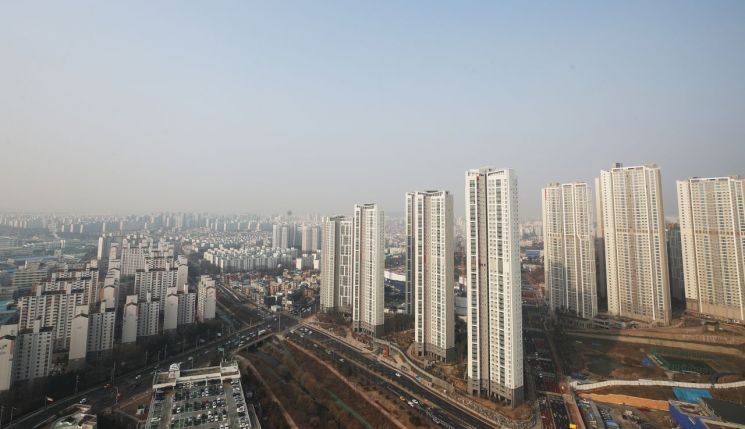
[Asia Economy Reporter Moon Jiwon] Due to the economic downturn caused by the novel coronavirus infection (COVID-19), apartment prices in the northern Seoul area have shifted to a flat trend for the first time in nine months since the first week of July. This is because the decline in areas such as Mapo and Yongsan districts has increased, and the rate of increase in areas like Nowon and Dobong districts has slowed, causing the overall housing prices in major northern districts to stall. Accordingly, apartment prices in Seoul also fell further compared to the previous week.
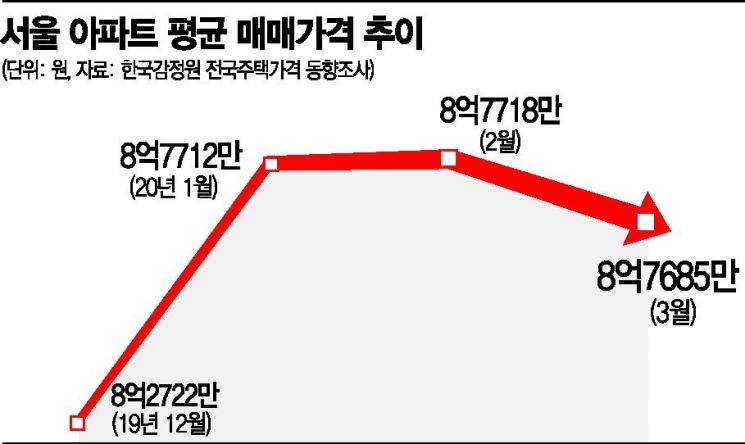
According to the Korea Real Estate Agency's 'Weekly Apartment Price Trend' data on the 9th, as of the 6th, apartment prices in Seoul fell by 0.04% compared to the previous week (-0.02%), widening the decline. This is due to an expanded wait-and-see stance and a contraction in transactions caused by the spread of COVID-19 and government regulations.
The average apartment prices in the 14 northern districts, which had maintained an upward trend, also shifted to a flat 0% for the first time in 40 weeks since the first week of July last year. This is interpreted as being influenced by the increased decline in the 'Mapo, Yongsan, Seongdong districts' (known as Ma-Yong-Seong), where prices rose significantly last year. In Mapo and Yongsan districts, prices fell by -0.04% this week, accelerating the downward trend.
In Gwangjin district (-0.03%) and others, the asking prices of major complexes dropped, expanding the decline. Nowon (0.03%), Dobong (0.03%), and Gangbuk districts (0.03%), which had seen high price increases due to development prospects and advantages of mid-to-low-priced complexes, also saw a reduction in their rate of increase. These 'No-Do-Gang' areas have been reducing their rate of increase for 3 to 4 consecutive weeks, showing a stalling atmosphere.
The 11 districts south of the Han River showed a clear recession mood, falling by -0.08%. Gangnam (-0.24%), Seocho (-0.24%), and Songpa districts (-0.18%) saw an expansion in the decline as the number of listings with falling prices increased in major reconstruction and popular complexes due to growing uncertainty and holding tax burdens. Gangdong district also showed a larger decline centered on high-priced complexes, falling by -0.02% compared to the previous week (-0.01%).
Outside the Gangnam 4 districts, the rate of increase generally shrank or remained steady. Guro district (0.05%) rose mainly around station areas but with a reduced rate of increase, and Yeongdeungpo district (0.00%) shifted to a flat trend this week from a 0.03% increase last week as Yeouido reconstruction complexes showed a downward trend.
Regions such as Gyeonggi-do and Incheon, where buying sentiment had concentrated due to the 'balloon effect,' are also somewhat stalling.
Gyeonggi-do rose by 0.17% compared to the previous week (0.19%), marking a slowdown in the rate of increase for four consecutive weeks. This is because buying sentiment weakened mainly in areas that had led the upward trend due to the spread of COVID-19 and expanded regulations. In particular, Suwon’s Gwonseon and Yeongtong districts (0.00%) shifted to a flat trend. The apartment prices in Gwonseon district have been stagnant for the first time in 21 weeks since the second week of November last year, and Yeongtong district for the first time in 39 weeks since the second week of July last year.
Ansansi (0.48%) rose due to transportation benefits from the Shinansan Line and expectations for redevelopment projects, but the rate of increase shrank. Gunpo city (0.48%) rose mainly in Sanbon and Geumjeong-dong, where GTX opening and remodeling expectations exist, and Guri city (0.46%) rose mainly in complexes benefiting from the Byeollae Line extension, but the rate of increase also shrank.
Incheon rose by 0.29% compared to the previous week (0.34%). Namdong district (0.46%) rose mainly in large complexes in Guwol and Ganseok-dong with transportation and redevelopment benefits, and new buildings in Seochang-dong. Yeonsu district (0.34%) rose mainly in Songdo, Yeonsu, and Dongchun-dong, which had transportation benefits and relatively low previous increases, but most areas except Dong district (0.03%) saw a reduction in the rate of increase.
Daejeon (0.11%) saw a contraction in buying sentiment due to the spread of COVID-19 and fatigue from rapid price increases, leading to a reduction in the rate of increase for three consecutive weeks. On the other hand, Sejong rose by 0.24%, maintaining the same rate of increase as the previous week. Although buying sentiment had weakened due to short-term rapid rises and economic crisis concerns, prices rose mainly in complexes with good transportation and accessibility.
© The Asia Business Daily(www.asiae.co.kr). All rights reserved.


















