KCDC: "Residential Treatment Centers Can Be Considered Medical Institutions" Interpretation
Clinical Trials for Therapeutics and Vaccines Targeting Mild Patients Expected to Accelerate
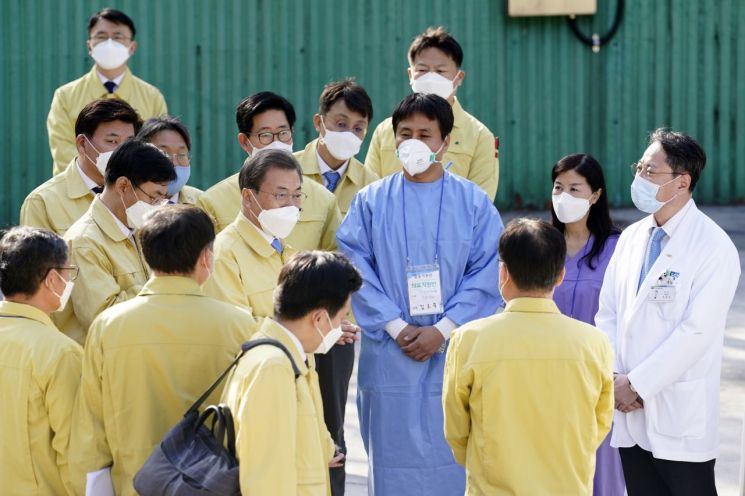 President Moon Jae-in is encouraging staff after receiving an operational status report at the Chungnam Daegu 1 Living Treatment Center in Cheonan, Chungnam, last month. The Chungnam Daegu 1 Living Treatment Center, designated as the seventh nationwide, can accommodate 600 mild COVID-19 patients.
 [Asia Economy Reporter Choi Dae-yeol] Clinical trials targeting patients infected with the novel coronavirus disease (COVID-19) undergoing treatment at residential treatment centers have become possible. Residential treatment centers are places where patients with mild symptoms stay, and since they were not considered medical institutions, conducting clinical research was difficult. If clinical trials proceed in the future, the development of vaccines and therapeutics is expected to accelerate significantly.
According to the medical community on the 8th, the Korea Centers for Disease Control and Prevention (KCDC) has internally determined that residential treatment centers can be interpreted as facilities equivalent to medical institutions, making research and development targeting admitted patients possible. This decision came in response to inquiries from some researchers about whether clinical trials could be conducted on patients admitted to residential treatment centers. The KCDC sent an official letter containing this information to the researchers, and accordingly, clinical trials are expected to commence soon.
Until now, COVID-19-related clinical trials have been conducted at some hospitals or by research teams. This is because relevant regulations stipulate that clinical trials can only be conducted at limited locations equipped with designated personnel and equipment, such as general hospitals or government-approved institutions. The KCDC’s expanded interpretation to include residential treatment centers reflects the urgent need for developing therapeutics and vaccines.
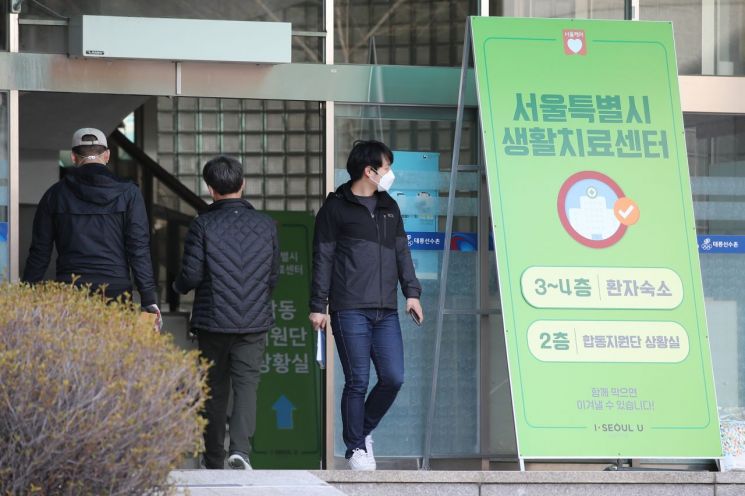 Living Treatment Center set up in the 'Olympic House' within Taereung Athletes' Village, Nowon-gu, Seoul
 Currently, there are no approved therapeutics for COVID-19, but clinical trials are rapidly underway domestically and internationally to evaluate the efficacy and side effects of existing drugs. In the final stages of clinical trials, actual patients must be involved, but recruiting patients is not easy. In China, where there were many patients early in the COVID-19 outbreak, clinical trials were initiated using 'Remdesivir,' originally developed as an Ebola virus therapeutic. However, as patient numbers declined at the time of patient recruitment, the countries conducting the trials were expanded to include South Korea and Japan.
According to the Central Disaster and Safety Countermeasure Headquarters for COVID-19, the government-designated residential treatment centers currently number seven in Daegu and two in Gyeongbuk, and including those operated by local governments in Seoul, Gyeonggi, and other areas, the total reaches 15. When confirmed positive for COVID-19, patients with severe symptoms are admitted to nationally designated negative pressure isolation beds or infectious disease specialized hospitals, while those with mild or no symptoms are admitted to residential treatment centers for care. Patients hospitalized in hospitals may be transferred to residential treatment centers once their symptoms improve. As of the 6th, 752 patients were admitted.
Currently, in South Korea, clinical trials are being prepared focusing on Seoul Asan Medical Center and Korea University Guro Hospital, testing the effectiveness of HIV therapeutics such as Kaletra, antimalarial drug Hydroxychloroquine, and asthma treatment drug Ciclesonide on mild patients. The government is also considering exempting the review process related to the management of human-derived materials such as patient tissues, cells, and blood, which normally require separate ethical review, to accelerate research and development of COVID-19 therapeutics, diagnostics, and vaccines.
© The Asia Business Daily(www.asiae.co.kr). All rights reserved.