Nationwide Universities Extend Online Classes Following Ministry of Education Recommendations
Graduate Labs and Research Rooms Lack Guidelines, Forcing Partial Attendance
Universities Cite "Special Tasks Like National Projects" vs Experts Urge "Shift Work Implementation"
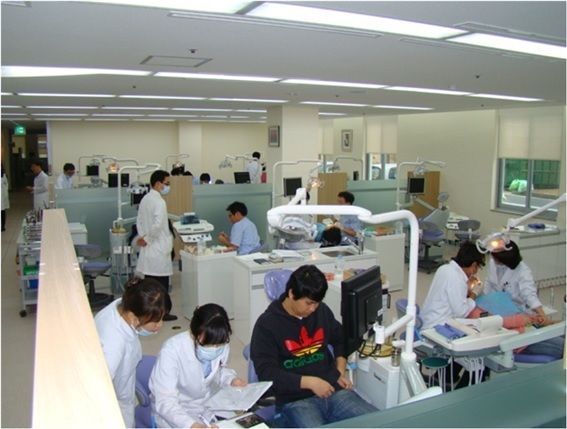
[Asia Economy Reporter Yoo Byung-don] # A(29), a graduate student in the science and engineering field at a university in Seoul, heads to the laboratory again today. Although the entire campus is deserted due to the impact of the novel coronavirus infection (COVID-19), this has nothing to do with A. There is work that must be completed within a set period, so research cannot be paused. A finds comfort in watching fellow graduate students from other labs who come to the laboratory without weekends off.
# The situation of B(28), a graduate student commuting to a laboratory at a university in Jeonbuk, is even more severe. The daily routine of arriving at work at 9 a.m. and leaving close to midnight is no different from before COVID-19. B said, "There are only a few people working together in the lab, but the worry is unavoidable," adding, "The university has not issued any separate notices regarding laboratory work, so it seems the supervising professor cannot take any measures."
Although universities nationwide are taking measures such as online lectures or delaying the start of the semester to prevent the spread of COVID-19, scenes that undermine these efforts are commonly found in 'laboratories.' While places where many people gather are relatively less risky for infection, laboratories, which can be seen as 'ant holes,' could potentially break down the 'large dam' that is the university, indicating the need for measures.
As of the 7th, most universities nationwide are extending the period of non-face-to-face classes. This follows the Ministry of Education’s guidelines, and the period of online-centered non-face-to-face classes may be extended in two-week increments depending on the future spread of COVID-19. The problem is that there are no guidelines for graduate students who commute to research labs or laboratories. Many universities leave the operation of research labs and laboratories to the discretion of the supervising professors.
An official from a university said, "I understand that professors with special tasks such as national projects have no choice but to continue experiments or research," adding, "Without special government guidelines or recommendations, universities cannot interfere or impose sanctions one by one."
However, experts point out that there is no reason for laboratories to be exempt from infectious disease prevention measures. Professor Jeon Byung-yul of CHA University School of Medicine, former director of the Korea Centers for Disease Control and Prevention, said, "If a confirmed case occurs in a research lab, the entire research building may have to be closed," adding, "If research cannot be stopped, measures such as two-shift or three-shift work to reduce density should at least be taken."
The Ministry of Education, which provides guidelines for quarantine in universities, has also belatedly recognized the problem and expressed its intention to prepare countermeasures. A Ministry of Education official said, "We will grasp the overall status of laboratory operations and prepare appropriate guidelines."
© The Asia Business Daily(www.asiae.co.kr). All rights reserved.
![User Who Sold Erroneously Deposited Bitcoins to Repay Debt and Fund Entertainment... What Did the Supreme Court Decide in 2021? [Legal Issue Check]](https://cwcontent.asiae.co.kr/asiaresize/183/2026020910431234020_1770601391.png)
















