Direct Application of Ethanol-Based Substance on Human Body
Potential for Itching and Respiratory Disorders
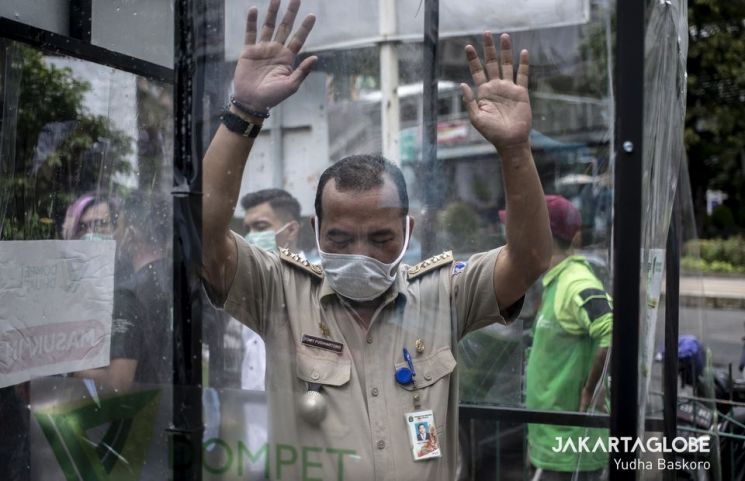
[Asia Economy Jakarta Correspondent Sujin Choi] Indonesia's measures to prevent the spread of the novel coronavirus infection (COVID-19) are raising concerns among experts. Temporary disinfection facilities, just large enough for one person, are being installed throughout the city, but due to toxicity, there are criticisms that these may be more harmful to the human body than effective in eradicating the virus.
According to local Indonesian media on the 7th, about 1,000 temporary disinfection facilities have been installed in Jakarta alone. This was prepared as part of quarantine activities as the number of confirmed cases recently surged by more than 180 per day.
These disinfection facilities are portable booths made of vinyl. Installed at the entrances of major buildings, people receive full-body disinfection before entering. One person enters the booth, turns on a switch, and spins around in place while being sprayed with disinfectant inside the booth to disinfect the entire body.
The problem is that the method of spraying ethanol-based disinfectant directly on the human body is causing concern among experts. Professor Wiku Adisasmito of the Indonesian government’s COVID-19 task force pointed out, "The disinfectant spray being applied is not effective in killing bacteria." He expressed concern that "while disinfectant sprays can remove contaminants, contact with or inhalation by the human body can cause itching and respiratory disorders." He also added that, as a flammable substance, there is a significant risk of fire.
Despite concerns about risks to the human body, the number of temporary booths is expected to increase further. Indonesian disinfection booths are popular because they can be cheaply made by local communities or individuals. The frame is built about 2 meters high using wood or metal pipes, then covered with vinyl sheets. It is made to fit one person, and a spraying device and disinfectant are installed inside.
The practical difficulty of getting tested in Indonesia also plays a role. COVID-19 test kits are severely lacking, and testing costs are not affordable, making it difficult for ordinary citizens to receive medical benefits.
© The Asia Business Daily(www.asiae.co.kr). All rights reserved.

















