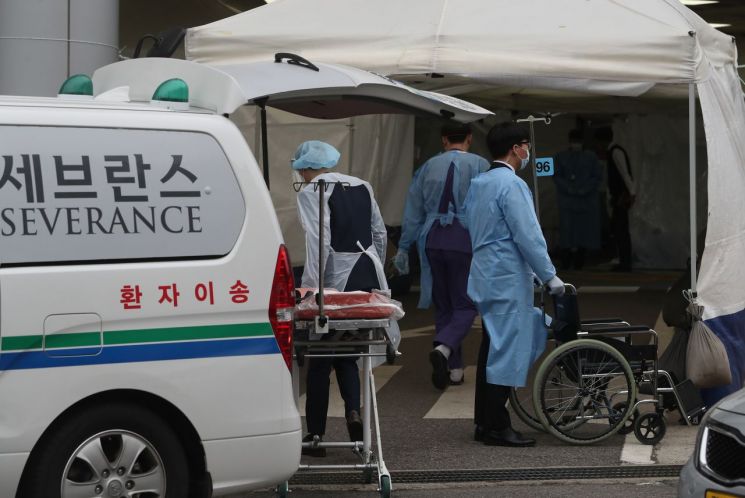
[Asia Economy Reporter Kim Heung-soon] Two severe COVID-19 patients in South Korea were treated with plasma therapy at Sinchon Severance Hospital and both fully recovered. Plasma therapy involves injecting plasma containing antibodies obtained from recovered COVID-19 patients into infected patients, and this is the first case where its effectiveness has been demonstrated.
Professor Choi Jun-yong and Professor Kim Shin-young's team at Severance Hospital announced on the 7th that two patients with severe pneumonia accompanied by acute respiratory distress syndrome due to COVID-19 infection were treated with plasma therapy and both fully recovered, with one patient discharged. The research results were published in the international academic journal 'JKMS' issued on the same day.
One of the patients was a 71-year-old male with no underlying diseases who showed symptoms of fever and cough before being diagnosed with COVID-19. He initially received antiviral treatments including hydroxychloroquine at the hospital, but his pneumonia symptoms did not improve, leading to his transfer to Severance Hospital. Upon arrival, his respiratory rate was over 30 breaths per minute (normal adults have less than 20), and chest X-rays showed severe pneumonia in both lungs.
At Severance Hospital, mechanical ventilation was initiated, and antiviral and antibiotic treatments were continuously administered. However, the patient's condition worsened despite these treatments, according to medical staff. Consequently, 500 ml of plasma from a recovered patient was administered twice at 12-hour intervals, combined with steroid therapy. The plasma was collected from a man in his 20s who had recovered from COVID-19. This recovered patient had experienced fever, cough, and pneumonia after infection but was symptom-free and confirmed recovered at the time of plasma donation.
The patient’s oxygen demand decreased two days after plasma therapy, and his C-reactive protein (CRP) levels also dropped. Subsequently, mechanical ventilation was discontinued, spontaneous breathing was restored, and the patient tested negative for COVID-19. No side effects occurred following plasma administration.
The other patient was a 67-year-old woman with a history of hypertension. After being diagnosed with COVID-19 due to high fever and muscle pain, she developed respiratory distress with increased oxygen demand from the third day, and her left lung condition worsened, leading to her transfer to Severance Hospital. Upon transfer, her respiratory rate was 24 breaths per minute, and oxygen saturation was only 93% despite oxygen administration (normal average is above 95%), indicating severe respiratory distress.
The medical team attached a ventilator and administered malaria and AIDS treatments, and attempted prone positioning to improve oxygen levels. However, lymphocytopenia and high fever persisted. The medical staff administered convalescent plasma from a recovered patient twice at 12-hour intervals to this patient as well. As a result, lymphocyte counts recovered, and viral load decreased. Chest X-rays showed improved lung infiltration, and CRP levels returned to normal. The patient was later declared fully recovered and discharged at the end of March.
Professor Choi Jun-yong stated, "Although plasma therapy has some side effects and lacks large-scale clinical trials, so scientific evidence is insufficient, it could be a viable alternative when combined with steroid treatment for severe patients who do not respond to antiviral treatments."
© The Asia Business Daily(www.asiae.co.kr). All rights reserved.
![Clutching a Stolen Dior Bag, Saying "I Hate Being Poor but Real"... The Grotesque Con of a "Human Knockoff" [Slate]](https://cwcontent.asiae.co.kr/asiaresize/183/2026021902243444107_1771435474.jpg)










