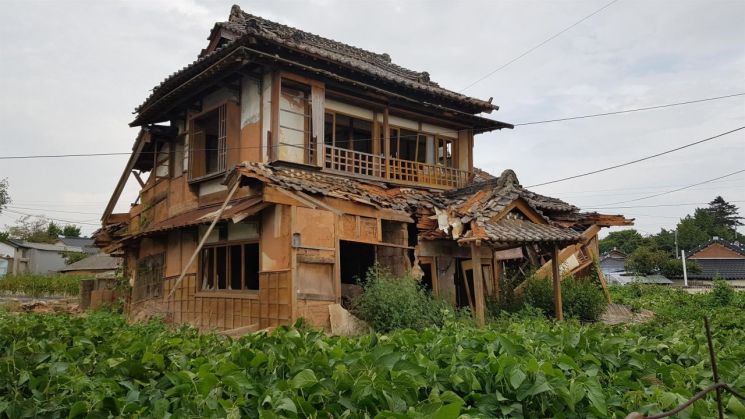
[Asia Economy Reporter Jonggil Lee] An investigation into economic exploitation during the Japanese colonial period is underway in Hwaho-ri village, Shintaein-eup, Jeongeup-si, Jeollabuk-do. The National Wanju Cultural Heritage Research Institute announced on the 7th that Hwaho-ri village has been selected as the first site for a survey on architecture and the human environment related to economic exploitation during the Japanese colonial period in the Jeollabuk-do region, with plans to gradually expand the scope of the investigation.
Hwaho-ri village has had abundant local products due to its wide plains since ancient times. It was easy to travel to the centers of Jeongeup, Gimje, and Buan, leading to many Japanese settlers during the colonial period. Large-scale farms were established, and harvested rice was exported to Japan via Gunsan Port. Traces of this include houses, warehouses, offices, and hospitals associated with Japanese farm owners Kumamoto Rihei (熊本利平), Daue Taro (田植太郞), Nishimura Tamotsu (西村保), and Lee Youngchun, who is regarded as a pioneer in rural health and hygiene.
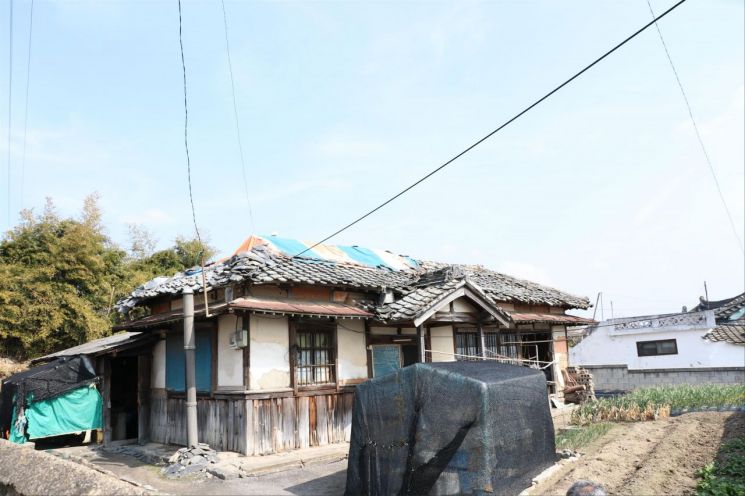
Considering the poor condition of modern buildings in the area, the institute is conducting an academic survey from various perspectives including architecture, landscaping, agriculture, humanities, and folklore in collaboration with Jeollabuk-do and Jeongeup-si. The results will be compiled into a report and made public. An official stated, “Based on the research results, we plan to proceed with cultural heritage registration or designation.”
© The Asia Business Daily(www.asiae.co.kr). All rights reserved.
![Clutching a Stolen Dior Bag, Saying "I Hate Being Poor but Real"... The Grotesque Con of a "Human Knockoff" [Slate]](https://cwcontent.asiae.co.kr/asiaresize/183/2026021902243444107_1771435474.jpg)

















