Principle Maintained Even During Financial Crisis
First Ever Dividend Suspension Since Establishment
Conditional on 35% US Economic Contraction, etc.
Wall Street’s Intense Focus on Final Decision
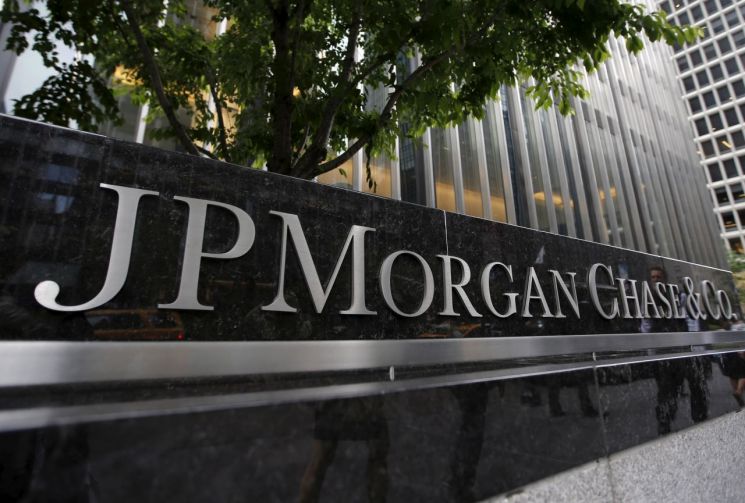
[Asia Economy Reporter Kwon Jaehee] JP Morgan Chase, considered the largest bank in the US, plans to suspend dividend payments for the first time since its establishment due to the economic downturn caused by COVID-19. JP Morgan Chase had maintained its dividend policy even during the 2008 global financial crisis by continuing dividend payments. Other major banks are expected to adopt similar policies, signaling that Wall Street is beginning to prepare for the worst economic recession.
According to CNBC on the 6th (local time), Jamie Dimon, CEO of JP Morgan Chase, described the economic crisis caused by COVID-19 as a "bad recession" in his annual letter to shareholders and said, "The board is considering suspending dividends." CEO Dimon added, "We are not immune to the economic crisis caused by COVID-19, which is an extremely negative scenario," and "JP Morgan Chase is exposed to billions of dollars in additional credit losses."
However, he added a caveat that the suspension of shareholder dividends would apply only in the case of an "extremely negative scenario," such as the US economy contracting by more than 35% and unemployment rising to 14%. Recently, Goldman Sachs and Morgan Stanley forecast that the US economy could shrink by 34% and 38%, respectively, in the second quarter. According to the US Department of Labor, the US unemployment rate last month rose to 4.4%, a 50% increase from 3.5% in February.
The decision on JP Morgan Chase’s dividend suspension is expected to be a focal point for Wall Street. Earlier, in the UK, the "Big 5" banks?HSBC, Standard Chartered, RBS, Barclays, and Lloyds?announced they would suspend dividend payments this year at the request of financial authorities, and European financial firms have also joined in suspending dividends following regulatory requests. Despite this global trend, US banks such as Goldman Sachs, Citigroup, and Morgan Stanley had expressed intentions to continue paying dividends.
However, if JP Morgan Chase, the leader of Wall Street, suspends dividend payments, it is difficult to rule out the possibility that other US banks will follow suit in a domino effect by declaring dividend suspensions.
The fact that even the financial sector, which has strictly adhered to shareholder dividend policies, is securing liquidity due to the economic crisis caused by COVID-19 indicates that companies urgently need cash to cope with the crisis. Goldman Sachs projected that "38% of companies in the US Standard & Poor’s (S&P) 500 index could be unable to pay dividends this year."
Janet Yellen, former Chair of the US Federal Reserve (Fed), also contributed to Wall Street’s preparation for the worst. In an interview with CNBC on the same day, Yellen said, "COVID-19 is a massive and unprecedented shock," and "economic activity in the second quarter could decline by the 20% range on an annualized basis." This aligns with interpretations that the US economy will contract by the 30% range and continue to deteriorate. Yellen also forecasted unemployment to reach 12-13%.
Due to the spread of COVID-19, the number of factories halting operations in the US is increasing. Factories that had already stopped operations are extending their shutdown periods. Aircraft manufacturer Boeing announced that it would temporarily suspend production of the 787 Max aircraft at its South Carolina plant. This announcement came shortly after South Carolina issued a stay-at-home order for residents except for essential work.
Honda, which had already stopped factory operations, decided to halt its US and Canadian plants until the 1st of next month, and Fiat Chrysler also announced it would suspend operations at its North American manufacturing facilities until the 4th of the same month. Last week, Nissan extended the shutdown period of its US plants until the end of this month, and Ford delayed the planned reopening of its North American plants, originally scheduled for the 14th.
Meanwhile, Larry Kudlow, Director of the White House National Economic Council (NEC), told reporters on the same day that "White House aides are discussing the possibility of issuing government bonds related to COVID-19." Kudlow referred to these as "war bonds" and emphasized that in this quasi-war situation caused by COVID-19, financing efforts must be undertaken not only by companies but also at the national level.
© The Asia Business Daily(www.asiae.co.kr). All rights reserved.

















