Criticism of Representative Hwang's Proposal for "500,000 Won to All Citizens"
Debate Over Emergency Disaster Relief Supplementary Budget: 13 Trillion, 25 Trillion, 100 Trillion
Accusations of Election-Oriented "Feast of Words"
[Asia Economy Reporter Jeon Jin-young] "This is malignant populism. Political parties are starting to resemble the National Revolutionary Dividend Party," "No matter how hard you work from dawn till night, if inappropriate remarks come from the party leadership, it inevitably ends in futility."
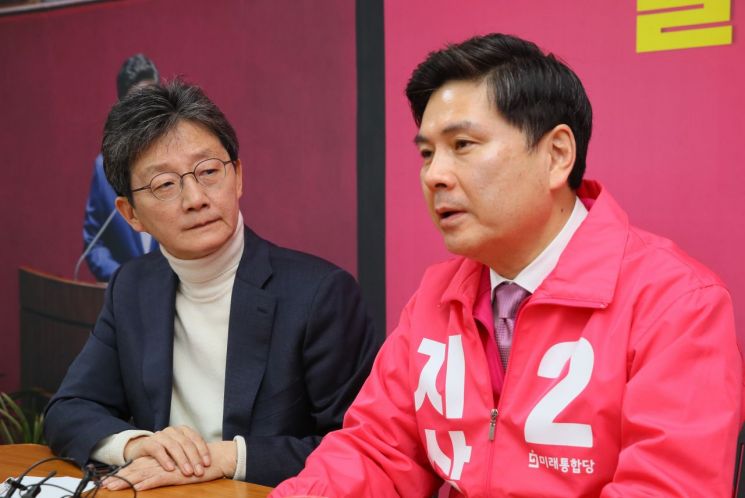
Regarding Hwang Kyo-ahn, leader of the United Future Party, insisting that an emergency disaster relief fund of 500,000 won be given to every citizen, party members Yoo Seung-min and Ji Sang-wook criticized him respectively in this manner. It is not only the United Future Party. Inside and outside the political sphere, there is strong criticism that the actions of both ruling and opposition party leaders are increasing public confusion or will end as a 'feast of words' with only fleeting slogans.
Regarding the emergency disaster relief fund, the ruling and opposition parties have proposed different supplementary budget sizes. The Democratic Party of Korea announced plans to expand the payment target to all citizens, signaling a complete revision. This came just a week after the government announced payments targeting the bottom 70% income bracket. The Democratic Party estimated the cost at about 13 trillion won. The United Future Party’s proposal to provide 500,000 won per person would require about 25 trillion won. The Minsheng Party suggested "paying 500,000 won per person to all citizens and then reclaiming the amount given to the wealthy through taxes," while the Justice Party requested 1 million won per person to be paid within this month.
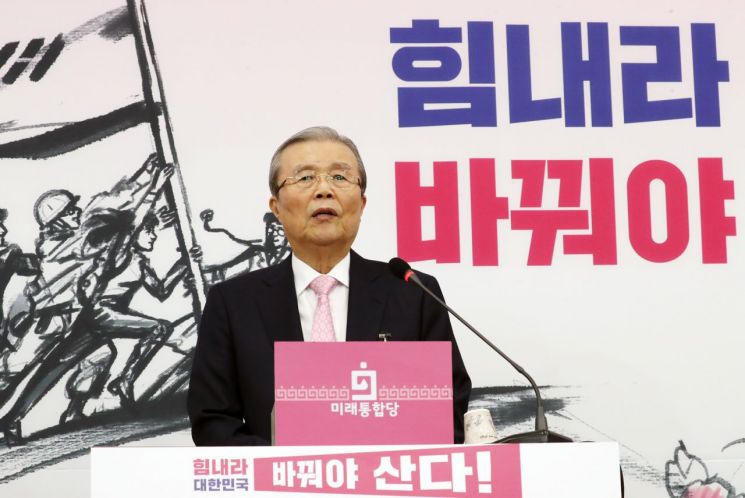
Furthermore, Kim Jong-in, the United Future Party’s general election campaign committee chairman, advocated for securing 100 trillion won in funding. He proposed reorganizing the 512 trillion won budget to raise 100 trillion won. This amount, which is 20% of the total budget, was criticized by both ruling and opposition parties as "unrealistic." Lee In-young, floor leader of the Democratic Party, called it an "unrealistic plan" and said it "feels irresponsible." Kang Min-jin, spokesperson for the Justice Party, also pointed out, "The plan to secure 100 trillion won and leave the government to prepare it is an irresponsible attitude for the main opposition party."
Similarly, Ahn Cheol-soo, leader of the People’s Party, proposed "returning 44 billion won in election subsidies" and using the funds to provide masks to voters. On the 3rd, Ahn suggested, "Let’s return the 44 billion won in party election subsidies and use that money to distribute masks to voters." However, due to the absence of voluntary return provisions in the Political Funds Act and the Public Official Election Act’s complete ban on donations by candidates and their spouses, this is practically impossible.
Additionally, remarks by Lee Hae-chan, leader of the Democratic Party, about considering relocating public institutions after the general election, and discussions within the Democratic Party and Justice Party about developing a public delivery app, have also become targets of criticism as "populism for the general election." On the 6th, Park Young-sun, Minister of SMEs and Startups, pointed out, "It requires careful consideration whether the government should even be doing that."
© The Asia Business Daily(www.asiae.co.kr). All rights reserved.
![Clutching a Stolen Dior Bag, Saying "I Hate Being Poor but Real"... The Grotesque Con of a "Human Knockoff" [Slate]](https://cwcontent.asiae.co.kr/asiaresize/183/2026021902243444107_1771435474.jpg)

















