Bank of Korea February International Balance of Payments
[Asia Economy Reporter Kim Eun-byeol] Despite the impact of the novel coronavirus infection (COVID-19), South Korea's current account surplus in February actually increased. This marks a surplus for 10 consecutive months since May last year.
According to the "February 2020 Balance of Payments (Provisional)" released by the Bank of Korea on the 7th, the current account surplus in February was $6.41 billion, an increase of $2.56 billion compared to the same month last year.
The expansion of the goods balance played a major role in the increase of the current account surplus. The goods balance in February was $6.58 billion, expanding the surplus by $1.16 billion compared to the same period last year.
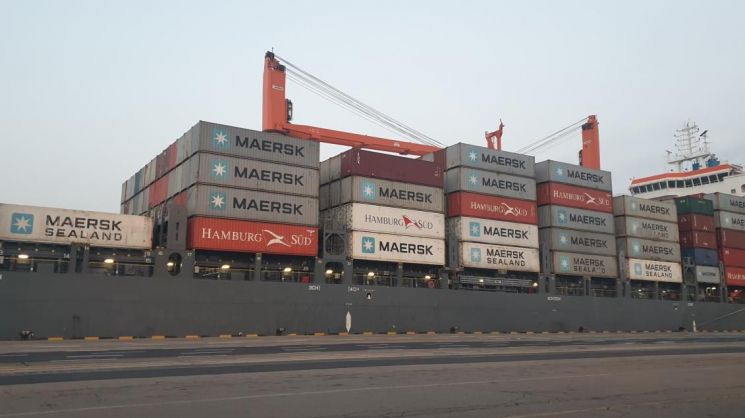
Despite the spread of COVID-19, semiconductor exports showed a steady performance, which had an impact. Exports in February amounted to $41.82 billion, marking an increase compared to the same month last year for the first time in 15 months since November 2018. Factors influencing this included an increase in working days due to the Lunar New Year holiday (+3.5 days) and an expansion of semiconductor export volume (51.3%).
Imports were $35.24 billion, turning to an increase compared to the same month last year for the first time in 10 months. Up to February, oil prices were actually on the rise, so the recent sharp drop in oil prices was not yet reflected.
The services balance recorded a deficit of $1.45 billion, with the deficit narrowing by $90 million compared to the same month last year. Due to COVID-19, there was a phenomenon of neither inbound nor outbound travel, and in particular, the significant decrease in the number of outbound travelers reduced the travel balance deficit. The travel balance deficit was $570 million, narrowing by $270 million compared to the same month last year. The number of inbound travelers, mainly Chinese and Southeast Asians, turned to a decrease, and the number of outbound travelers dropped to less than half compared to the same month last year.
The primary income balance recorded a surplus of $1.25 billion, expanding by $790 million compared to the same period last year. This was thanks to increased dividend income from overseas, mainly from institutional investors.
Meanwhile, in February, as the financial market showed instability due to COVID-19, the increase in foreign investment in South Korea sharply decreased. Foreign investment in South Korea in February was $370 million, a sharp drop compared to January ($5.92 billion). Foreign investment in domestic stocks decreased by $3.01 billion, while foreign investment in domestic bonds increased by $3.37 billion.
© The Asia Business Daily(www.asiae.co.kr). All rights reserved.

















