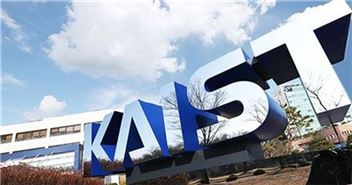
 Provided by KAIST
[Asia Economy (Daejeon) Reporter Jeong Il-woong] KAIST, which has long been regarded as the cradle for nurturing domestic scientific talent, is beginning to spread its wings toward the university’s centennial vision. KAIST will celebrate its 50th anniversary next year.
According to KAIST on the 7th, KAIST was established in 1971 as the nation’s first research-oriented university specializing in science and engineering. The founding purpose of the university was to cultivate scientific and technological talent equipped with both scientific theory and practical application skills.
In line with this founding purpose and intent, KAIST has produced a total of 66,676 talents up to last year, including 13,750 doctoral graduates, 34,182 master’s graduates, and 18,744 bachelor’s graduates since its establishment.
Moreover, these talents are currently active in various fields such as basic and convergence research, industry-academia cooperation, and startups, contributing to creating new value through science and technology.
In particular, to commemorate its 50th anniversary next year, KAIST is preparing various events centered around Honorary Professor Yang Dong-yeol of the Department of Mechanical Engineering to reflect on the past 50 years and prepare for the upcoming 100th anniversary. This signifies preparing for the university’s next 50 years with Honorary Professor Yang, the first graduate and first doctoral recipient of the university’s predecessor, the Korea Advanced Institute of Science.
First, KAIST and Honorary Professor Yang will hold the ‘KAIST Summit’ on February 16 next year, coinciding with the founding anniversary, inviting world-renowned scholars to the Daejeon main campus. This event will be academic in nature, sharing past achievements and discussing the educational and research directions for the next 50 years.
Following this, a ‘Global Lecture Series’ is planned to be held throughout the year, featuring Nobel laureates and global leaders from fields such as artificial intelligence (AI), new materials, and physics, attracting attention from the domestic and international scientific communities.
Above all, KAIST plans to newly introduce the ‘Singularity Professor’ system to focus on enhancing faculty capabilities. The core of this system is to provide professors on campus with the opportunity to immerse themselves in challenging research projects for at least 10 years without being constrained by evaluations.
The long-term goal is to support free and creative research that can change the paradigm of science and pioneer new academic fields while preparing for the next 50 years in addition to the past 50 years.
The ‘Next-Generation Collaborative Research Labs,’ which opened in 2018, will also be expanded to six labs. These collaborative research labs are intended to allow researchers to pass on academic value and achievements across generations.
Currently, at KAIST, cross-generational collaboration among researchers is underway in fields such as systems metabolic engineering, healthcare, condensed matter computational physics, catalyst design and chemical reactions, nanophotonics, and bio-design engineering. KAIST explains that this is the first attempt among domestic universities and is expected to present a successful model for collaborative research.
KAIST President Shin Sung-chul said, “KAIST’s challenges and innovations must continue,” adding, “In the era of technological hegemony of the Fourth Industrial Revolution, we will become a university that meets the nation’s expectations so that the public can talk about their dreams and hopes through KAIST.”
© The Asia Business Daily(www.asiae.co.kr). All rights reserved.
![Clutching a Stolen Dior Bag, Saying "I Hate Being Poor but Real"... The Grotesque Con of a "Human Knockoff" [Slate]](https://cwcontent.asiae.co.kr/asiaresize/183/2026021902243444107_1771435474.jpg)










