Tokyo and the Metropolitan Area Including Surrounding Regions
Severe Shortage of Hospital Beds Expected to Become a Serious Issue
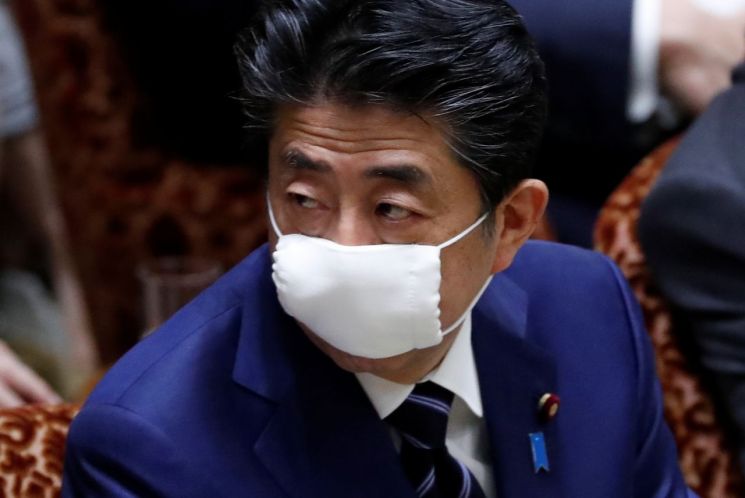
[Asia Economy Reporter Kwon Jae-hee] As the number of confirmed cases of the novel coronavirus infection (COVID-19) rapidly increases day by day, the Japanese government has entered the 'countdown' to declaring a state of emergency. Japan previously declared a state of emergency only for the affected areas during the Great East Japan Earthquake in 2011. If a state of emergency is declared this time, it will be the first ever due to an infectious disease.
On the 6th, Yomiuri Shimbun reported that Prime Minister Shinzo Abe is expected to declare a state of emergency as early as the 7th. This is based on the revised Special Measures Law for COVID-19, and the target area is expected to be the metropolitan area including Tokyo.
In Japan, the number of confirmed cases is increasing to a concerning level. As of 11:30 PM on the 5th, the cumulative number of confirmed cases was counted at 4,570, an increase of 362 from the previous day. This includes confirmed cases from the Diamond Princess cruise ship. The number of deaths increased by 9 from the previous day, totaling 104.
The area with the steepest increase in confirmed cases is the capital, Tokyo. Following an increase of 117 cases on the 4th, 143 new cases were reported on the 5th, bringing the total confirmed cases to 1,033 so far.
Yomiuri Shimbun explained that the imminent declaration of a state of emergency by Prime Minister Abe is due to concerns that the rapid surge in confirmed cases in Tokyo and other areas will cause a severe shortage of hospital beds.
This state of emergency declaration is based on the "Special Measures Law for New Influenza and Other Measures." It stipulates that the Prime Minister, as the head of the government task force, can declare a state of emergency if an infectious disease specified by law, such as COVID-19, spreads rapidly nationwide and is likely to seriously affect the lives and economy of the Japanese people.
Once a state of emergency is declared, authorities can take measures that restrict individual property rights, such as using land necessary for establishing medical facilities, which is advantageous for securing hospital beds. Additionally, governors of Japan's prefectures (todofuken) can request refraining from going out and restricting the use of facilities with large gatherings based on legal grounds. However, even if a state of emergency is declared, going out cannot be forcibly prohibited, so a "city lockdown" is not possible.
If the Japanese government declares a state of emergency, the economic impact is also expected to be significant. Some forecasts suggest the shock could be 1.5 times that of the 2008 Lehman Brothers bankruptcy crisis. According to Mainichi Shimbun, Professor Emeritus Katsuhiro Miyamoto of Kansai University estimated that if a state of emergency due to COVID-19 is declared across the entire Japanese archipelago, the economic loss over two years could reach approximately 63 trillion yen (about 717.381 trillion KRW). This estimate was calculated considering the current level of the gross domestic product (GDP).
© The Asia Business Daily(www.asiae.co.kr). All rights reserved.

















