[Asia Economy Reporter Junho Hwang] A clue to unlocking the secrets of learning and memory has been discovered. It has been revealed that the neural protein (MAP2), known to be involved in the growth of dendrites in brain nerve cells, plays an important role in memory activity. This is expected to aid research not only on the secrets of memory but also on synaptic damage diseases such as autism, schizophrenia, and Alzheimer's disease. The Korea Brain Research Institute (KBRI) announced on the 6th that an international joint research team led by Dr. Gyeju Lee and Dr. Yoonju Kim, including participation from Georgetown University in the United States, made this discovery.
MAP2 Protein Involved in Memory
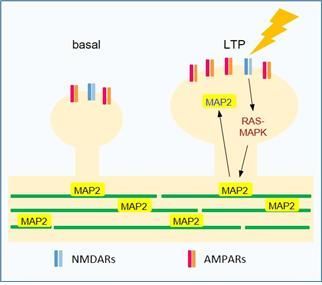
The research team discovered a new fact that microtubule-associated protein 2 (MAP2) is involved in memory activity. Through various neurobiological research techniques such as electrical signal measurement and imaging analysis, the team demonstrated that when MAP2 protein is deficient in the hippocampal neural circuits of animal models, the phenomenon of long-term potentiation in synapses is not induced.
Long-term potentiation is a cellular phenomenon that explains the brain's memory and learning functions. It refers to the continuous enhancement (memory) of synaptic signal transmission (activation) through repetitive stimulation, that is, learning information.
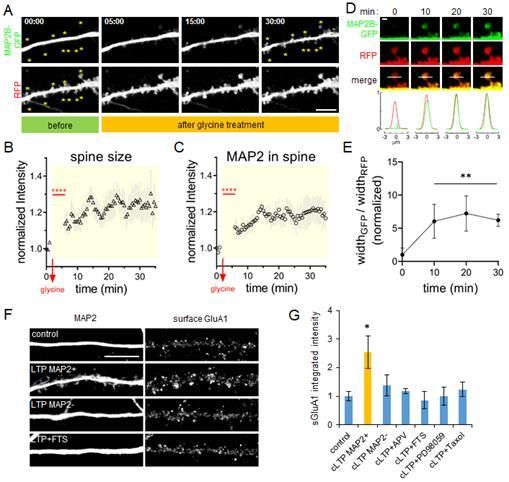
Additionally, the research team observed in real-time that MAP2 rapidly moves to synapses during long-term potentiation stimulation. At this time, they confirmed that the number of AMPA receptors, which are important for enhancing synaptic activation, increases, and the size of dendritic spines also grows.
The research team explained that this means MAP2 may ultimately be involved in memory formation by participating in the process of inducing synaptic strengthening.
Helps Research on Synaptic Damage Diseases
The research team evaluated that by taking a step closer to answering the long-standing question of humanity, "How is memory created and maintained?", they have provided fundamental information that can be applied to memory-related diseases such as dementia in the future.
Dr. Gyeju Lee stated, "We plan to conduct follow-up research on the impact of MAP2's synaptic movement on cognitive behavior," and added, "We hope this study will be used as an important foundational resource for research on synaptic damage brain diseases such as autism, schizophrenia, and Alzheimer's disease."
The results of this study were published in the online edition of the prestigious biology journal 'FASEB Journal.'
© The Asia Business Daily(www.asiae.co.kr). All rights reserved.



















