143 New COVID-19 Cases in Tokyo on the 5th, Cumulative Cases Exceed 1,000
Serious Infections Among Medical Staff, 153 Cases in 10 Metropolitan Areas as of the 4th
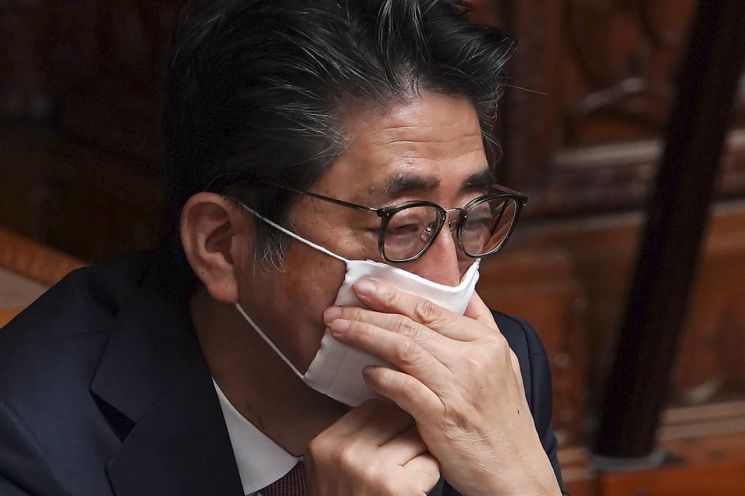
[Asia Economy Reporter Lim Cheol-young] As the number of confirmed cases of the novel coronavirus infection (COVID-19) in Japan surges, calls for decisive action from the central government are growing louder.
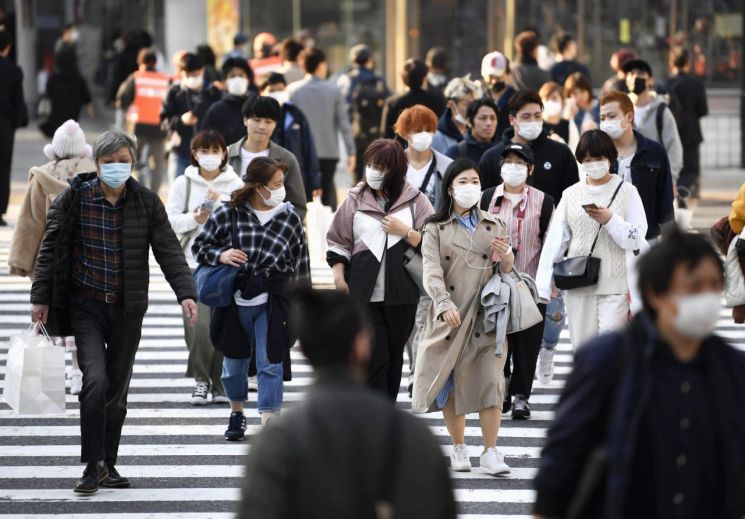
On the 5th, NHK reported, citing Tokyo Metropolitan Government officials, that there were 143 new confirmed COVID-19 cases. This figure surpasses the 118 cases reported on the 4th. Consequently, the cumulative number of confirmed cases in the Tokyo area has exceeded 1,000, reaching 1,034.
As a result, it is highly likely that the number of confirmed COVID-19 cases in Japan has set a new record for the sixth consecutive day. The total number of confirmed cases in Japan was tallied at 4,209 as of the 4th. The number of confirmed cases has increased for five consecutive days from the 31st of last month to the 4th of this month. The daily counts were 242 on the 31st, 266 on the 1st, 281 on the 2nd, 353 on the 3rd, and 368 on the 4th. The cumulative death toll has been confirmed at 95.
Infections among medical personnel in Japan are also reported to be at a serious level. The Mainichi Shimbun reported that as of the previous day, at least 153 doctors, nurses, and other medical staff had been infected with COVID-19. This figure only accounts for ten metropolitan areas where more than 100 infections have been confirmed, including Tokyo, Osaka, Chiba, Hokkaido, Hyogo, Fukuoka, Saitama, and Kyoto. The actual number of infected medical personnel may be even higher.
The region with the highest number of infected medical personnel is Fukuoka Prefecture, with 41 cases as of the previous day. At the Shinkomonji Hospital in Fukuoka alone, 19 doctors and nurses were confirmed positive.
As the number of confirmed cases rises, voices calling for decisive measures such as the central government's declaration of a state of emergency are increasing. Yuriko Koike, Governor of Tokyo, appeared on an NHK discussion program that day and stated, "The government's decisive action is required," urging Prime Minister Shinzo Abe to declare a state of emergency. Tokyo is preparing for a state of emergency situation. Governor Koike explained that based on the law, if a state of emergency is declared, measures stronger than requests for voluntary restraint on going out can be implemented.
Moreover, as COVID-19 cases surge in Japan, media outlets that had previously ignored South Korea's response to COVID-19 have begun to show interest in Korea's response system. The Sankei Shimbun published an article titled "90% of Infection Routes in Korea Identified," introducing how the Korean government has curbed the increase in COVID-19 cases through mass testing and epidemiological investigation and tracking efforts.
In particular, the newspaper reported on the Blue House's announcement that President Moon Jae-in held non-face-to-face telephone talks with leaders of 16 countries in late February, and many of the participating leaders cited Korea's quarantine system as a model. Additionally, the newspaper introduced how the drive-through testing method introduced by the Korean government became a hot topic and was adopted by governments of various countries.
The Asahi Shimbun also reported on the 3rd that Korea's epidemiological investigation and treatment system helped prevent a medical collapse. The newspaper explained that health authorities use mobile phone location information systems (GPS) records to confirm the movements of infected individuals within 10 minutes.
© The Asia Business Daily(www.asiae.co.kr). All rights reserved.


















