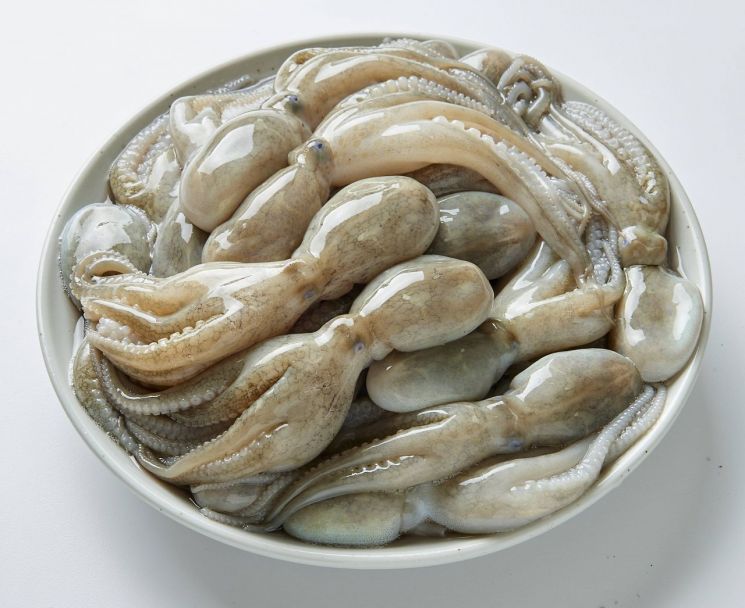
[Asia Economy Reporter Lim Hye-seon] The price of jjukkumi, known as the "King of Spring," is rising. This is due to reduced catch volumes caused by abnormal weather and increased logistics costs, making it difficult to import jjukkumi from China and Thailand.
According to the Ministry of Oceans and Fisheries' Fisheries Information Portal on the 2nd, the wholesale price of live jjukkumi at production sites rose to 26,000 KRW, up 36.8% from 19,000 KRW at the end of February. Compared to March last year, it increased by 20.6%. Consumer purchase prices have risen even more. According to data from the Suhyup Noryangjin Fish Market, the price per kilogram of jjukkumi soared 89.5%, from 10,500 KRW in the fourth week of February to 19,900 KRW in the third week of March.
Jjukkumi, which usually spawns in March and April, is highly sought after because its eggs are full and its taste is savory. As a member of the octopus family, jjukkumi tends to gather along the west coast when the early spring water temperature rises, increasing the shrimp that serve as its food. This year, the sea temperature rose by an average of 1 to 2℃ compared to last year, increasing jjukkumi activity from late January. Many egg-carrying jjukkumi were caught from February, resulting in a reduced catch volume in March, which is considered the peak season. A representative from a large supermarket explained, "Due to the COVID-19 pandemic, local festivals were canceled, reducing demand and making jjukkumi prices cheaper in February compared to the previous year. However, as more consumers started seeking jjukkumi in March, fresh food online shopping malls like Market Kurly and supermarkets began purchasing in large quantities, causing prices to rise since mid-last month."
According to the Ministry of Oceans and Fisheries' Fisheries Information Portal, last year's jjukkumi catch was 3,828 tons, a decline of more than 50% over the past decade. This year, the catch volume has decreased by 10 to 20% compared to last year.
Difficulty in distributing imported jjukkumi is also a factor in the price increase. Jjukkumi is usually imported by air from China, Thailand, and Vietnam. With the global spread of COVID-19, air routes have been suspended, making it impossible to bring in imported jjukkumi. A logistics company official said, "Currently, Korean Air is the only airline handling air logistics, but due to high demand compared to supply, logistics costs have more than doubled compared to previous years," adding, "The price competitiveness has decreased, so importing is not profitable."
Jjukkumi prices are expected to rise further. A large supermarket representative said, "From mid-month, fishing boats will focus on catching crabs, reducing jjukkumi fishing volume," and added, "Since the fishing ban starts on May 11, jjukkumi prices are bound to increase."
© The Asia Business Daily(www.asiae.co.kr). All rights reserved.
![Clutching a Stolen Dior Bag, Saying "I Hate Being Poor but Real"... The Grotesque Con of a "Human Knockoff" [Slate]](https://cwcontent.asiae.co.kr/asiaresize/183/2026021902243444107_1771435474.jpg)
















