High Hopes for Early Agreement Seem to Face 'Trump Variable'... Government "No Agreement Yet" Backs Down
U.S. State Department "Can Absolutely Say It Is Not Over" Dismisses
Expectations for Early End to Unpaid Leave of Korean Workers at USFK Dim
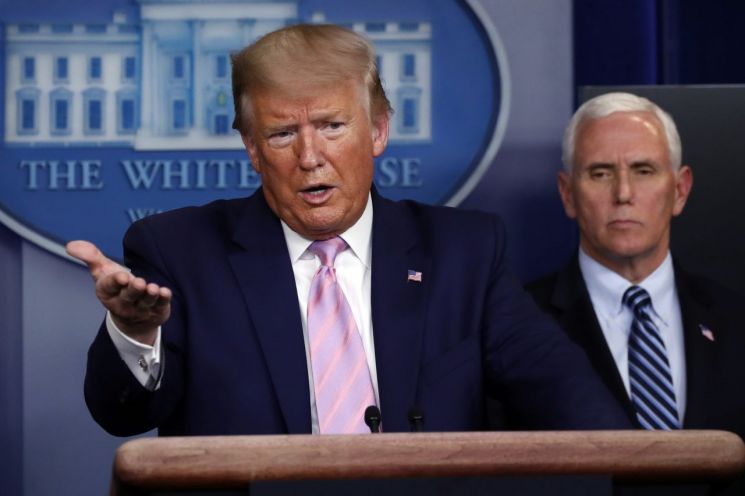
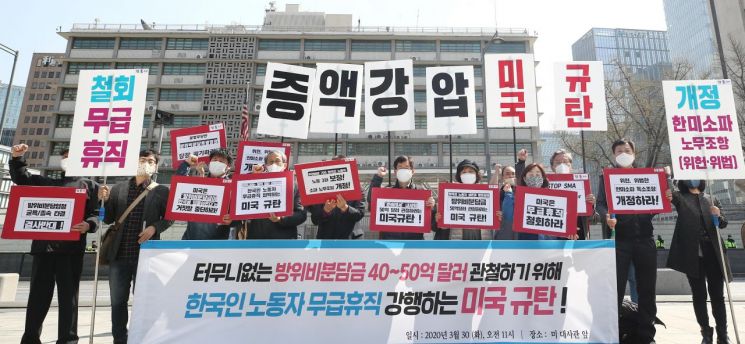
[Asia Economy Reporter Lim Cheol-young] Negotiations between South Korea and the United States for the conclusion of the 11th Special Measures Agreement (SMA) on defense cost-sharing have encountered last-minute variables. Expectations that a provisional agreement, which had significantly narrowed the gap in positions, would lead to a swift resolution have become uncertain again due to the so-called "Trump variable." Meanwhile, the forced unpaid leave imposed by the U.S. side, threatening the livelihoods of Korean workers employed by the U.S. Forces Korea, has entered its third day.
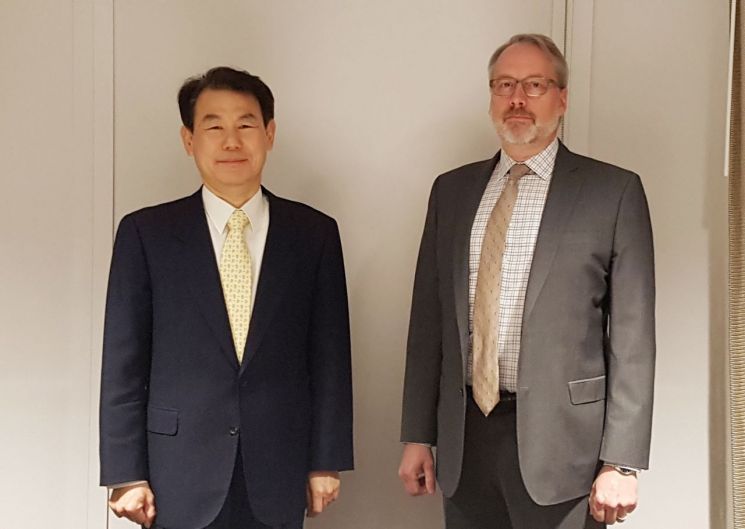
According to the Ministry of Foreign Affairs on the 3rd, although Foreign Minister Kang Kyung-wha and U.S. Secretary of State Mike Pompeo held a phone call regarding the provisional working-level agreement reached by the Korea-U.S. negotiation teams, they failed to cross the threshold for a final settlement. The early resolution hopes hinted at by Defense Cost-Sharing Negotiator Chung Eun-bo on the 31st of last month and echoed inside and outside the government on the 1st have been dashed.
In fact, government sources appeared to step back somewhat from the previous stance that the talks were in the "final coordination stage." A diplomatic source said, "Although high-level consultations on the defense cost-sharing negotiations have continued, no agreement has yet been reached," adding, "We plan to continue consultations to ensure an early conclusion of the negotiations." The Blue House also announced that at the National Security Council (NSC) meeting chaired by National Security Office Director Chung Eui-yong on the afternoon of the previous day, standing members reviewed the status of the defense cost-sharing negotiations and agreed to continue efforts for an early settlement.
The U.S. side’s responses, which dampened expectations for a swift resolution, followed in succession. On the 2nd (local time), Clark Cooper, U.S. Deputy Assistant Secretary of State for Political-Military Affairs, repeatedly emphasized the need for a fair agreement, stating that the Korea-U.S. defense cost-sharing negotiations are far from over. During a virtual press briefing with the media, Cooper hinted that discussions continue between Foreign Minister Kang Kyung-wha and Secretary Mike Pompeo, as well as between President Moon Jae-in and President Donald Trump, saying, "I can assert that the negotiations have been ongoing and are definitely not over." Additionally, U.S. Forces Korea Commander Robert Abrams posted on his Twitter that he had learned the Korean proverb "drinking kimchi soup first," which was interpreted as a subtle reference to the defense cost-sharing negotiation situation.
The factor that poured cold water on the provisional agreement, which had been confident enough to consider the timing and format of its announcement, is believed to be the "Trump variable." NBC News previously reported, citing two officials, that on the morning of the 31st of last month (Eastern Time), Secretary of State Mike Pompeo and Secretary of Defense Mark Esper visited the White House to prevent the unpaid leave crisis affecting Korean workers of the U.S. Forces Korea. It is analyzed that although the two secretaries brought the provisional agreement to President Trump, they did not receive his approval.
However, there is growing interpretation that the progress made in the defense cost-sharing negotiations has not returned to square one. Considering that as recently as the 25th of last month, the U.S. State Department spokesperson stated that the position gap between the two countries remains large and that flexibility from South Korea is needed, while emphasizing that the contributions of U.S. taxpayers must be properly reflected, it is clear that recent progress has been made in the negotiations.
Earlier, the U.S. side reportedly agreed to reduce the demanded increase in defense cost-sharing from the previously asserted $4 billion level to about "10% plus alpha," and to extend the negotiation cycle from one year to five years. Initially, the U.S. had demanded approximately $5 billion, about six times the previous year's contribution from South Korea. Furthermore, the U.S. side is said to have dropped its claim to add a "readiness" category, which was not included in the existing SMA framework that covers Korean labor costs for U.S. Forces Korea.
As the outlook for the defense cost-sharing negotiations becomes uncertain again, concerns over the livelihoods of Korean workers employed by the U.S. Forces Korea are likely to grow. The unprecedented unpaid leave situation for these workers, which began on the 1st, is expected to continue for the time being. Although the possibility of a dramatic resolution has not completely disappeared, the delay in announcement compared to expectations suggests that more time may be required for the final negotiation process.
Among the 8,600 Korean workers employed by the U.S. Forces Korea, about 4,000?nearly half?have entered unpaid leave. The government plans to enact special legislation to provide support measures for the workers' livelihoods. Bruce Klingner, a senior researcher at the Heritage Foundation, analyzed in an interview with Voice of America (VOA) that "even if the negotiation teams reach an agreement in the middle, without decisions from the heads of state of both countries, progress cannot be made at this stage."
© The Asia Business Daily(www.asiae.co.kr). All rights reserved.



















