Is the Political Environment Favorable to the Ruling Party in the General Election... Economic Clouds from COVID-19, Backlash if Complacent
[Asia Economy Reporter Ryu Jeong-min] Ahead of the official election campaign for the 21st general election, President Moon Jae-in's approval rating has emerged as a variable in the political landscape. The president's approval rating continues to soar, buoyed by favorable foreign media reviews of the response to the novel coronavirus infection (COVID-19).
This has had the effect of dispelling various negative factors facing the ruling party, such as criticism over the economic crisis, doubts about the values of justice and fairness triggered by the 'Cho Kuk incident,' and the prosecution's investigations targeting the Blue House. This is why the ruling party is visibly encouraged by the rise in the president's approval rating.
In fact, a survey conducted by Gallup Korea from the 24th to the 26th of last month, asking 1,001 people nationwide aged 18 and over whether President Moon is performing his duties well, showed a positive evaluation of 55%. Negative evaluations were at 39%. For more details, please refer to the Central Election Poll Deliberation Commission website.
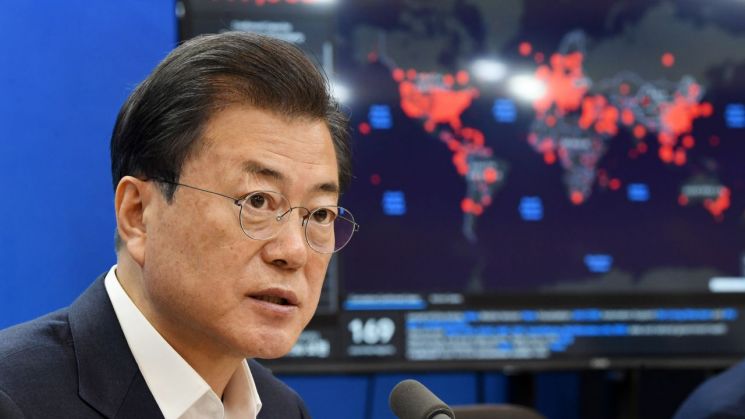
President Moon's approval rating is at its highest level since November 2018. Compared to September last year, when the approval rating fell below the 40% threshold due to the Cho Kuk incident, this is a significant increase.
Other institutions' opinion polls also generally show approval ratings exceeding 50%. With two weeks remaining until the general election, the soaring presidential approval rating is generally seen as a boon for the ruling party and a setback for the opposition. Some political circles even analyze that the ruling party could achieve better-than-expected results in constituency elections.
However, there is a contrasting analysis that attention should be paid to the 'national crisis' situation caused by COVID-19. The current situation requires a different 'interpretive framework' than typical political opinion poll analyses.
While public opinion may form around rallying behind the president during a global crisis, directly linking this to a positive factor for the ruling party's vote share is considered problematic. This perspective aligns with attention to the 'hidden side' of the COVID-19 political situation.
The COVID-19 situation is, in effect, making life difficult for the public, and the majority are feeling this impact firsthand. From small and medium-sized enterprises and small business owners to office workers, many are suffering economic hardships under the dark clouds of COVID-19. The postponement of kindergarten, elementary, middle, and high school openings, replaced temporarily by online classes, has become a real concern for dual-income couples mainly in their 20s to 40s.
It is also noteworthy that the majority of the public holds a pessimistic outlook for the future. In the Gallup Korea survey, 40% responded that their household finances would 'worsen' in a year, while only 10% said they would 'improve.' This indicates that people are not optimistic about their current lives or their future.
Holding a general election amid an overall economic crisis is akin to walking on thin ice for the ruling party. Whether the opposition can rekindle the 'judgment theory' flame could become a variable as the official election campaign begins.
The United Future Party's efforts to unify with conservative-leaning independent candidates is also a point to watch. Additionally, unexpected variables that could shake up the election landscape in the final stages may emerge. Political missteps that provoke public opinion could change the course of the election.
Um Kyung-young, director of the Era Spirit Research Institute, said, "When the election campaign intensifies, the ruling party should be cautious about 'reckless remarks' controversies," adding, "The proportion of undecided voters in their 20s is not insignificant, and whether they participate in voting is also a variable."
© The Asia Business Daily(www.asiae.co.kr). All rights reserved.


















