Hotel and Duty-Free Industry Faces Wave of Bankruptcies... Temporary Business Suspensions Increase
Major Food Service Companies Struggle, CJ Implements Strong Self-Rescue Plan... Industry-Wide Sense of Crisis

[Asia Economy reporters Lee Seon-ae and Lim Hye-seon] The spread of the novel coronavirus infection (COVID-19) is causing a wave of restructuring across the distribution industry. In particular, duty-free shops, hotels, and dining sectors are taking a direct hit from the deterioration in performance due to changes in consumption patterns caused by 'social distancing.' As a chain of bankruptcies becomes a reality, companies are increasingly implementing stringent self-help measures such as halting investments entirely, returning salaries, and taking unpaid leave to survive.
◆Hotel and Duty-Free Shop Bankruptcy Crisis... Focus on Cost Reduction= Due to the downturn in the tourism industry, more hotels and duty-free businesses are struggling with management difficulties and going bankrupt. According to the Seoul Bankruptcy Court and the hotel industry on the 1st, HTC, a hotel resort specialized management company, filed for corporate rehabilitation procedures on the 26th of last month. Corporate rehabilitation procedures are a corporate restructuring process conducted under court supervision, carried out when it is judged that maintaining the company is better than liquidation. Established in 1997, HTC operates over 30 business sites including domestic and overseas resorts, residences, and training centers, with annual sales reaching 20 billion KRW. It employs about 200 staff members.
The prolonged COVID-19 situation has caused the tourism industry to come to a complete halt. HTC's management losses worsened due to the Middle East Respiratory Syndrome (MERS), the Terminal High Altitude Area Defense (THAAD) issue, and now the spread of COVID-19, leading them to finally resort to rehabilitation.
Earlier in February, Matei, the operator of the comprehensive accommodation reservation site 'Hotel Enjoy,' also filed for corporate rehabilitation procedures.
Some hotels are reducing costs by closing parts of their accommodation and food and beverage facilities and placing employees on leave. Grand Walkerhill Seoul, operated by SK Networks, has suspended room operations until the 22nd and is operating with a two-shift system for employees. The Plaza will suspend weekday buffet restaurant operations until the 30th of next month. Last month, the Hilton Hotel Gyeongju in Gyeongbuk temporarily closed. Business hotels catering to Chinese tourists, such as Crown Park Hotel Seoul in Euljiro and Benikea Premier Hotel Dongdaemun, also shut their doors.
Hanwha Hotels & Resorts is implementing paid leave, paying 70% of the average wage to those on leave. Last month, executives reduced their base salary by 20%, and general managers and team leaders returned their position allowances for three months. Hotel Lotte is encouraging all employees to take unpaid leave on a weekly basis.
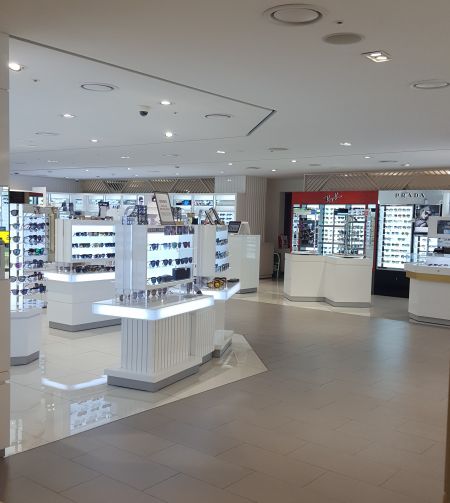
The duty-free industry is also in a tight spot. SM Duty-Free, operated by Hana Tour, returned its Seoul city duty-free shop license. They gave up the 5-year extension of the existing 5-year plus 5-year license period. Industry insiders expect that if the COVID-19 situation continues into the first half of the year, more small and medium-sized companies will be forced to return their licenses. A duty-free industry official explained, "Small and medium duty-free shops already saw sales drop by more than 80% last month and have no cash liquidity. If this situation continues until June, they will have no choice but to give up business operations." Lotte Duty-Free, the number one duty-free operator in Korea, has also implemented a four-day workweek and reduced base salaries accordingly. Employees choosing the four-day workweek have their base salary reduced proportionally to the reduced working hours.
◆CJ Foodville's Survival 'Self-Help Plan'... Investment Suspension, Salary Return, Unpaid Leave= CJ Foodville, the dining affiliate of CJ Group, has decided to implement a high-intensity self-help plan. CEO Jung Sung-pil announced the 'Self-Help Plan for Survival' on March 31, stating, "In response to the global economic crisis and deteriorating management environment caused by the COVID-19 situation, we will focus all company efforts on securing liquidity through the sale of fixed assets such as real estate, freezing new investments, maximizing expenditure control, executives returning salaries, and suspending new store openings."
CJ Foodville will completely suspend and minimize all investments until it judges that management normalization has been achieved. Except for unavoidable investments related to safety, hygiene, and relevant regulations, all other investments are prohibited. They will also refrain from expanding new bakery B.I (Brand Identity) and reduce investment support funds for franchise renewal investments to the legal standard level, which was previously supported above the legal standard to strengthen mutual growth.
To strengthen cash flow, they will implement comprehensive cost control measures such as strengthening receivables and payables management and suppressing internal and external cash expenditures. In the dining business, low-profitability stores will continue to close, and new openings will be suspended to improve cash liquidity. CEO Jung explained that this is an unavoidable measure as the business is practically in a suspended state.
Additionally, to lead the crisis overcoming efforts, the CEO and executives, including organizational leaders, will voluntarily return part of their monthly salaries until the first half of the year. Employees will also voluntarily take at least one week of unpaid leave by June.
A CJ Foodville official said, "The domestic dining industry itself is collapsing, and all business divisions of the company are showing red flags, making the implementation of self-help plans for survival inevitable. The dining industry is heavily influenced psychologically, so even after the end of COVID-19, it is expected that damage recovery will be difficult in the short term. However, today's survival can promise the future, so I want all employees to understand and participate in this self-help plan."
The implementation of CJ Foodville's self-help plan has created a sense of crisis within CJ Group. CGV, the number one multiplex in Korea, has temporarily closed 35 theaters and switched all employees to a three-day workweek system. Overseas performance is also affected by the COVID-19 pandemic. According to FnGuide, CGV's estimated operating loss in the first quarter of this year is 25.2 billion KRW. Freshway, a food distribution affiliate, had planned to invest about 300 billion KRW in food distribution and group meal services until 2021 but has suspended all plans.
An industry insider said, "Even large corporations are staggering, causing anxiety in the food and dining industry. Companies like Namyang Dairy Products, Lotte Confectionery, and SPC Samlip recently declared emergency management at their regular shareholders' meetings and announced plans to improve management efficiency, so cost-cutting efforts will continue throughout the industry."
© The Asia Business Daily(www.asiae.co.kr). All rights reserved.


















