Conducted 3D Stereoscopic Scanning with the Buddhist Cultural Heritage Research Institute
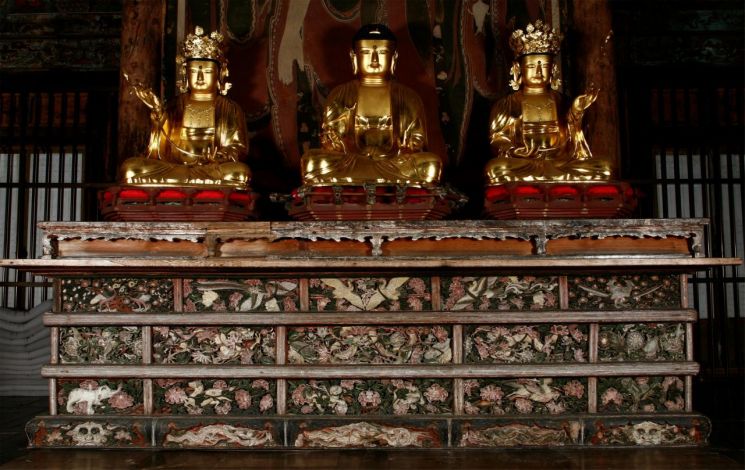
[Asia Economy Reporter Lee Jong-gil] A Buddhist altar (Buddan) is a pedestal prepared in temples to enshrine Buddha statues and place ritual objects needed for ceremonies. The production techniques have developed according to the enshrinement and worship methods of Buddha statues, and the artisans of the time intricately carved patterns and images reflecting the era, simultaneously showcasing the tradition and originality of Korean Buddhist culture.
The Cultural Heritage Administration and the Buddhist Cultural Heritage Research Institute announced on the 31st that following the woodblock prints, Buddhist altars have been selected as the subject of the "Comprehensive Survey of Buddhist Cultural Heritage" and will undergo a detailed investigation over five years. Some Buddhist altars have already been recognized for their historical value. Representative examples include the Sumi-dan (須彌壇) of Baekheungam at Eunhaesa Temple in Yeongcheon and the Sumi-dan of Daeungjeon Hall at Jikjisa Temple in Gimcheon, both designated as national treasures. However, they have been perceived as parts of buildings and have received less attention compared to Buddha statues or Buddhist paintings. Since repairs are difficult, there has been a consistent call for accurate measurement data for preservation and restoration. The main material of Buddhist altars is wood, which is prone to deformation and vulnerable to pests and fire.
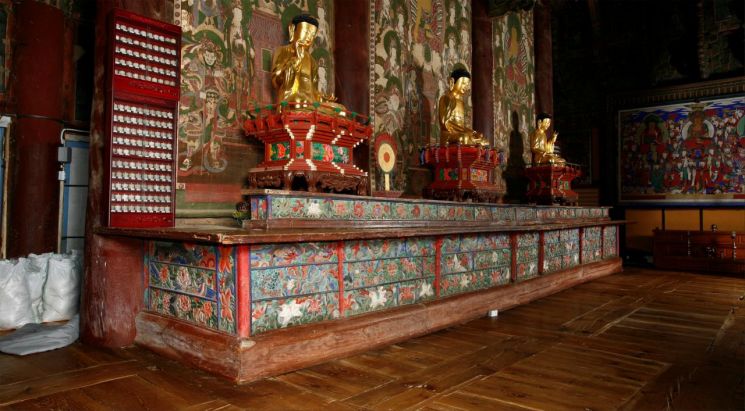
The Cultural Heritage Administration and the research institute selected sixteen temples in Jeollabuk-do and Jeollanam-do as the survey targets for Buddhist altars this year. The investigation will be conducted through various methods such as precise measurements, 2D digital photography, 3D scanning, drafting, damage status mapping, wood species analysis, preservation environment analysis, and safety inspections. In addition to digital documentation and conservation science analysis, a humanities study researching the history and art historical significance of Buddhist altars will be conducted concurrently. An official stated, "We plan to systematically organize the current status of Buddhist altars and designate artifacts judged to have high preservation value as national cultural heritage."
© The Asia Business Daily(www.asiae.co.kr). All rights reserved.


















